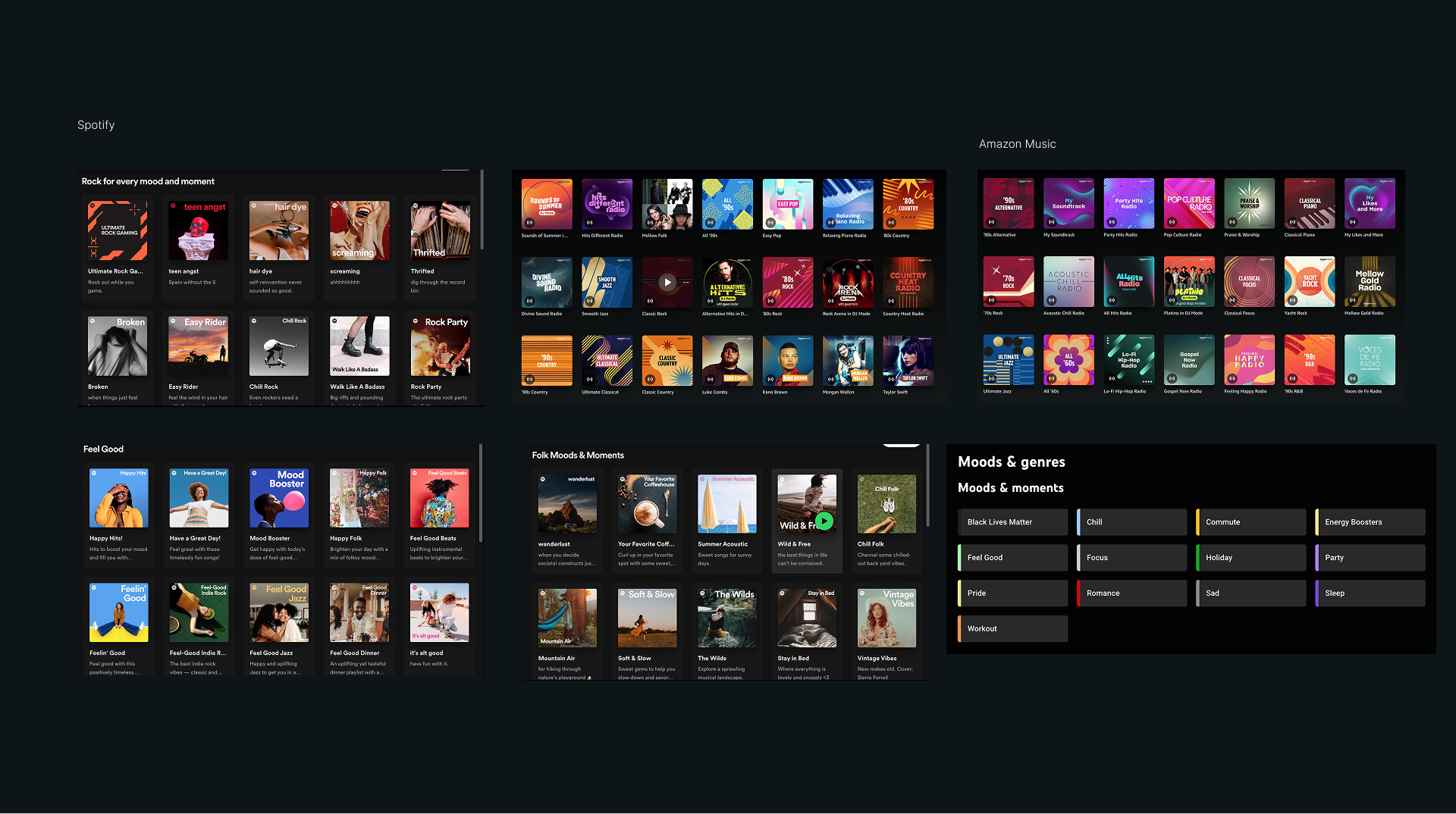
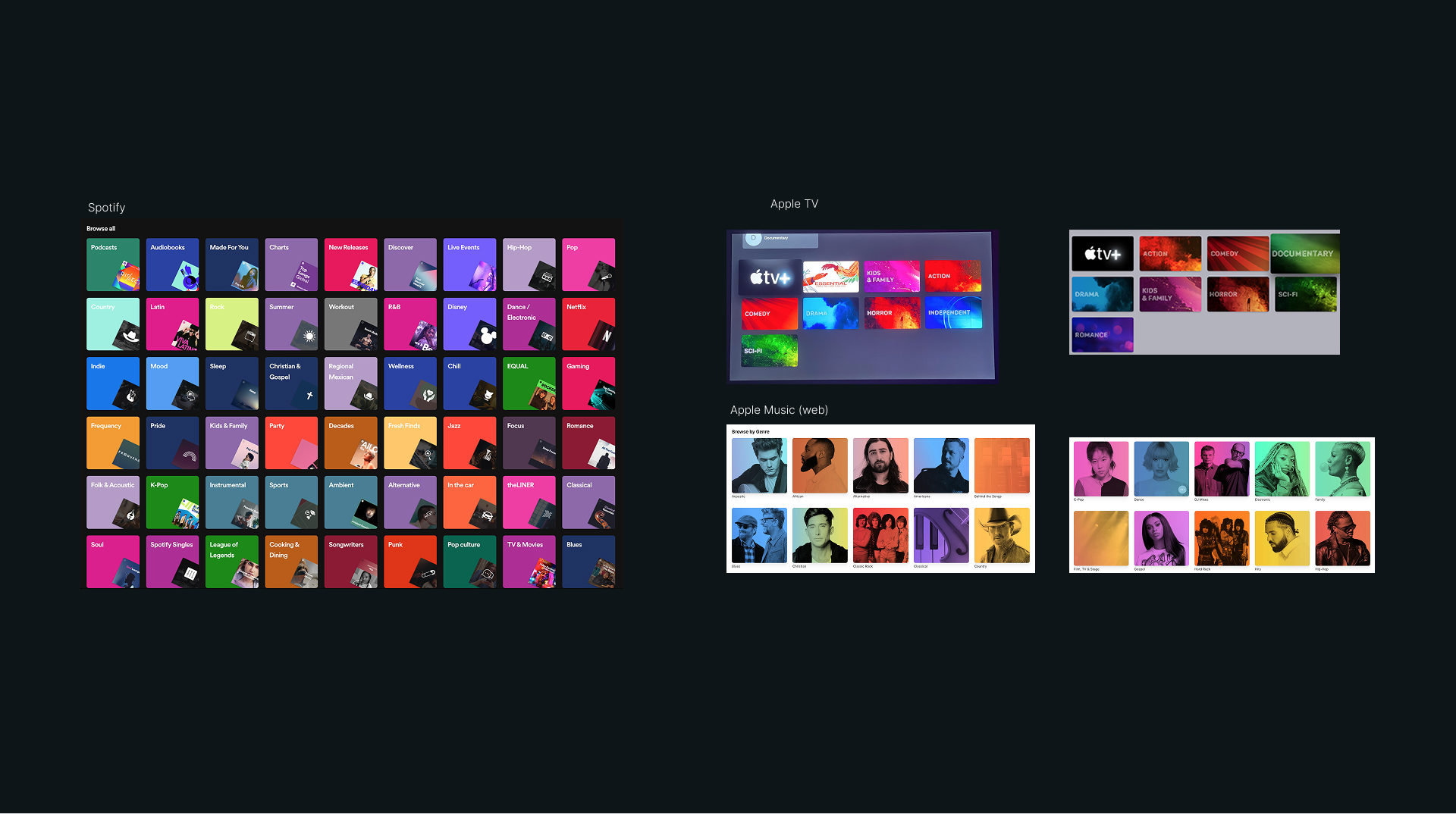
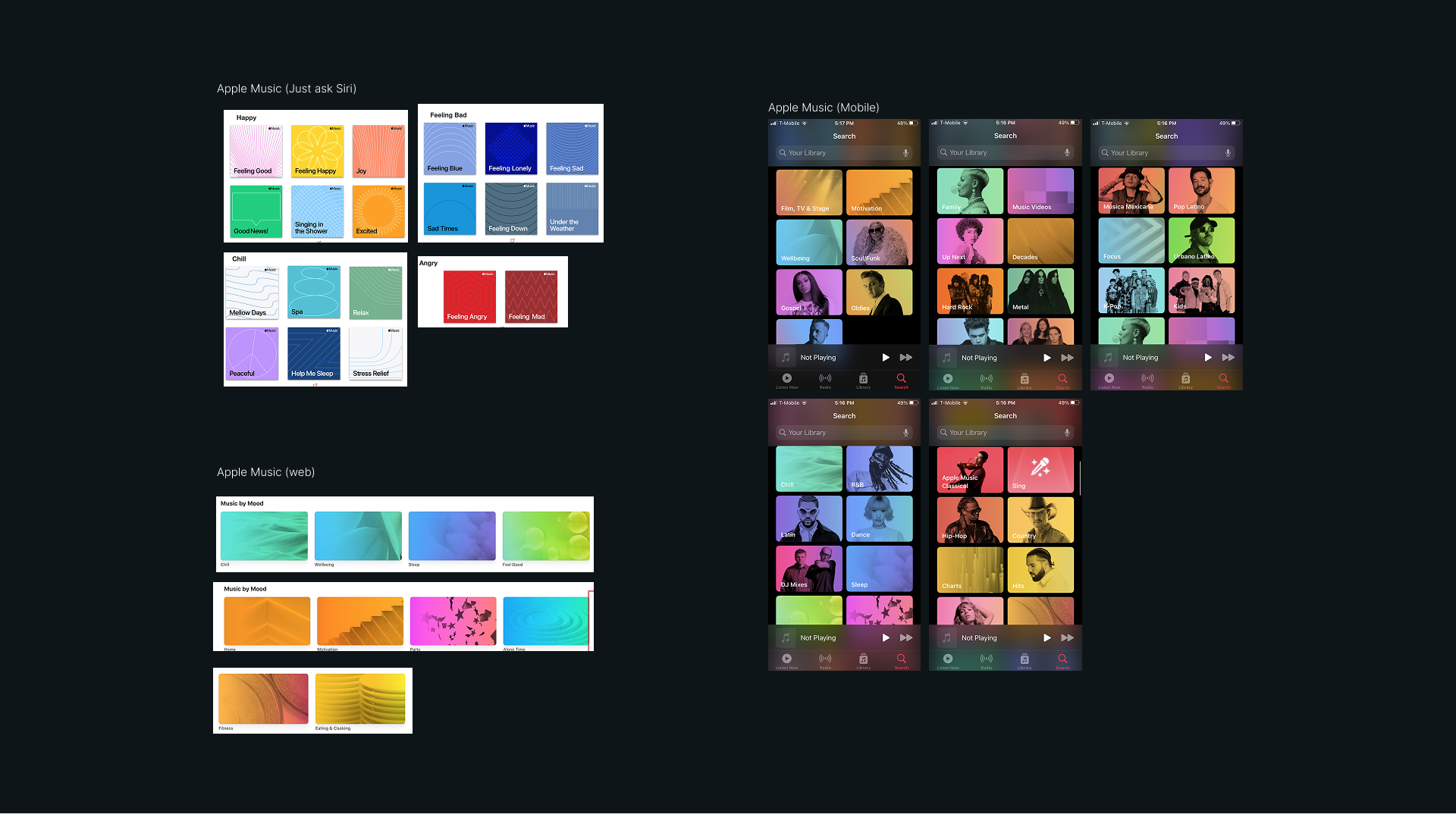
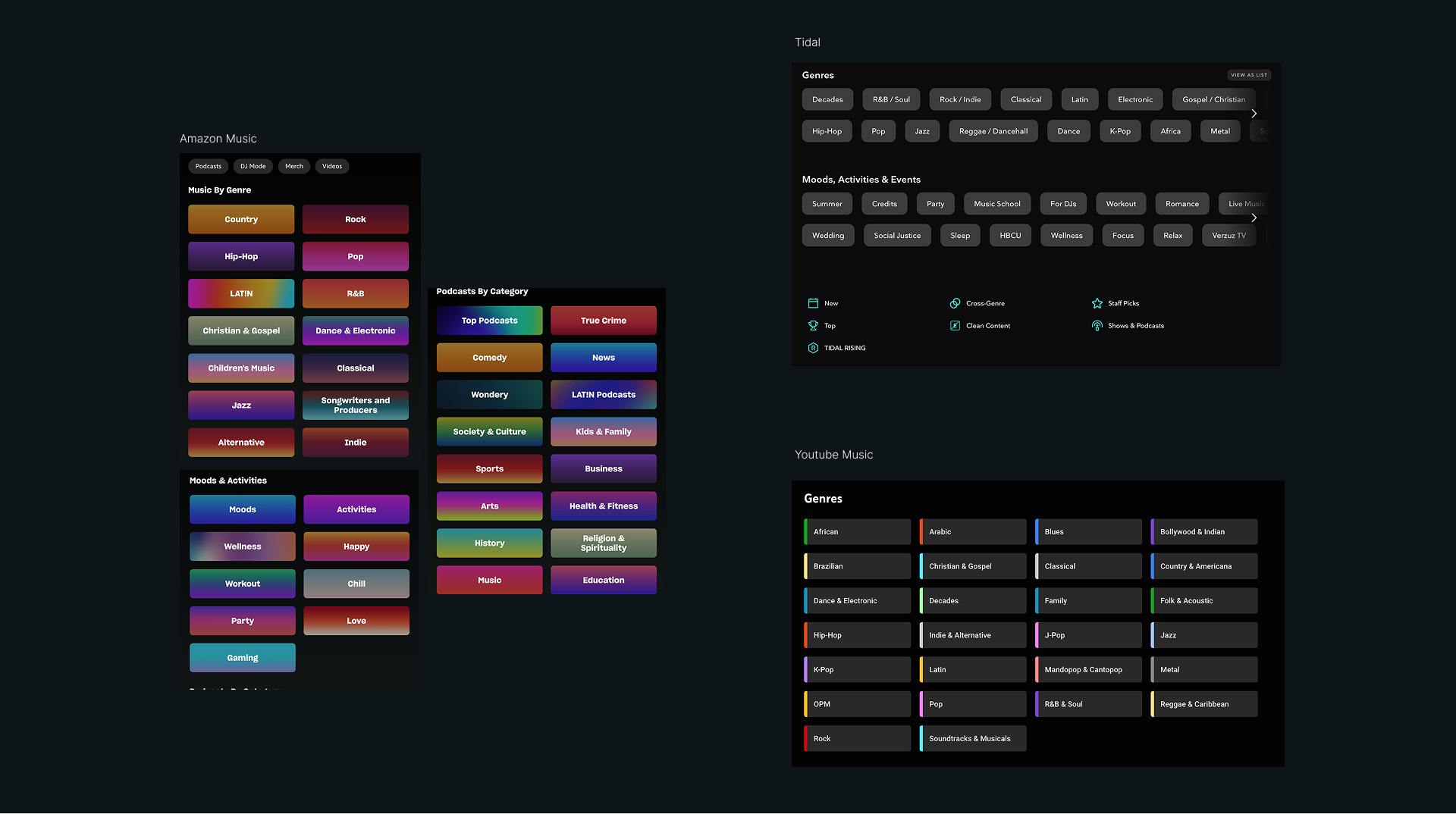
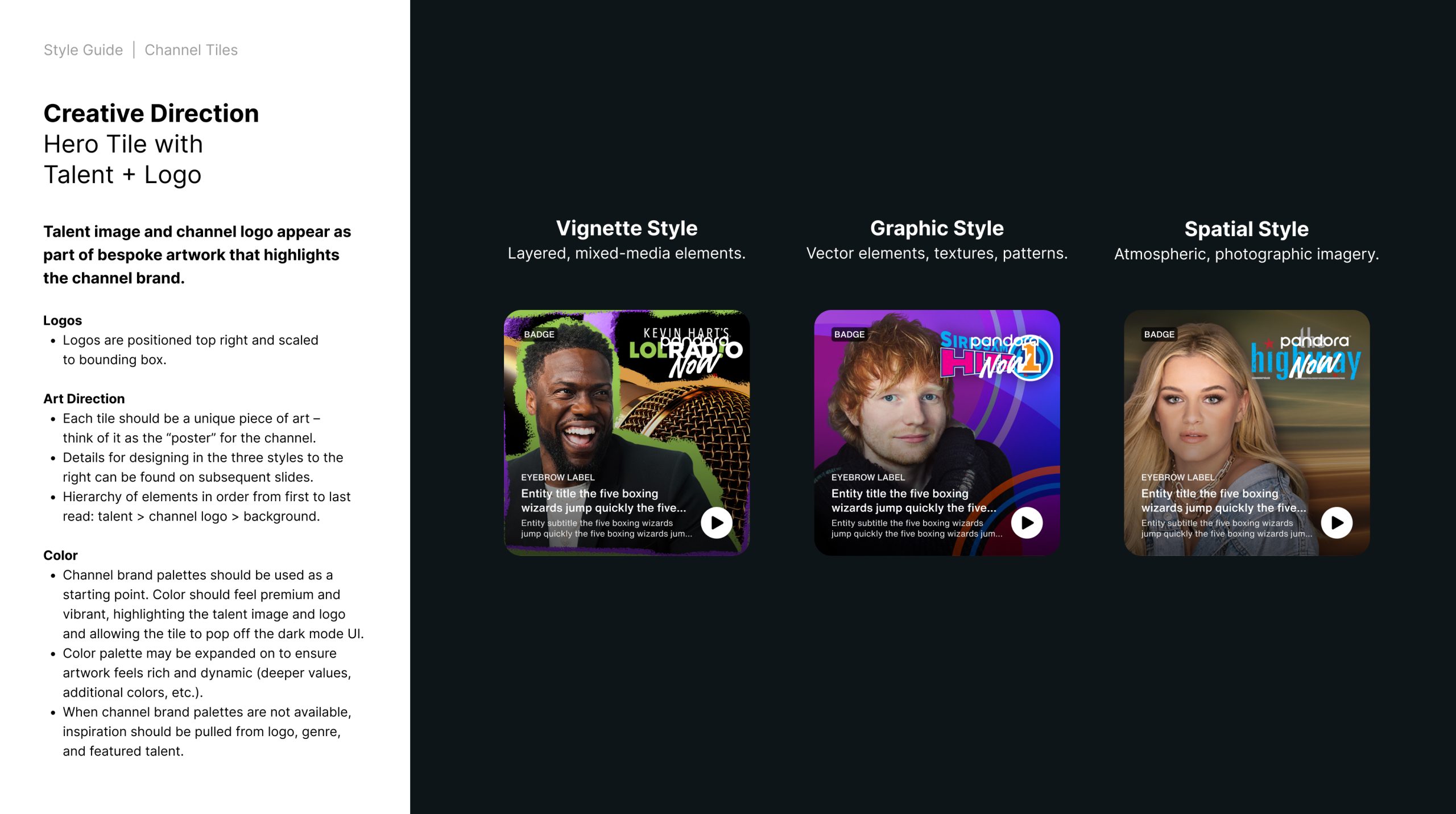
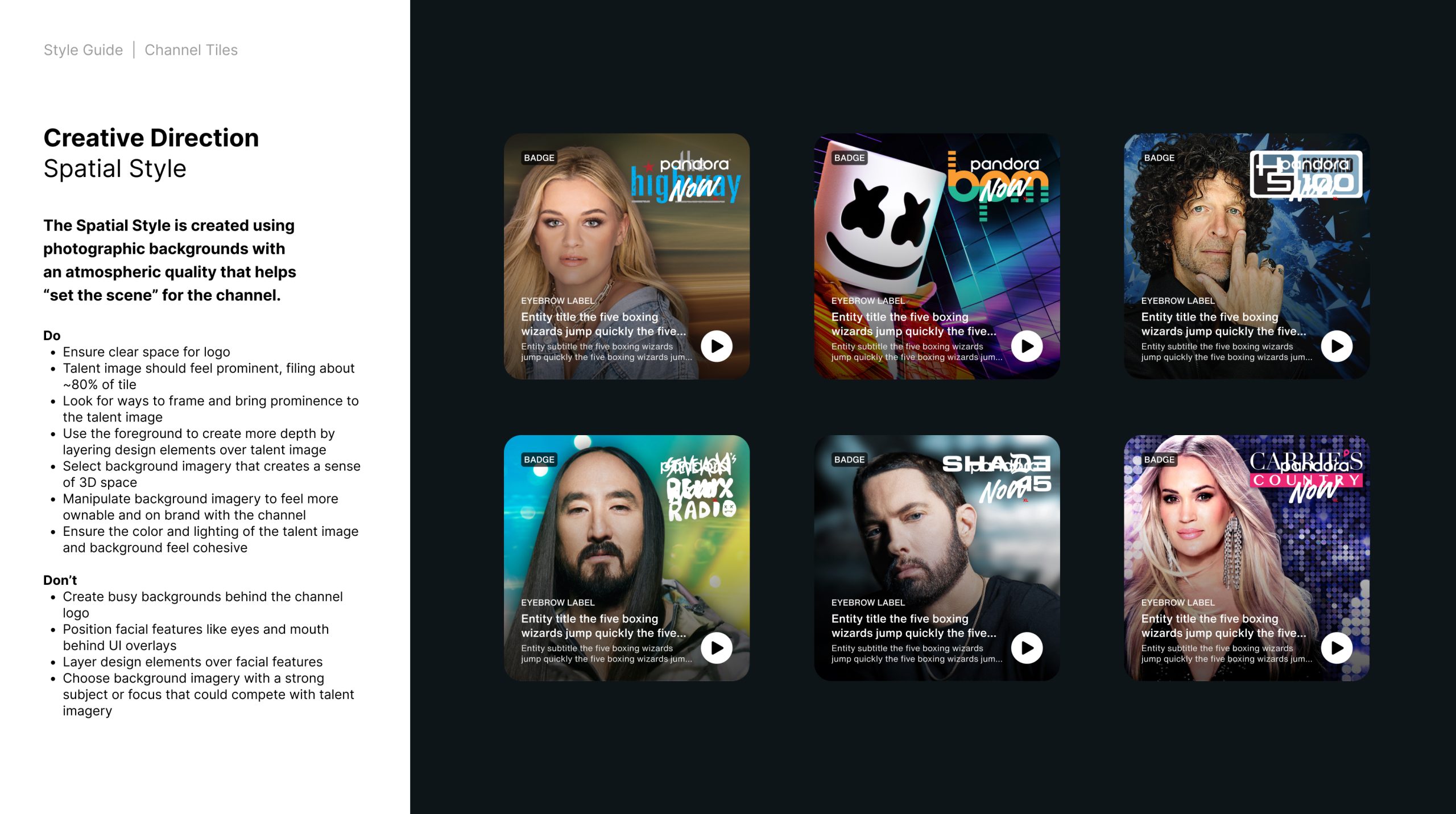
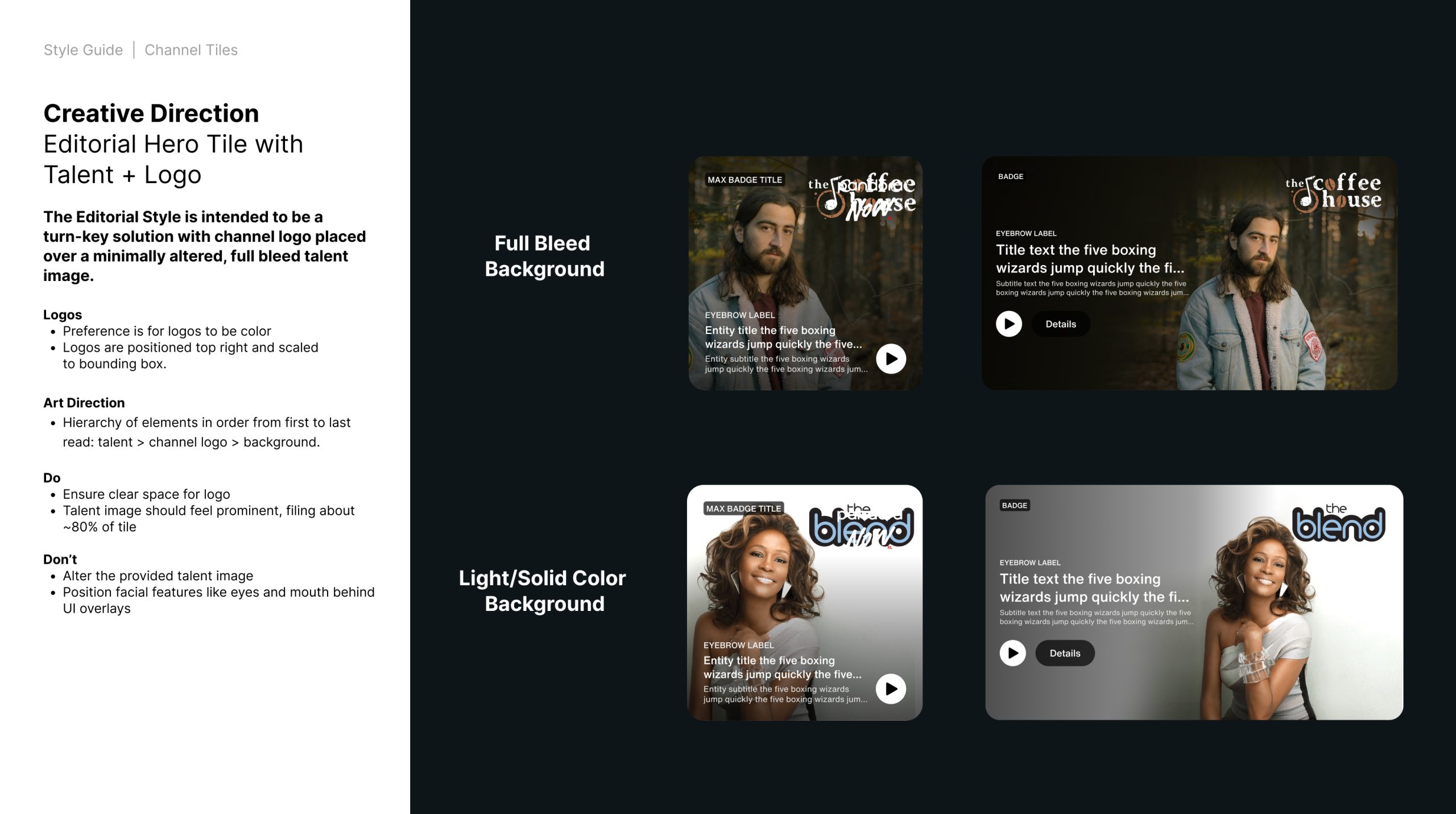
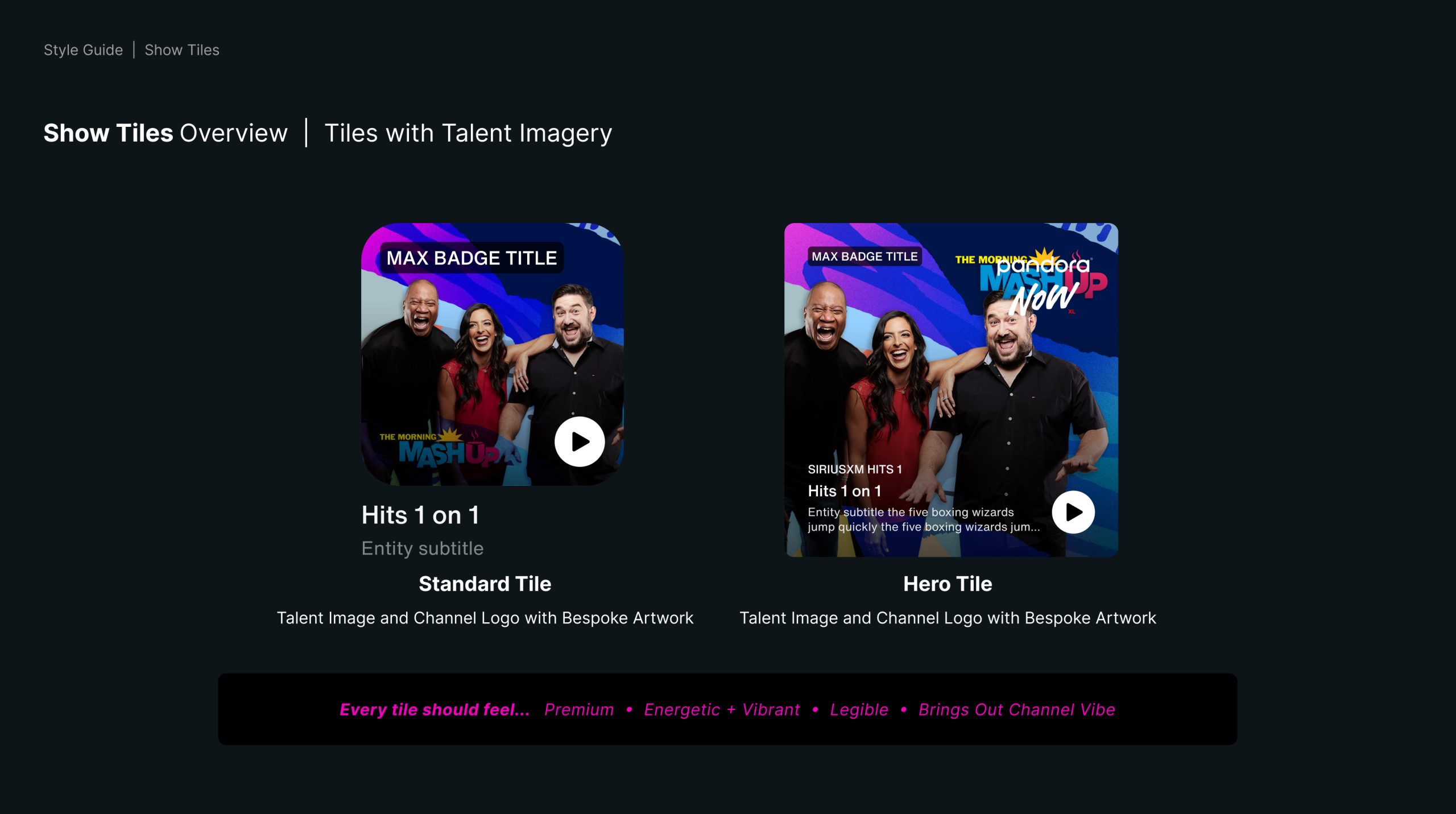
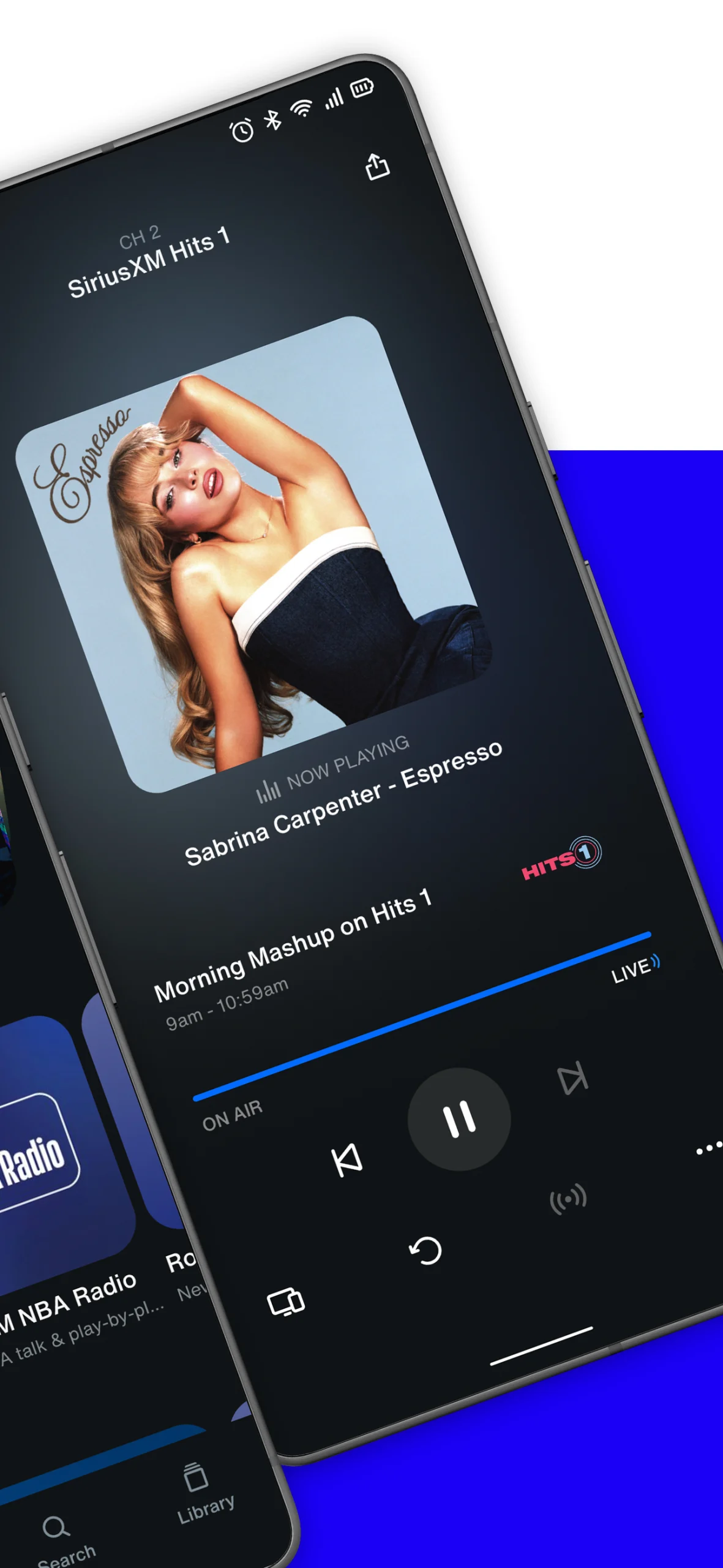
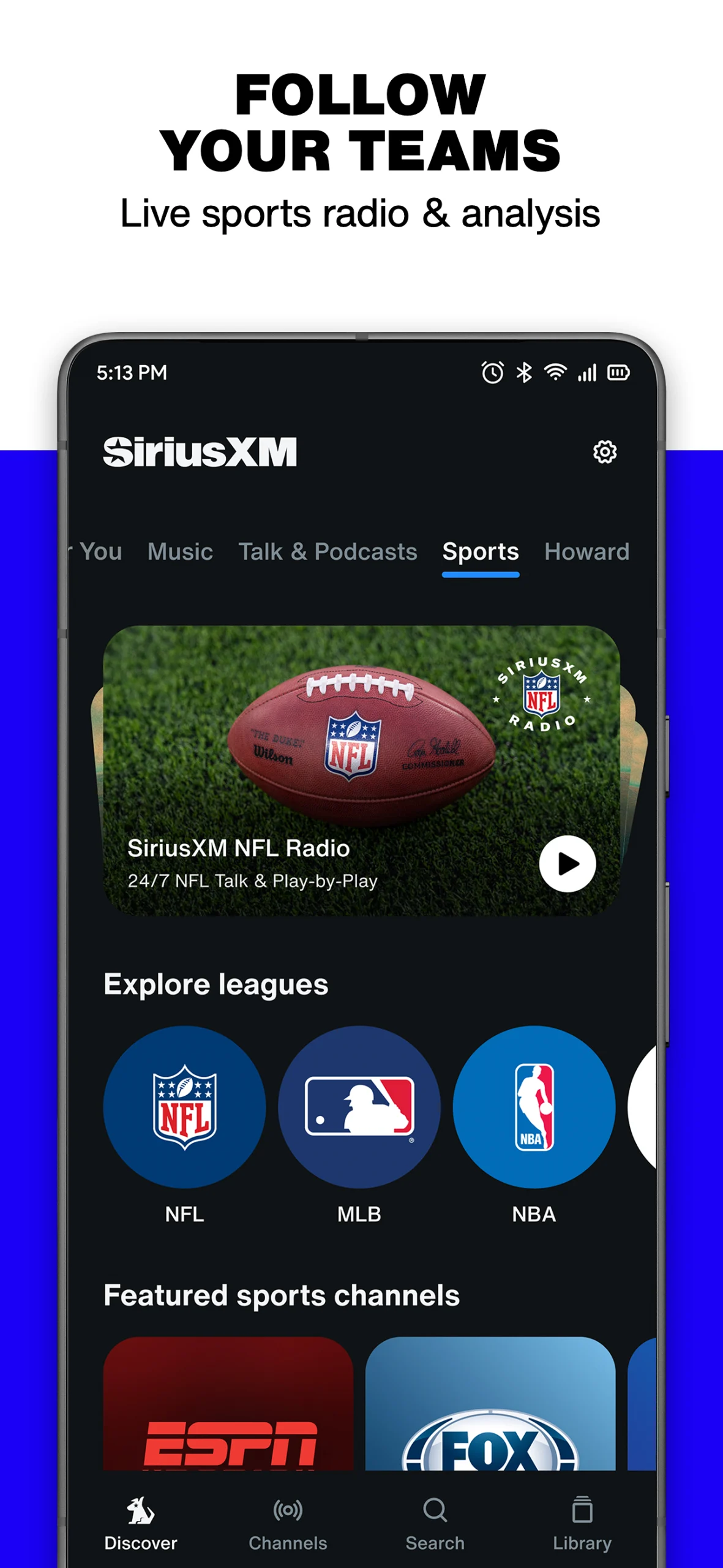
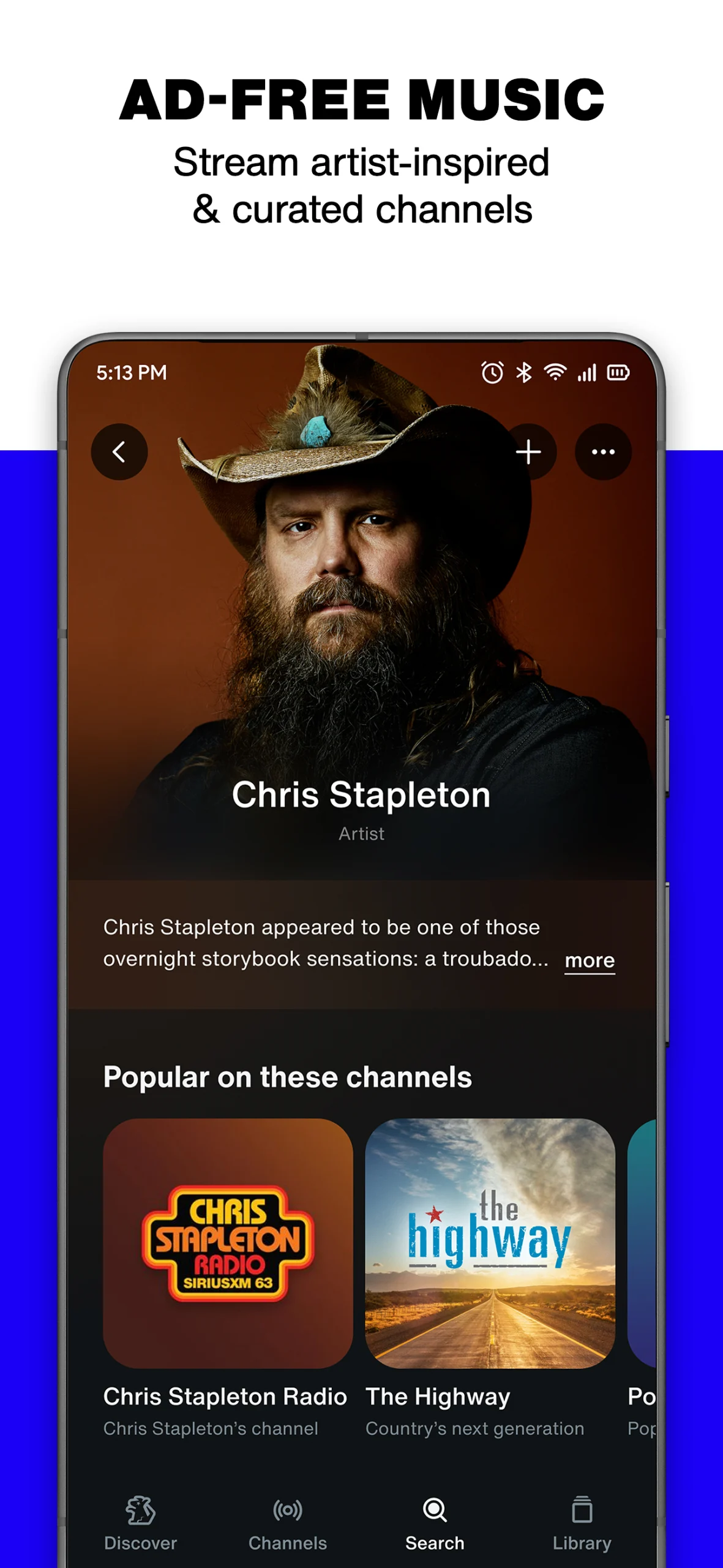
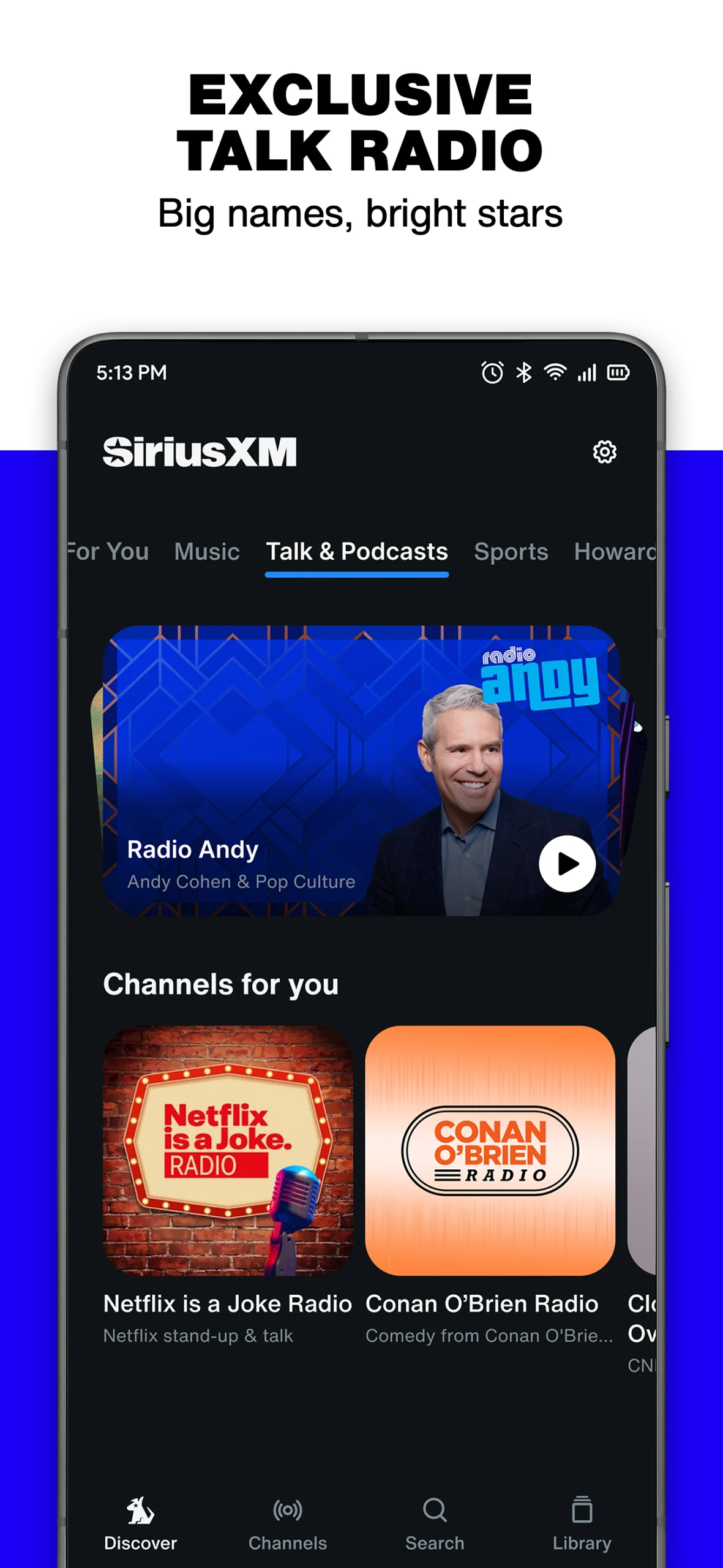
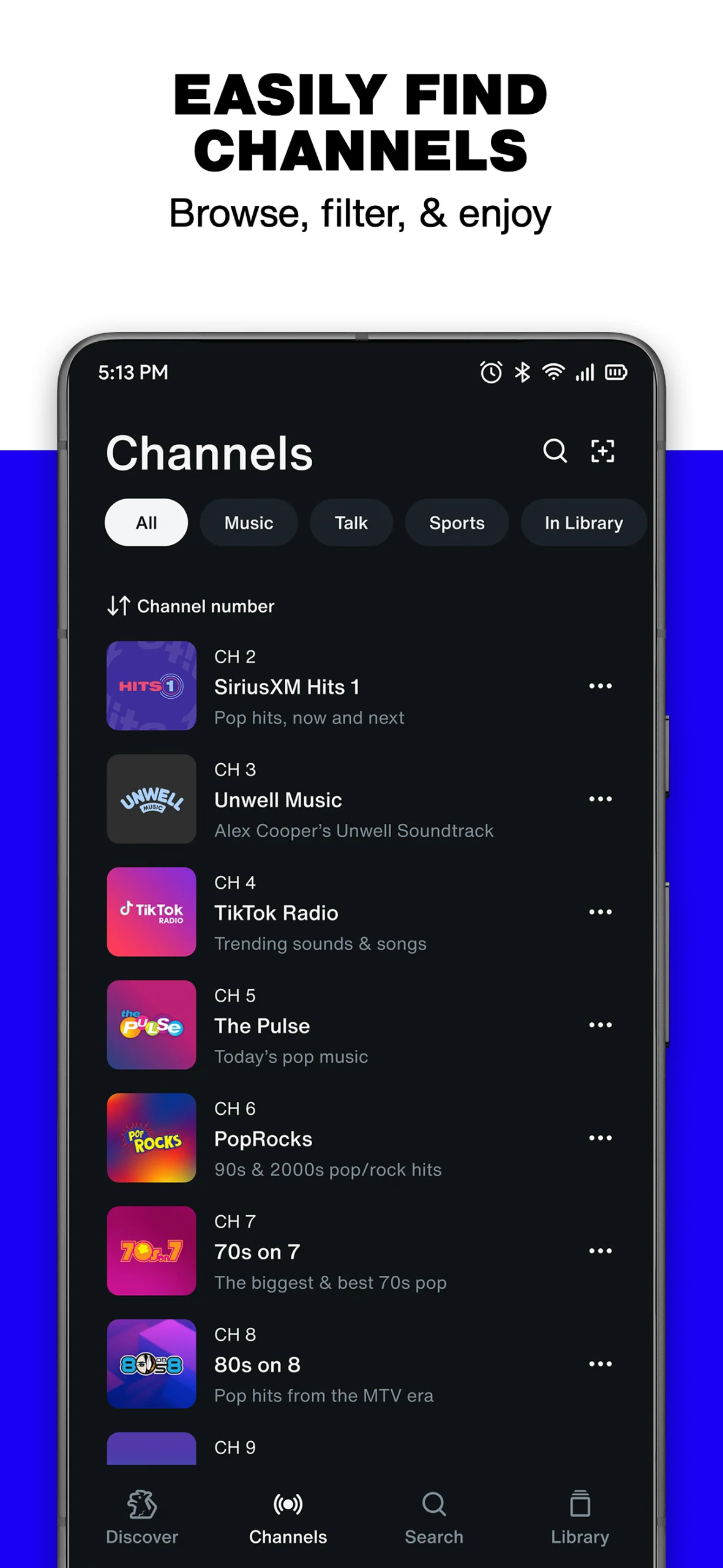
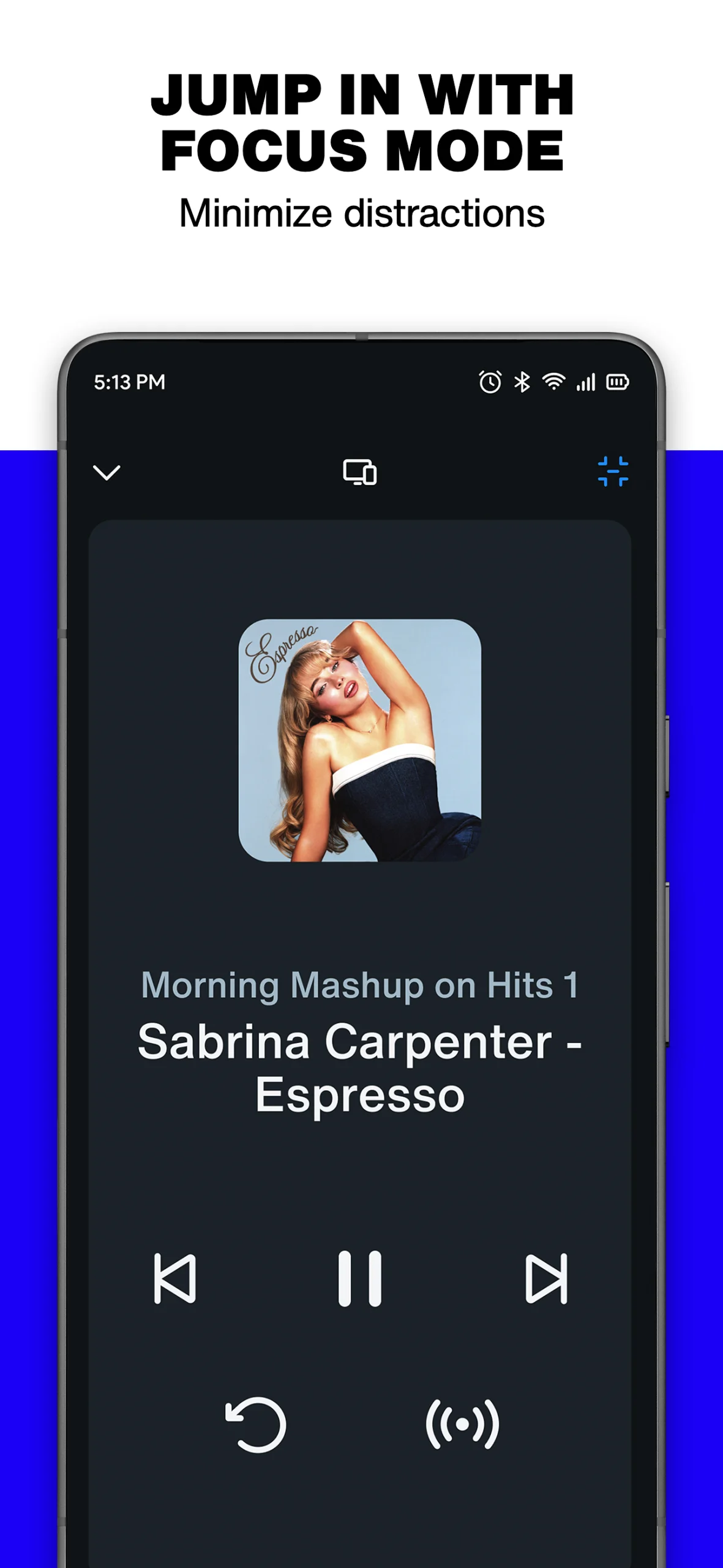
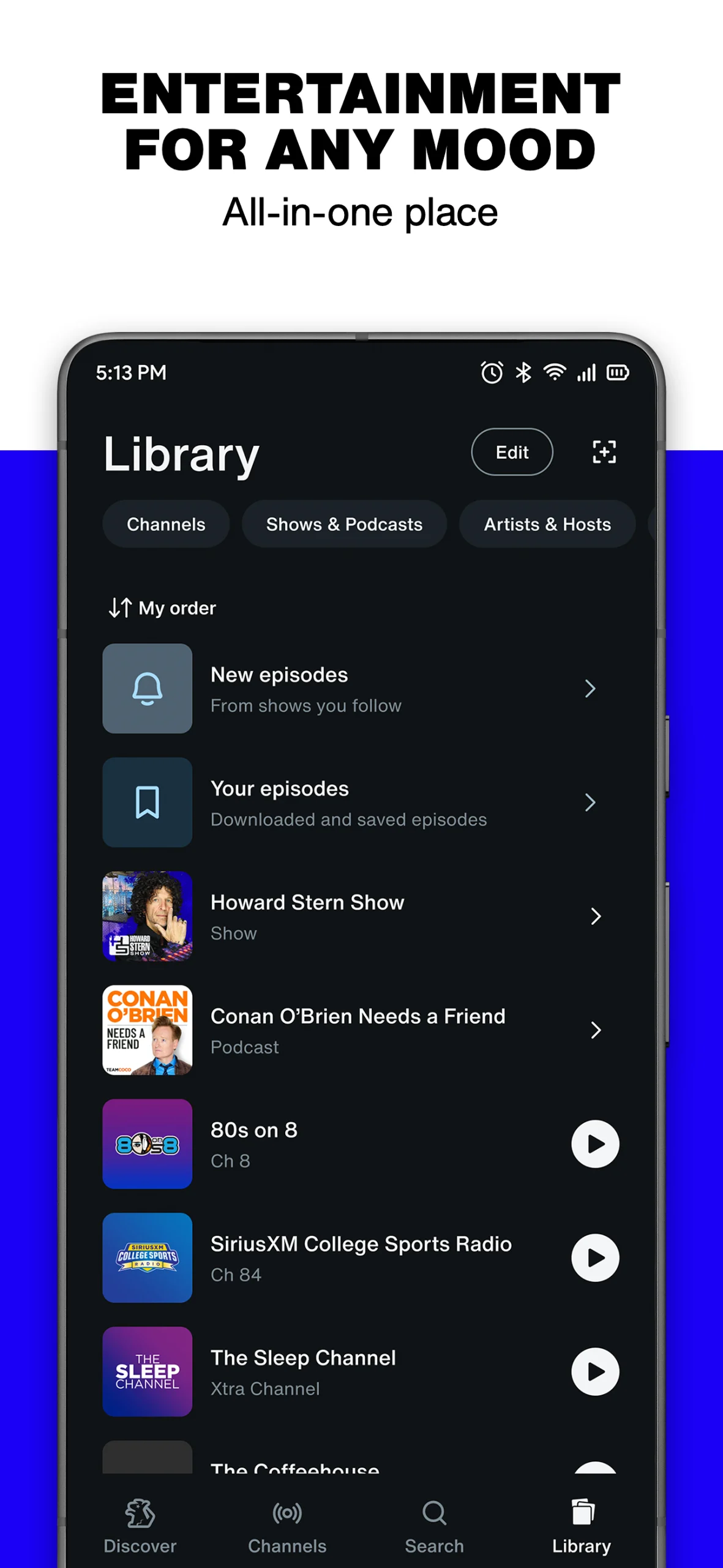
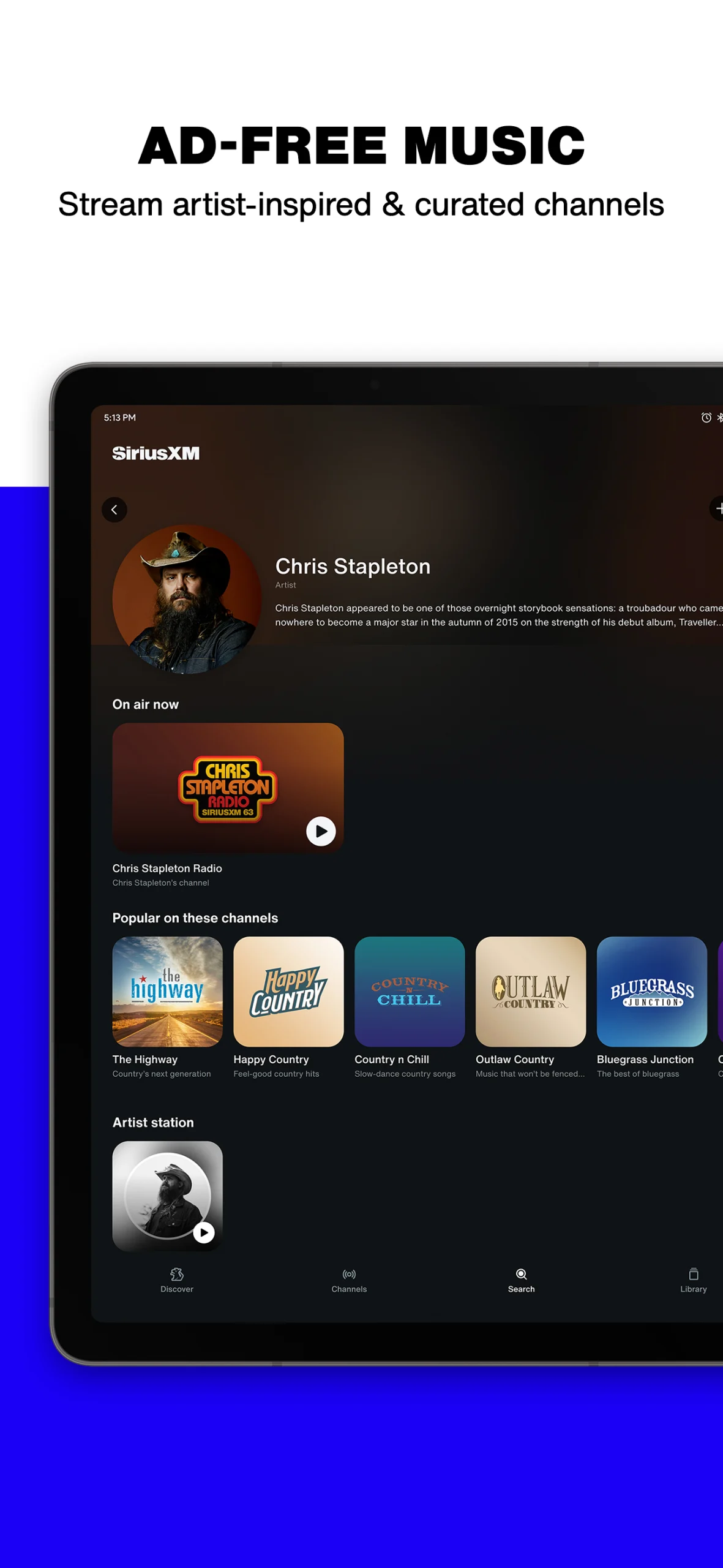
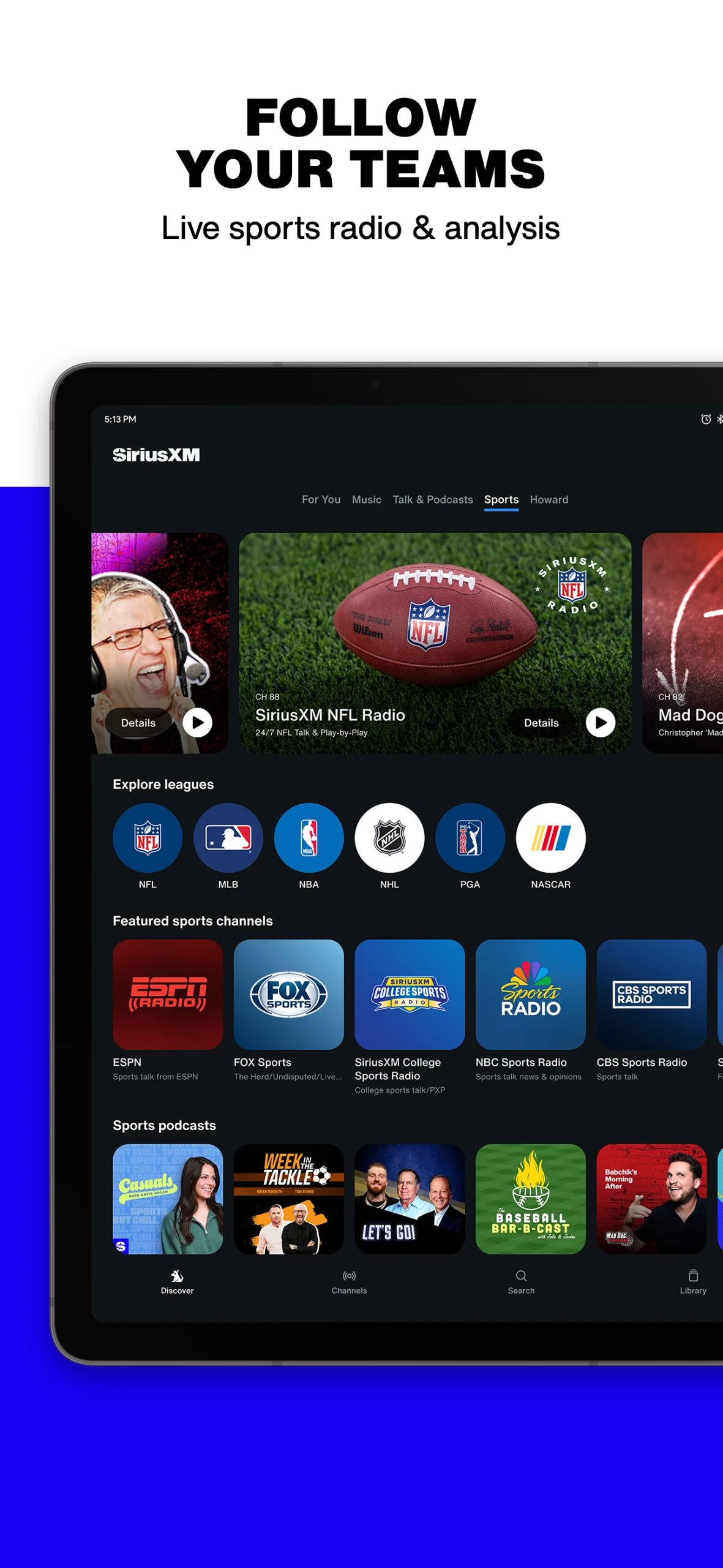
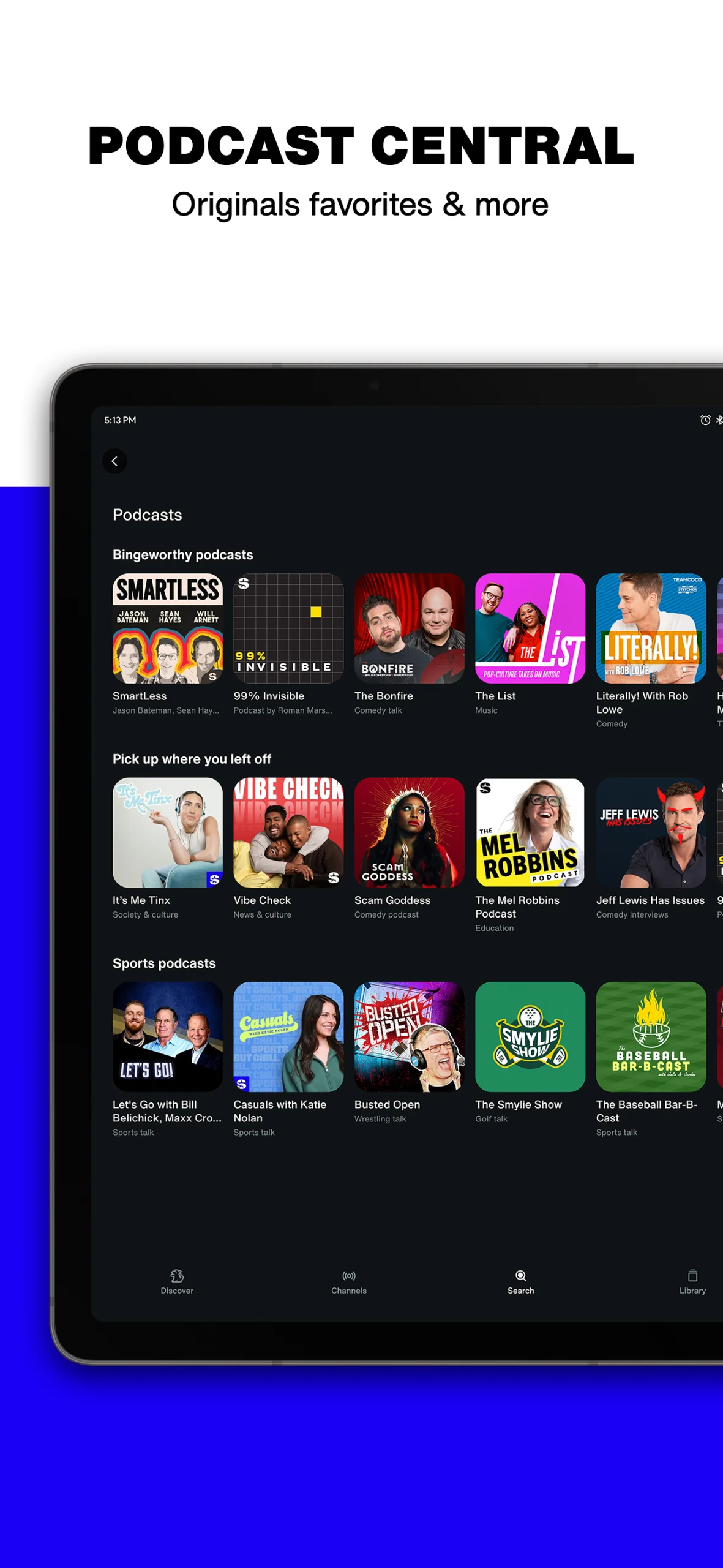
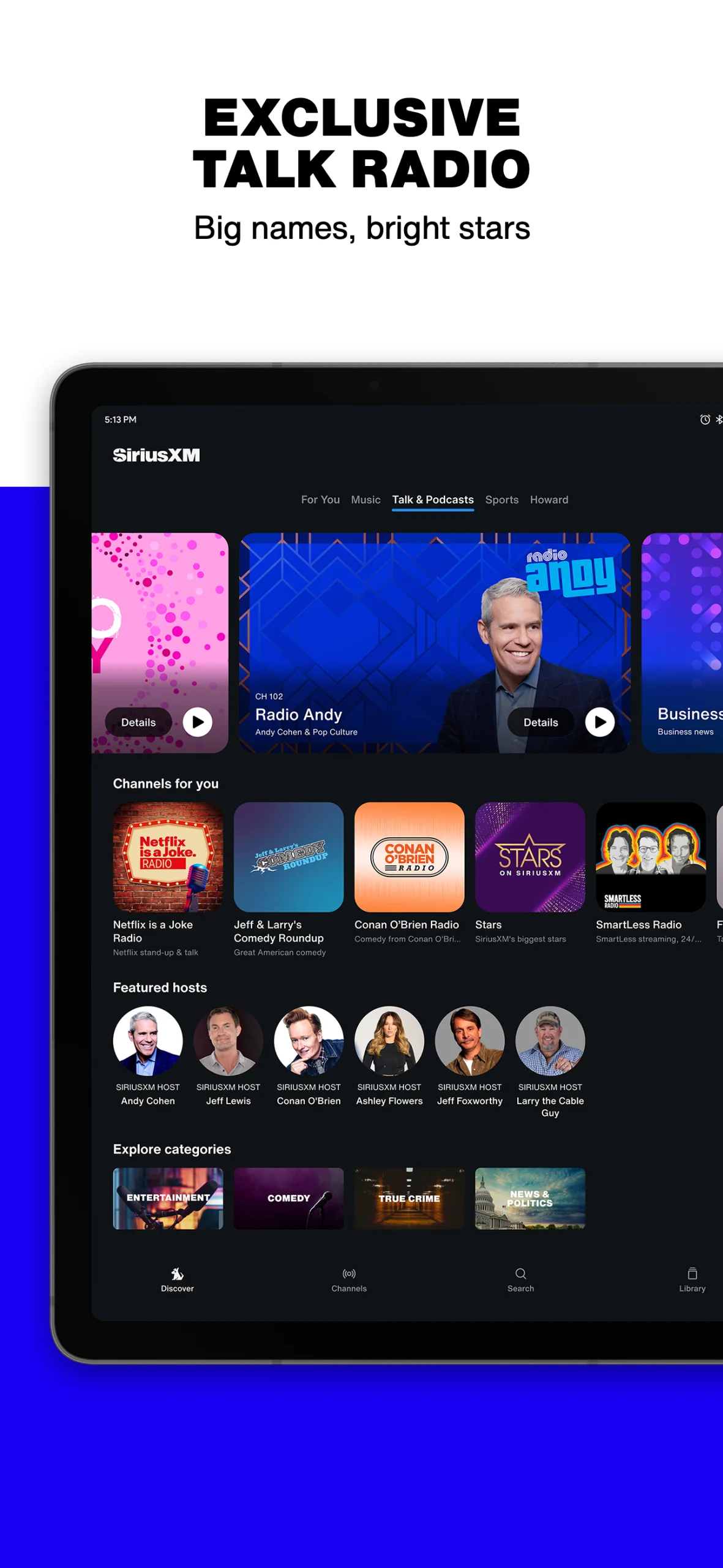
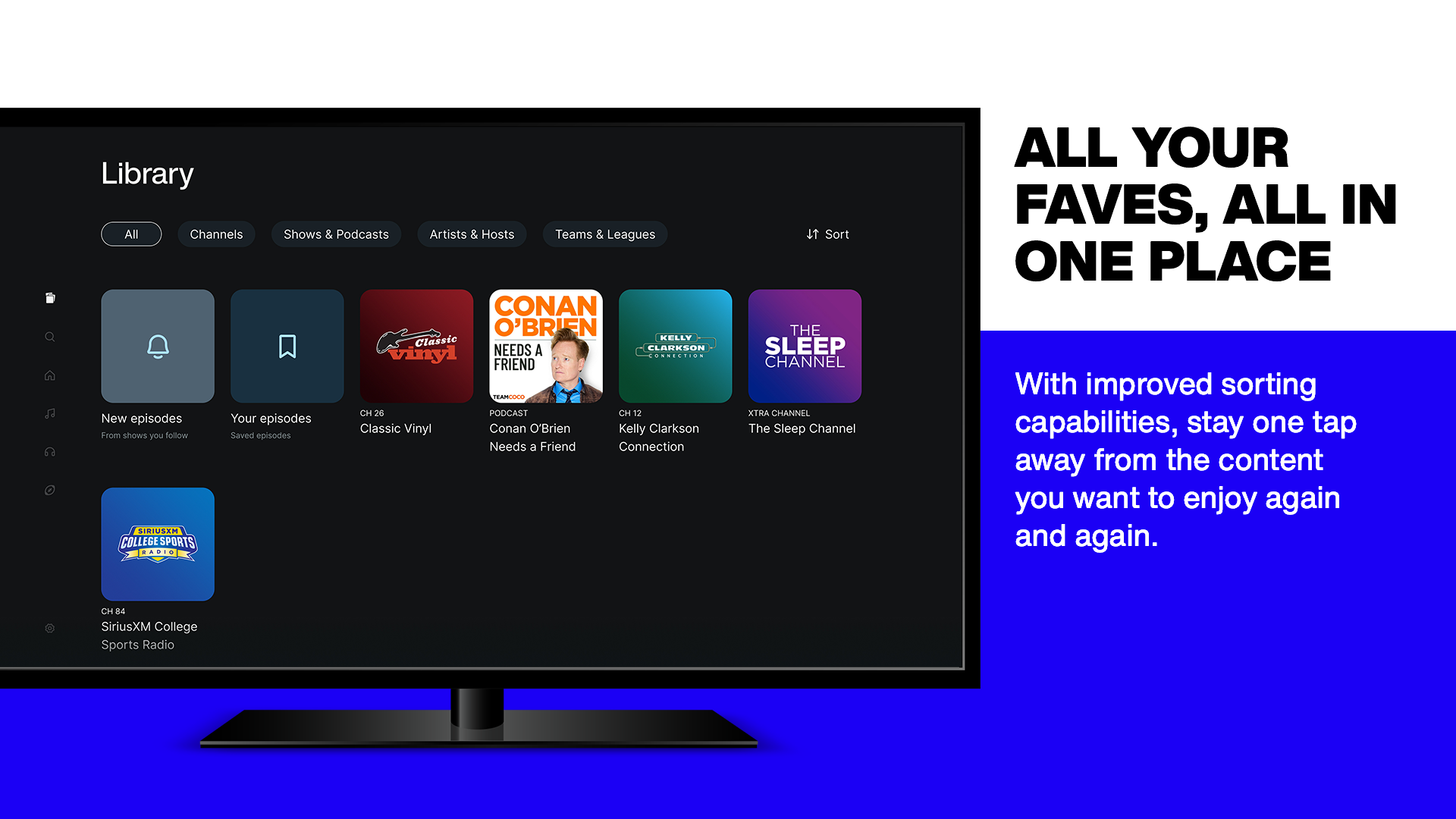
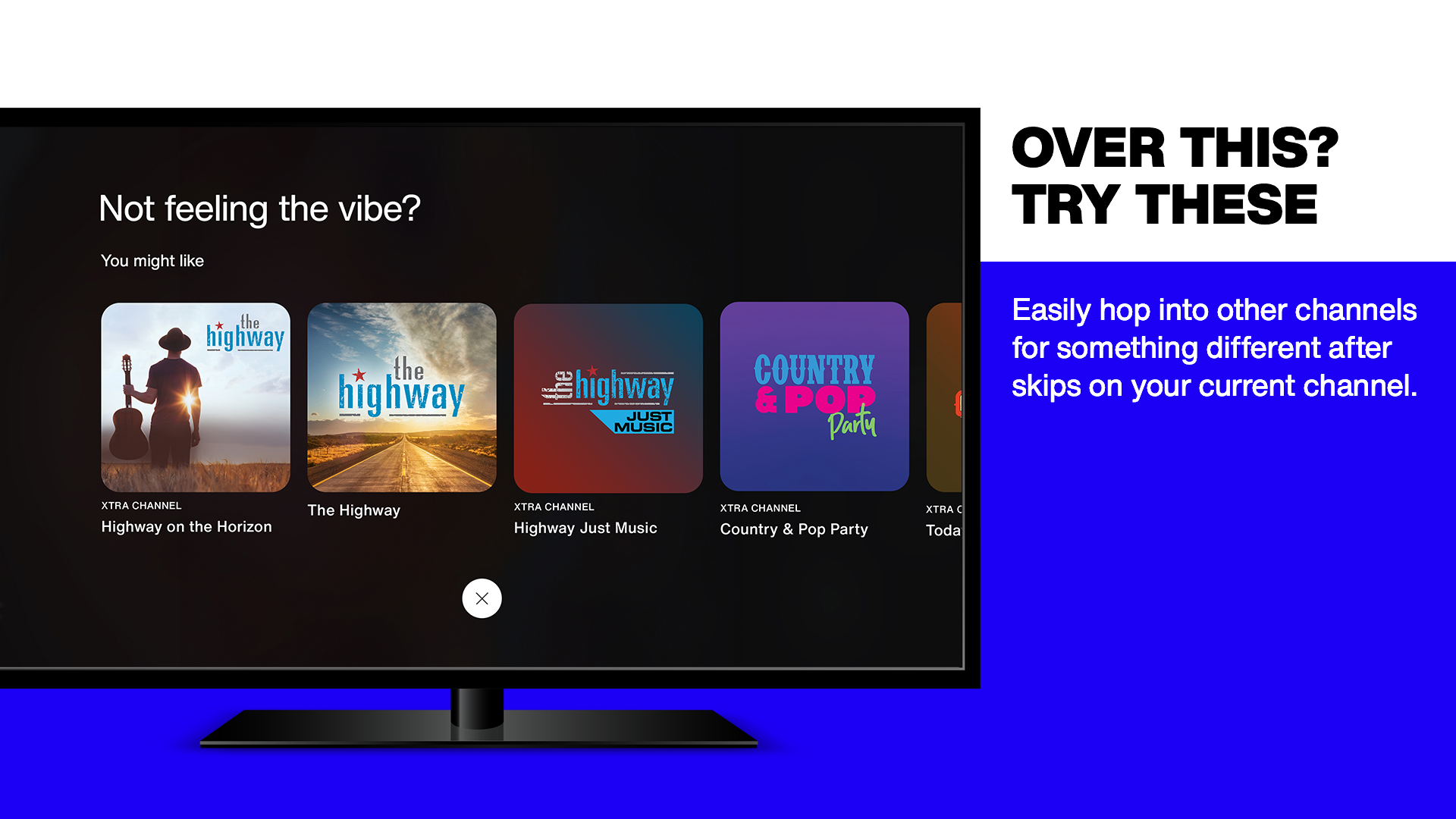
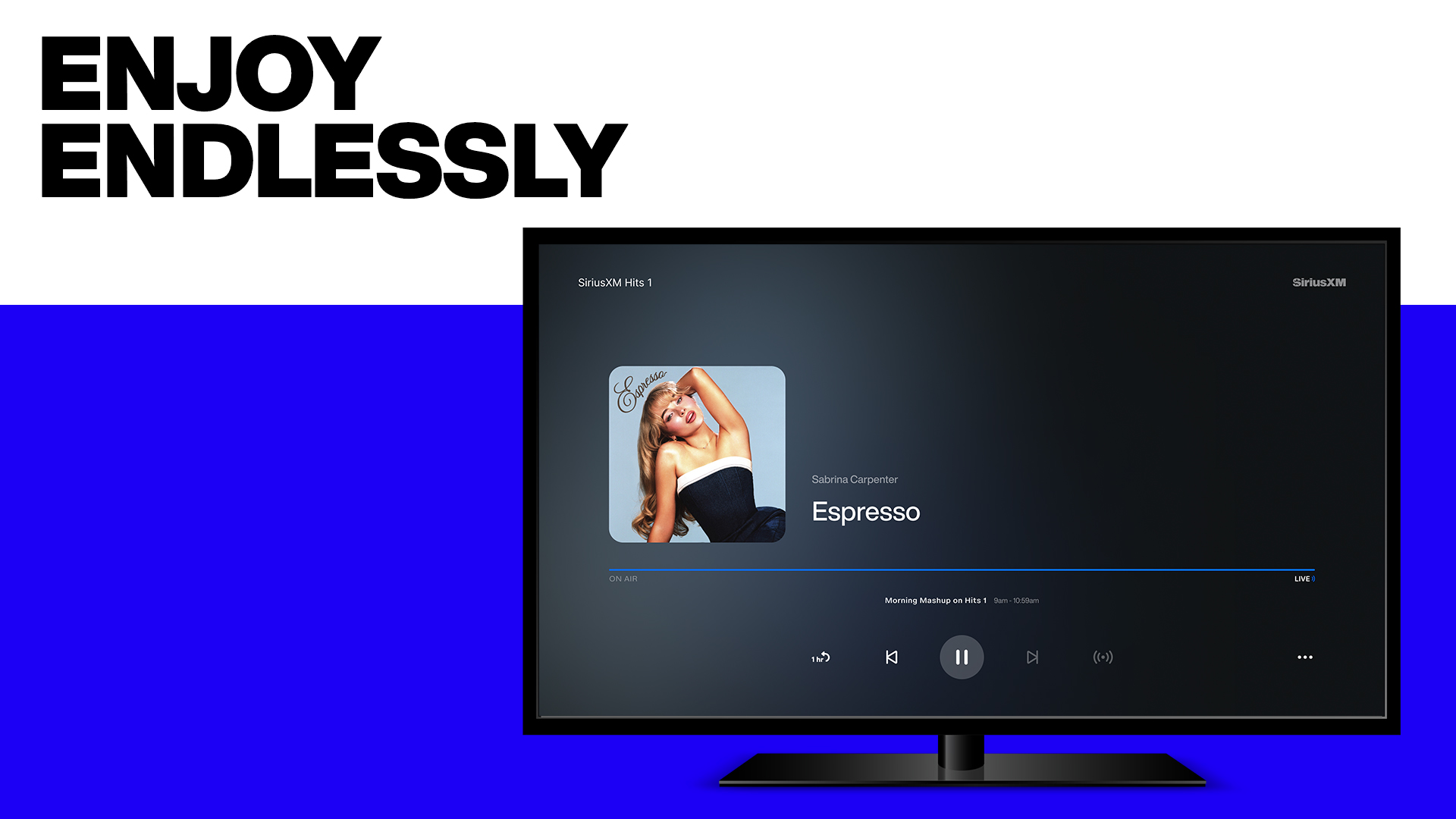
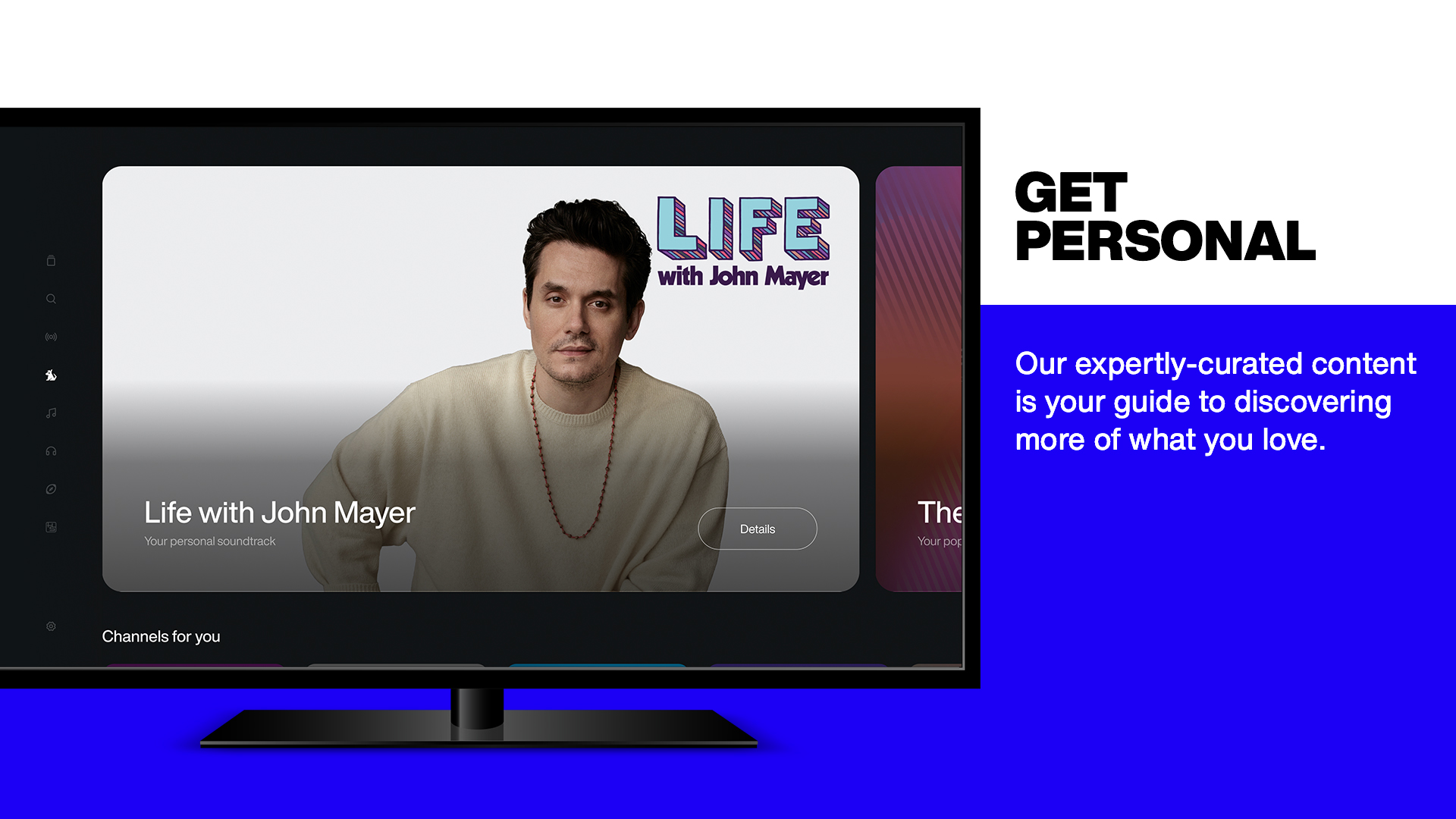
Therum developed a system led design framework for SiriusXM informed by deep market research and competitive analysis. We studied how peer platforms communicate their brand and structure content across large scale media ecosystems. This included examining how competitors present audio and video content, establish hierarchy, and guide users through complex libraries. These insights shaped a framework that unified content types, media formats, and visual styles across SiriusXM’s digital experience. The goal was to create clarity and consistency at scale without flattening personality or genre expression.
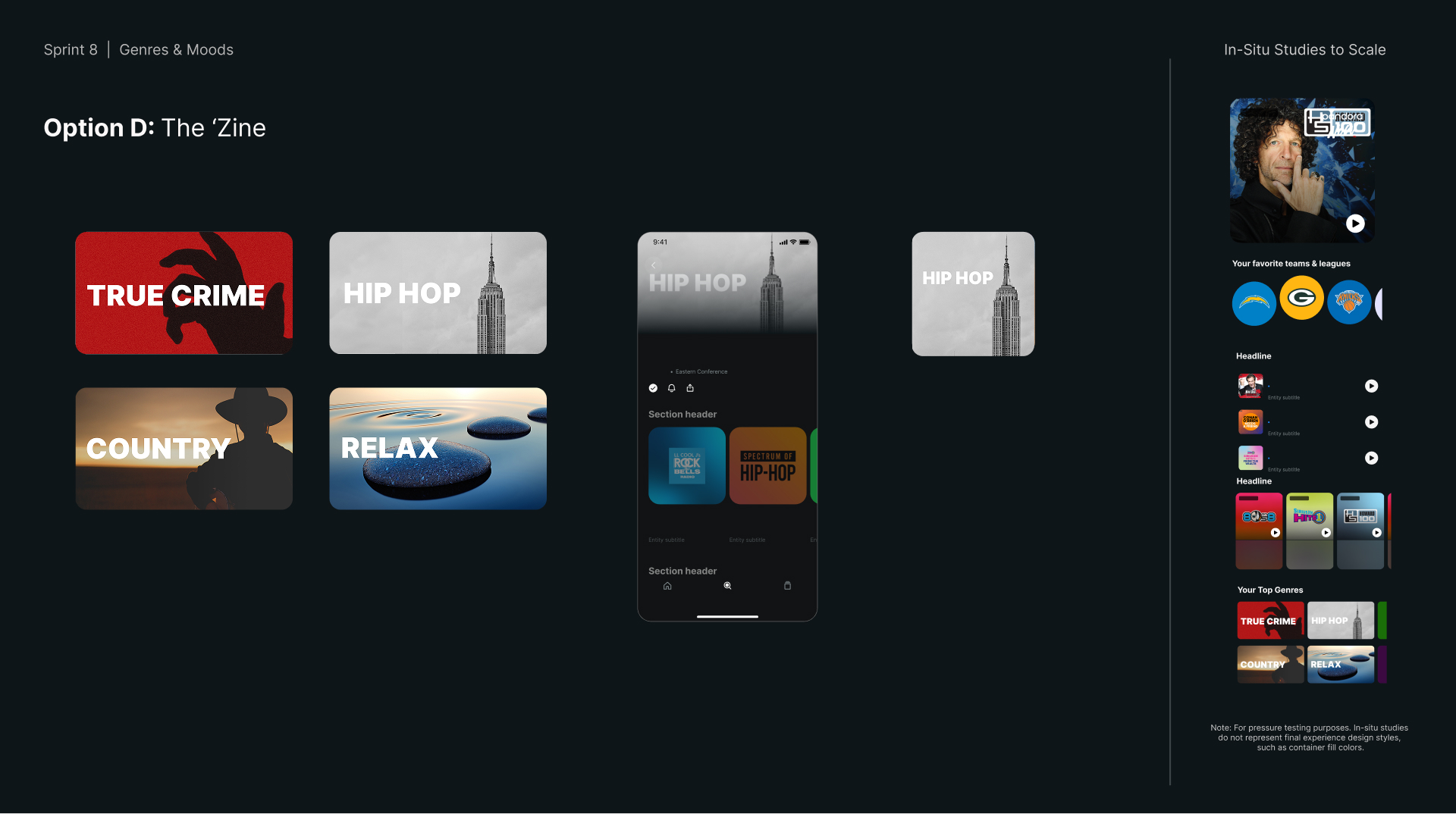
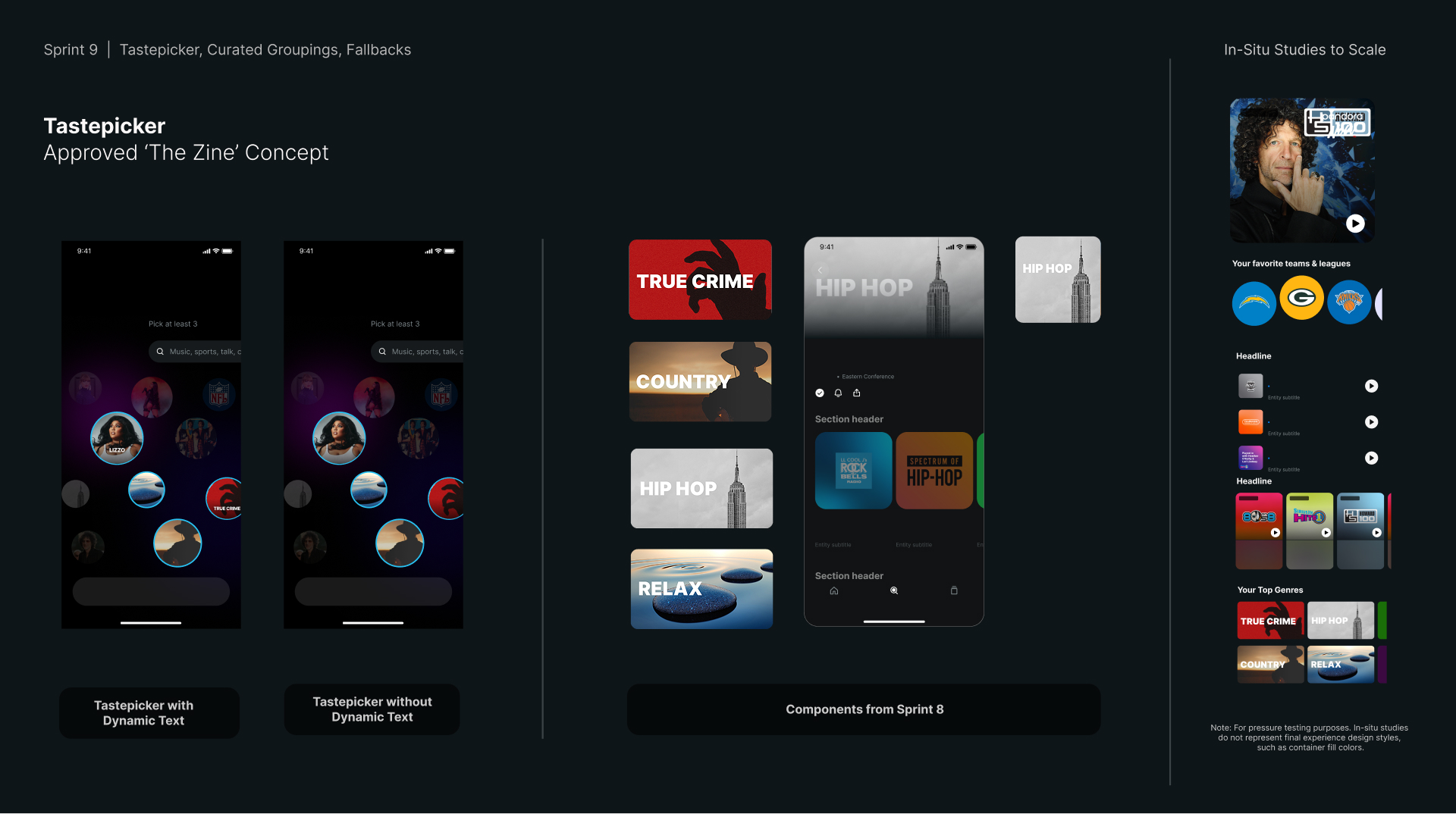
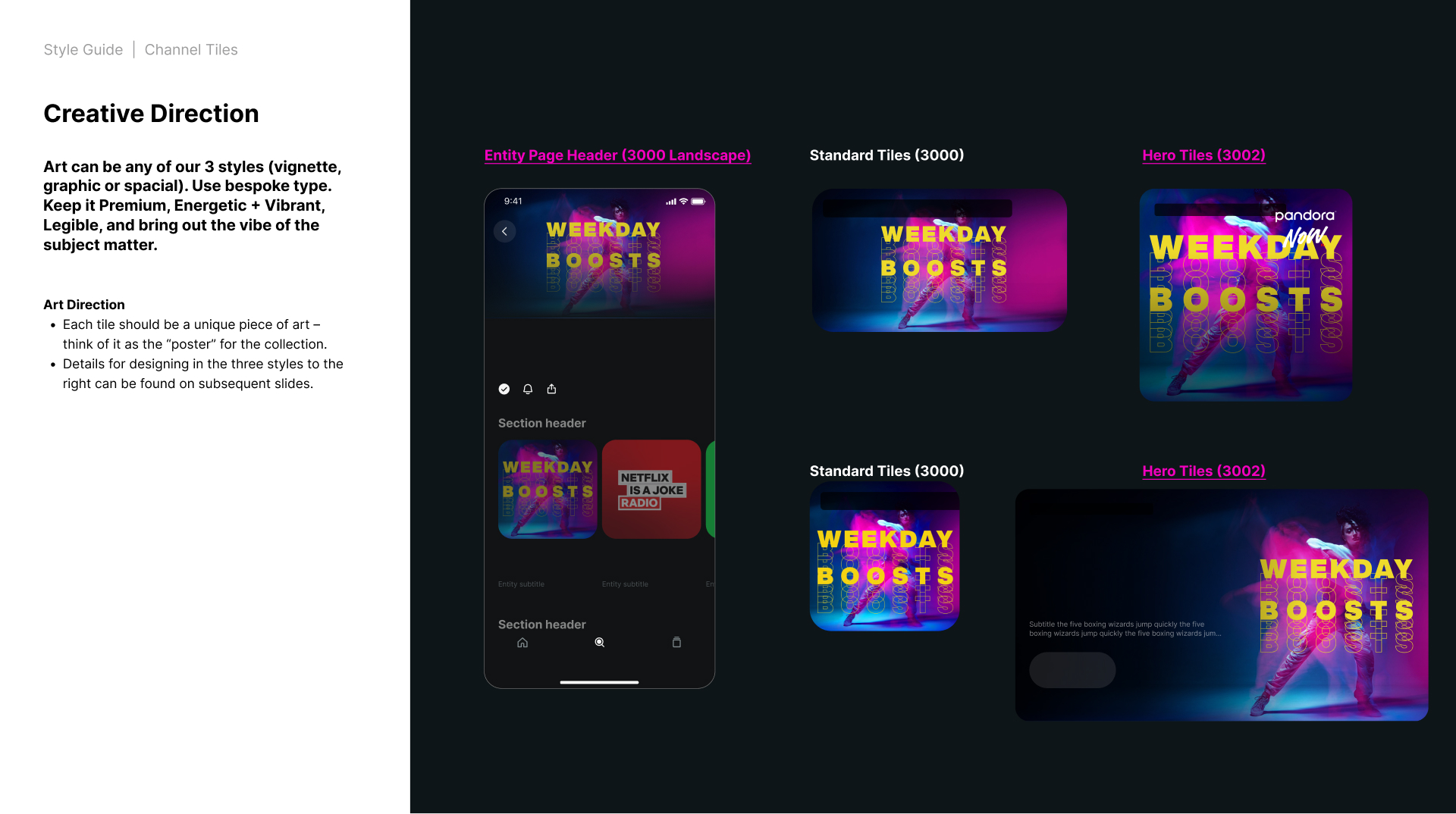
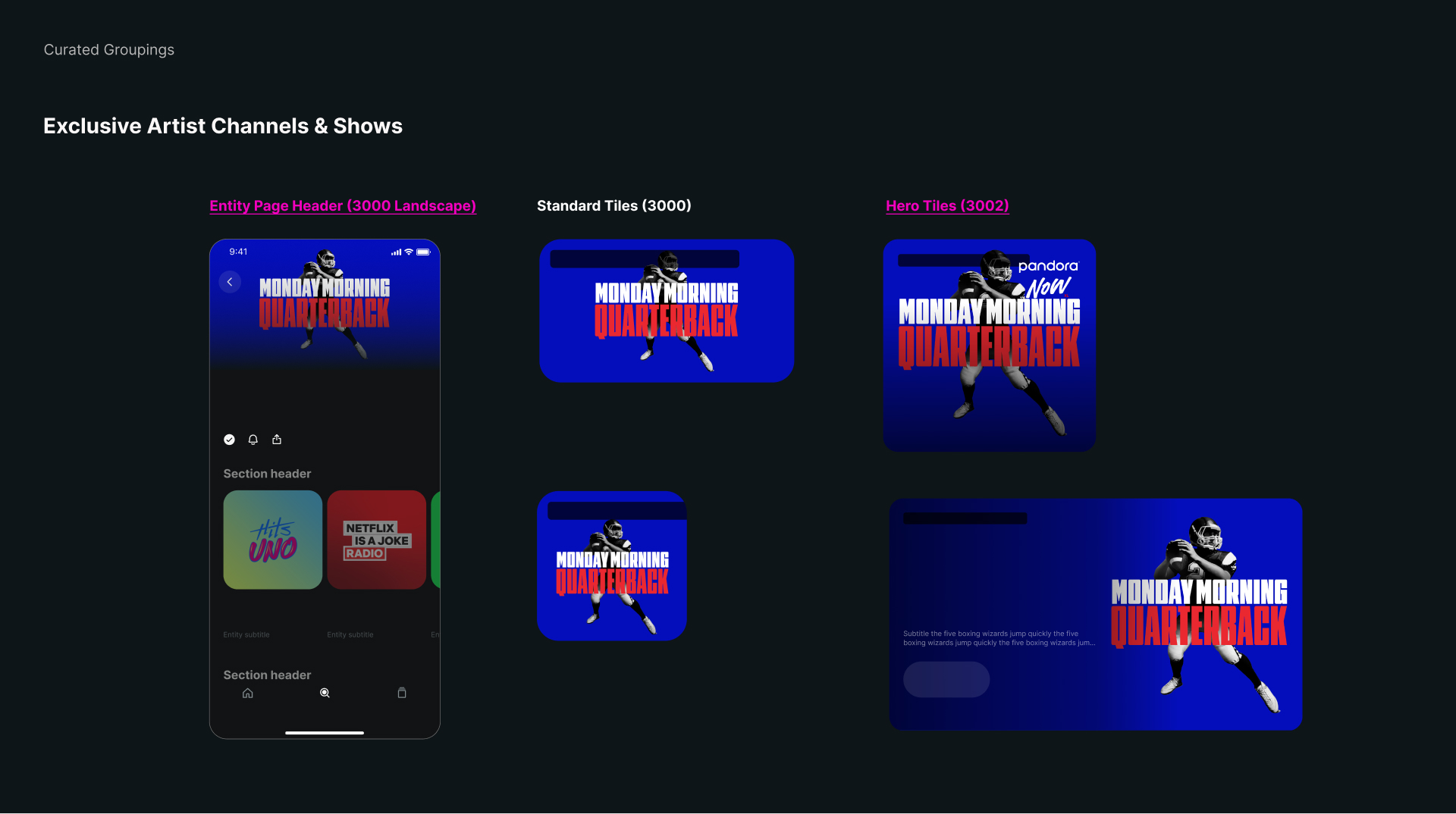
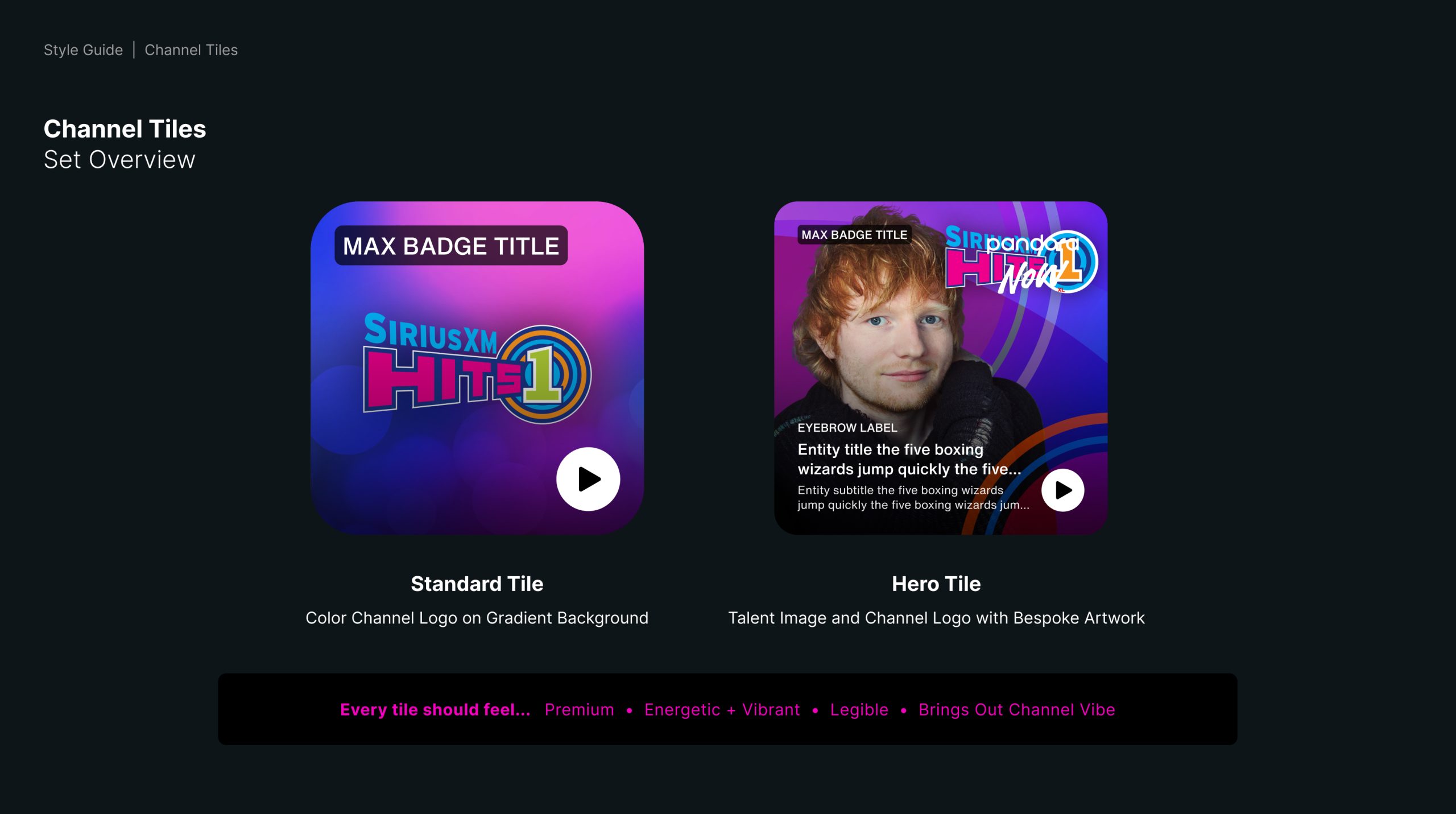
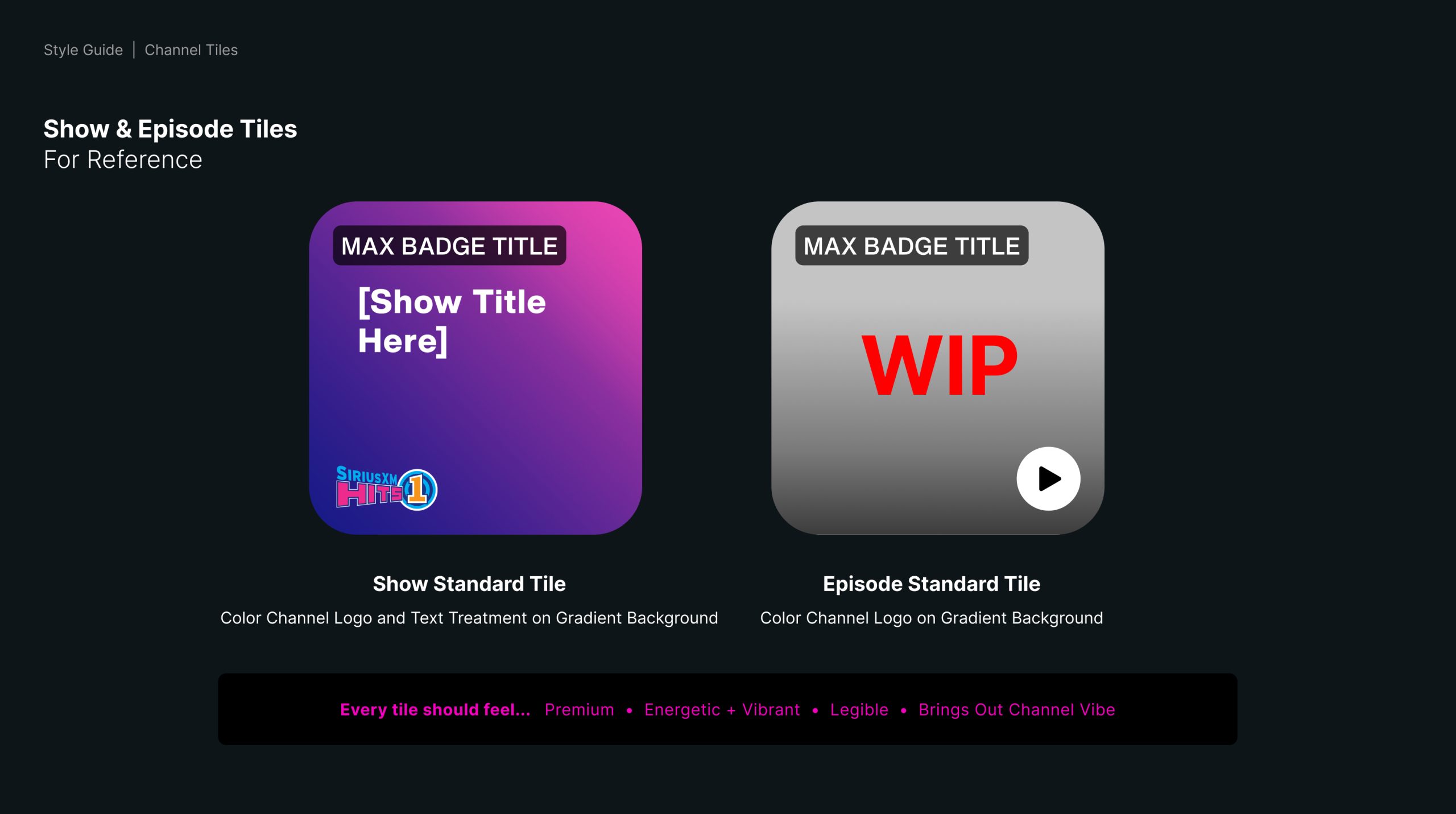
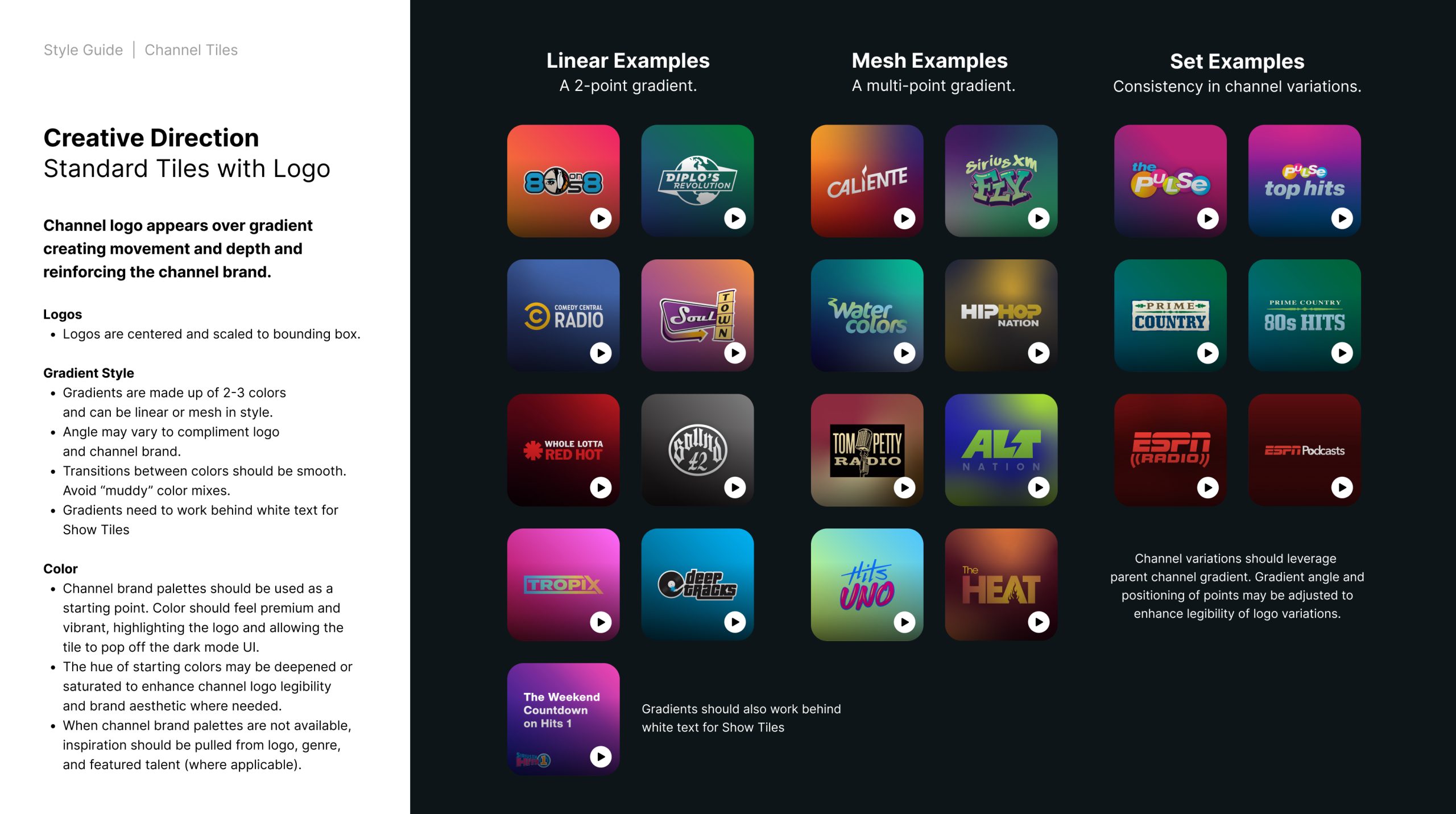
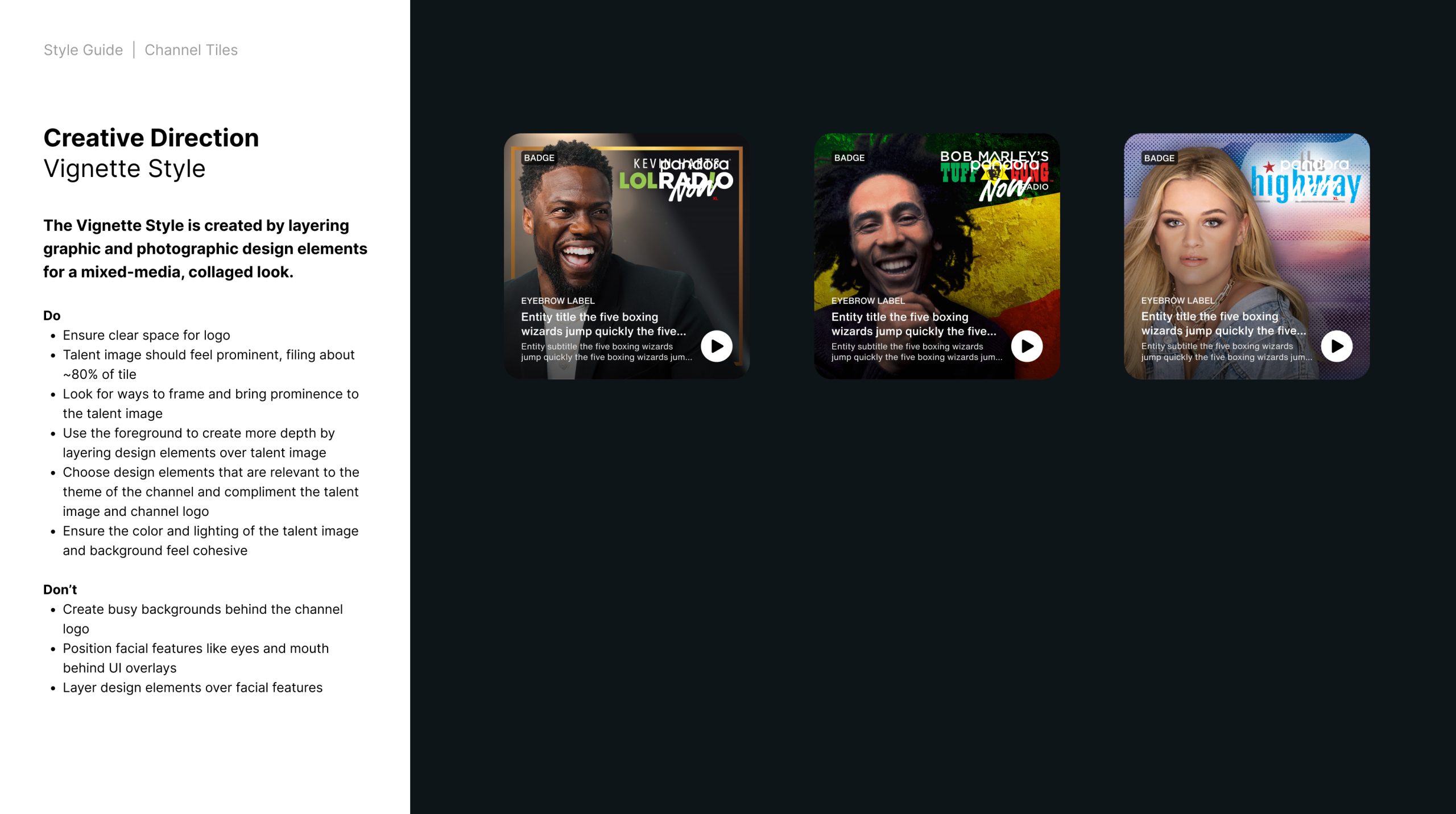
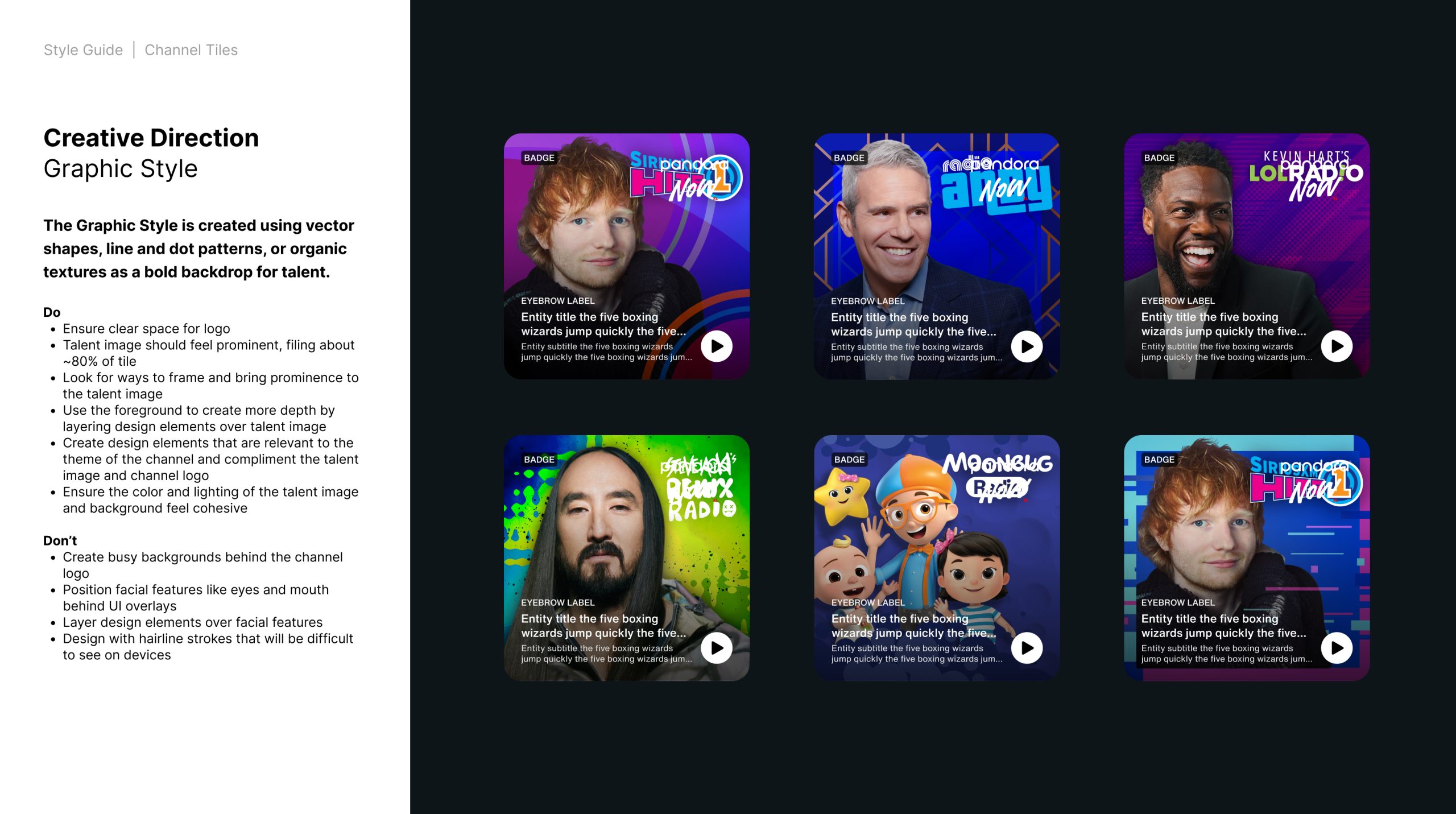
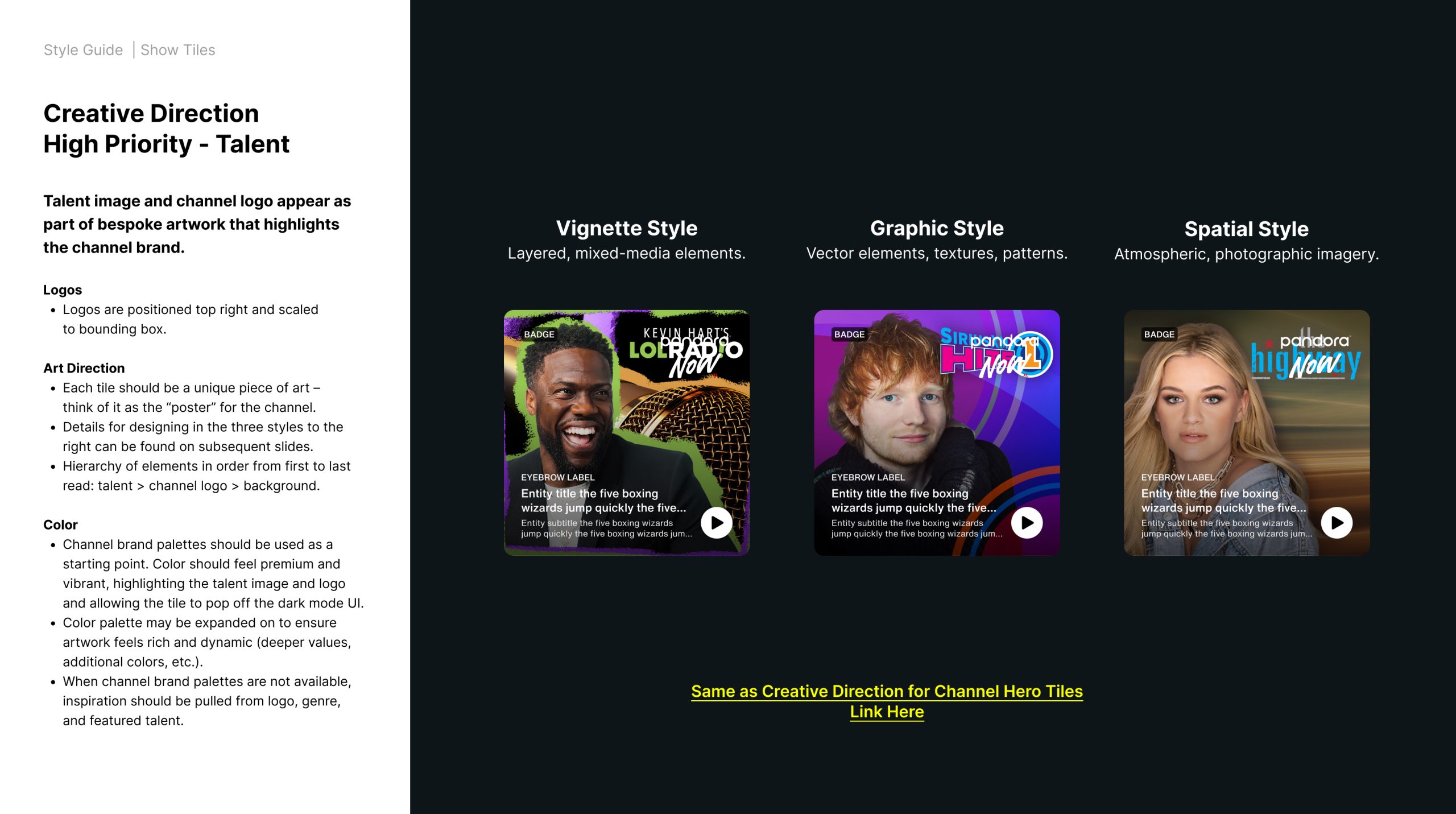
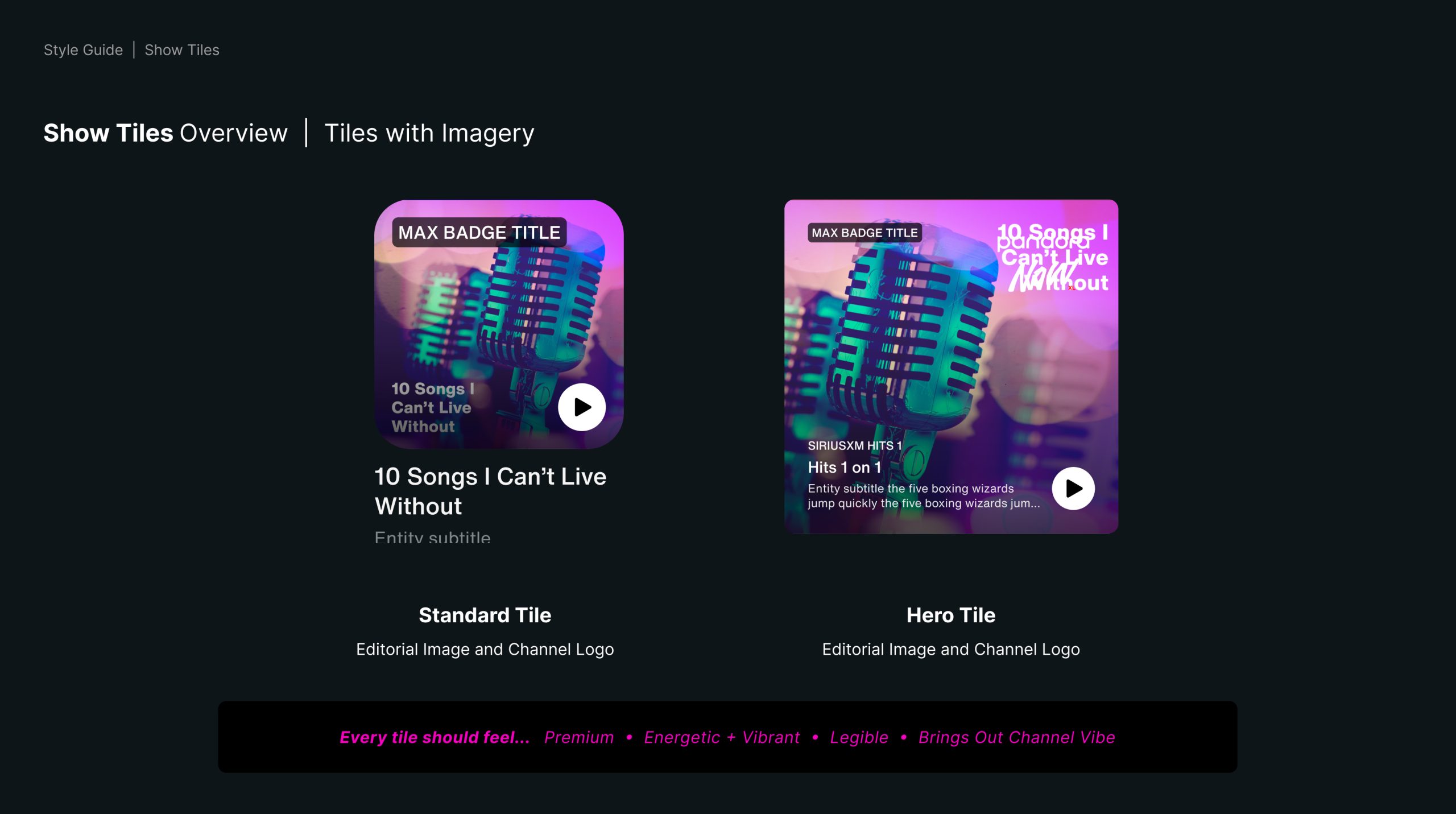
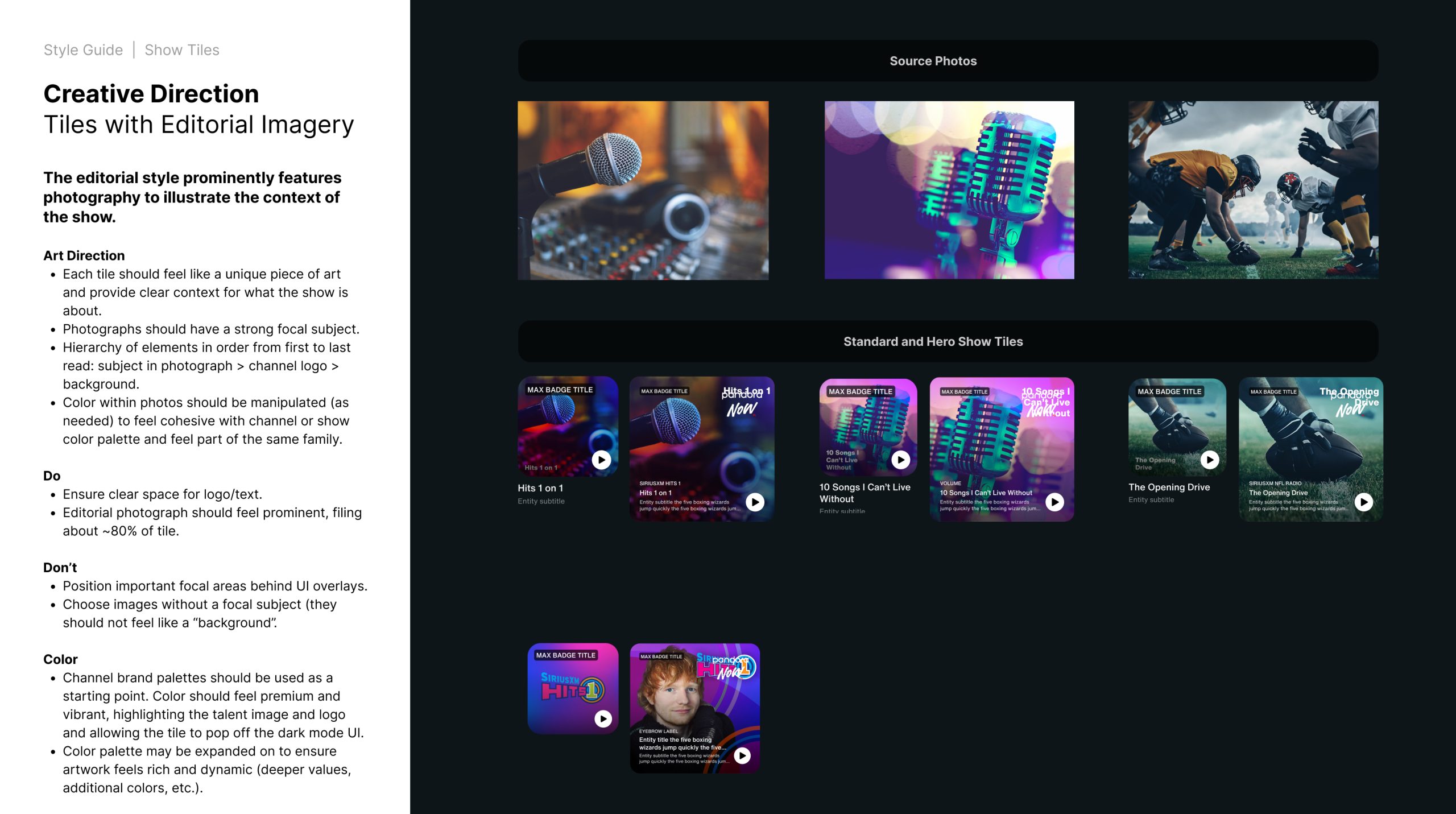
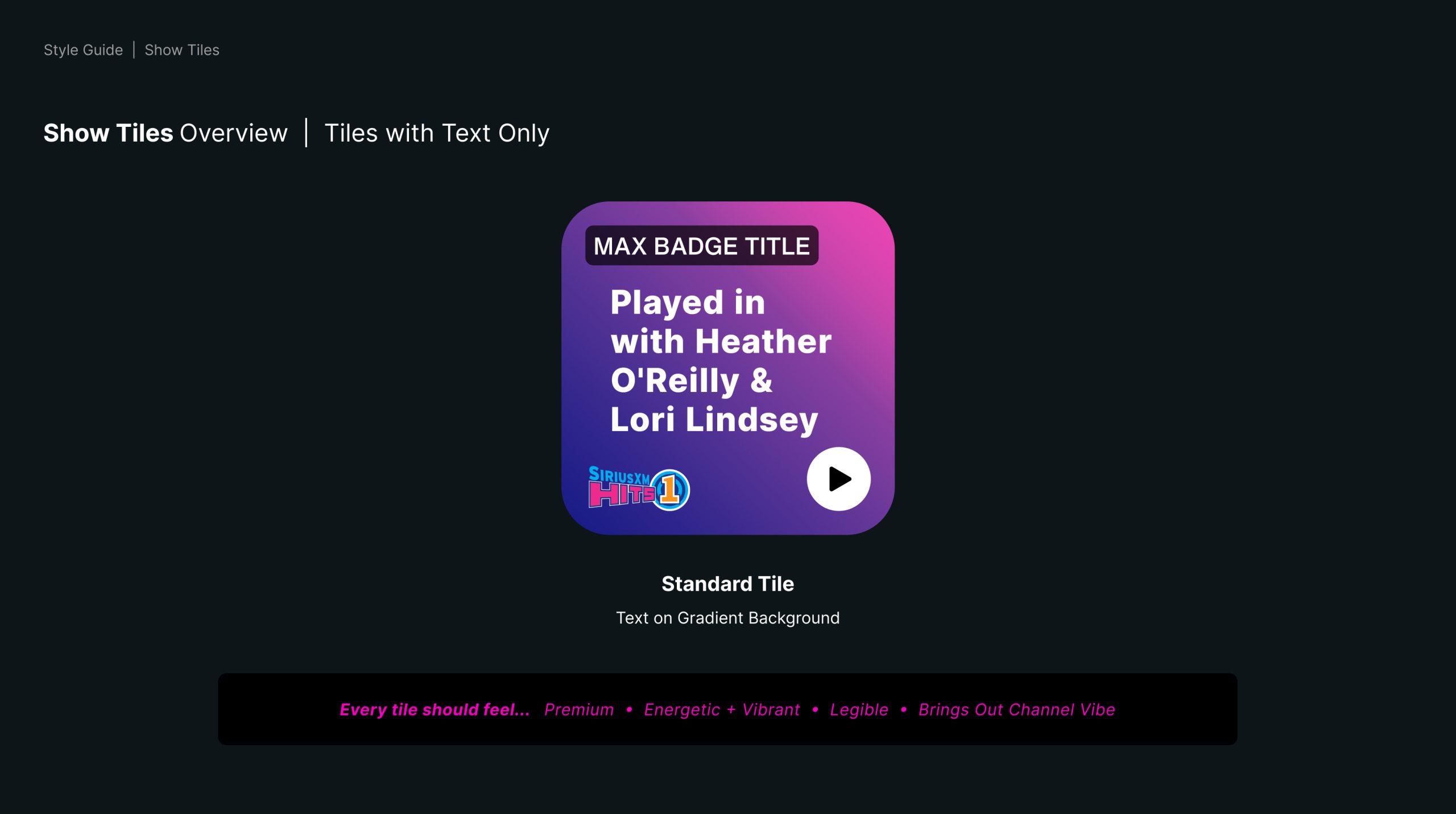
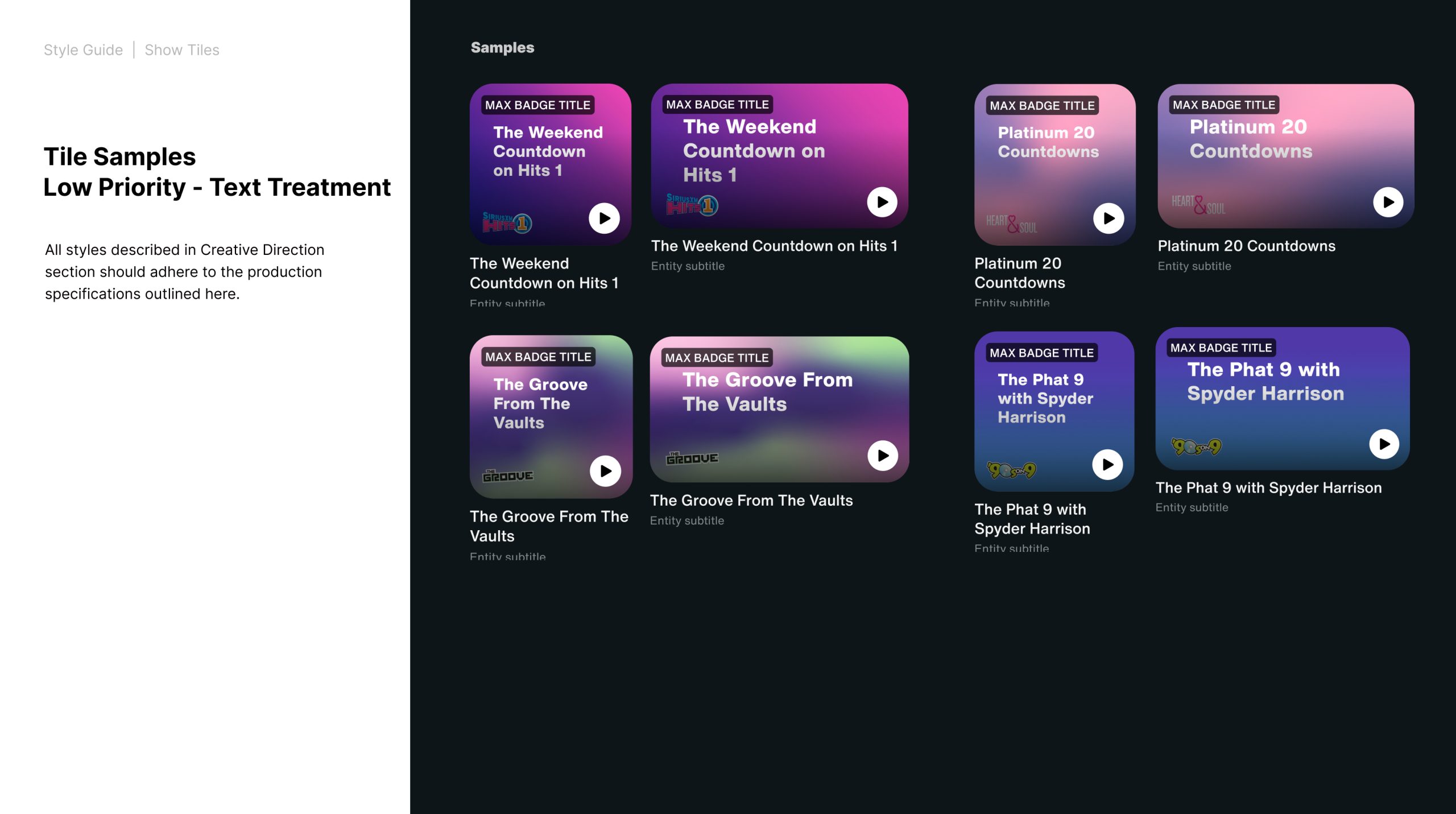
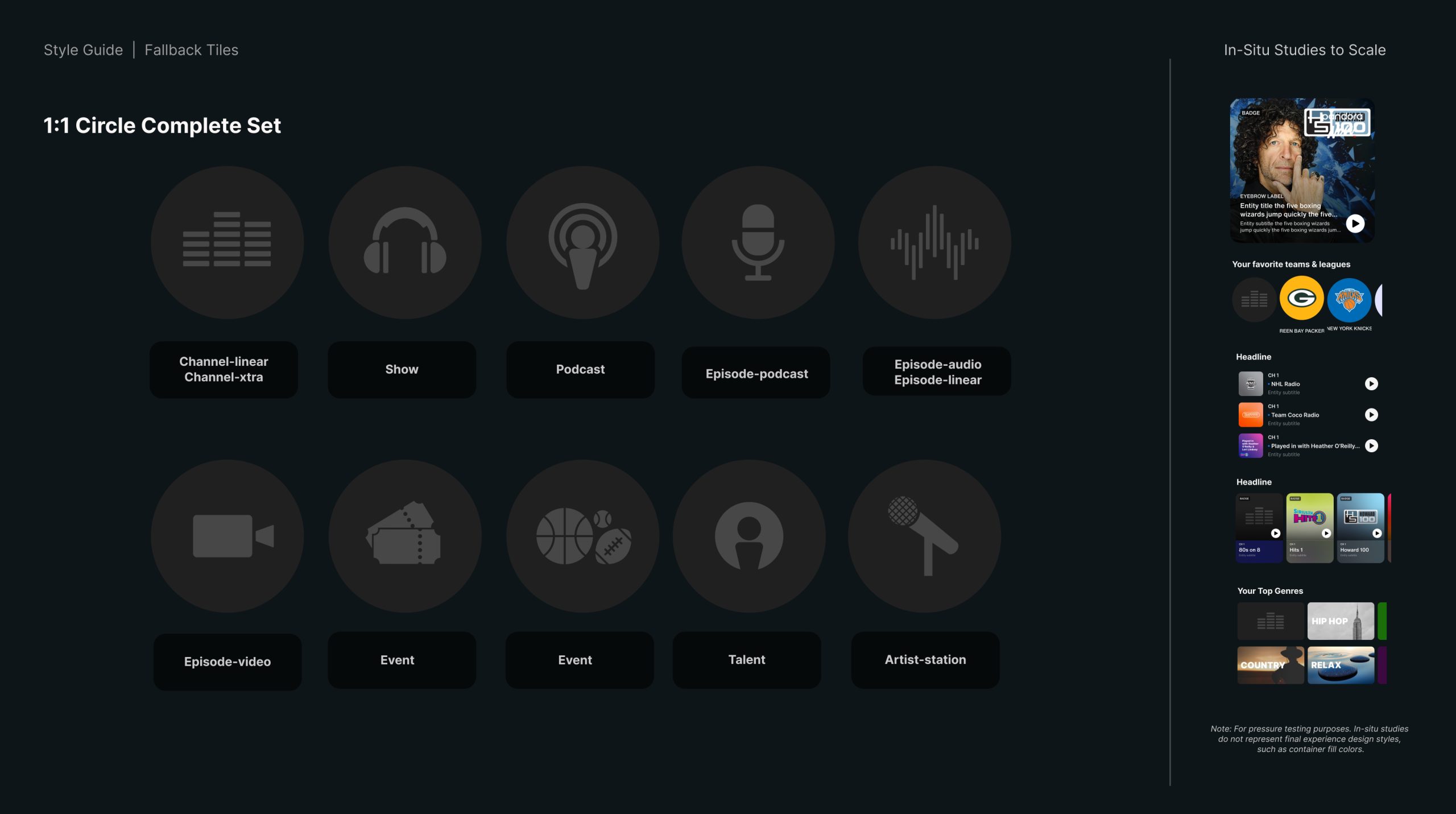
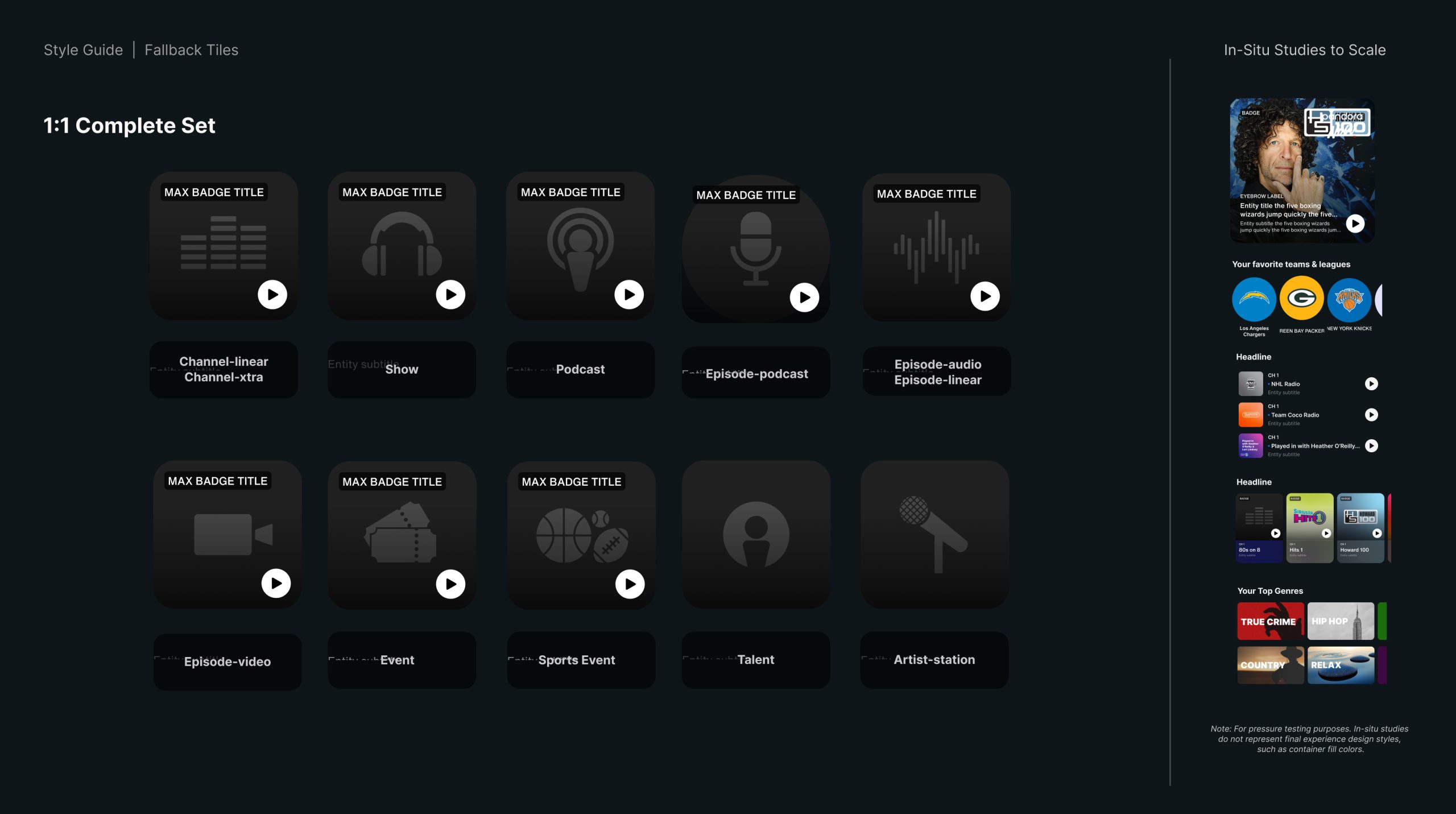
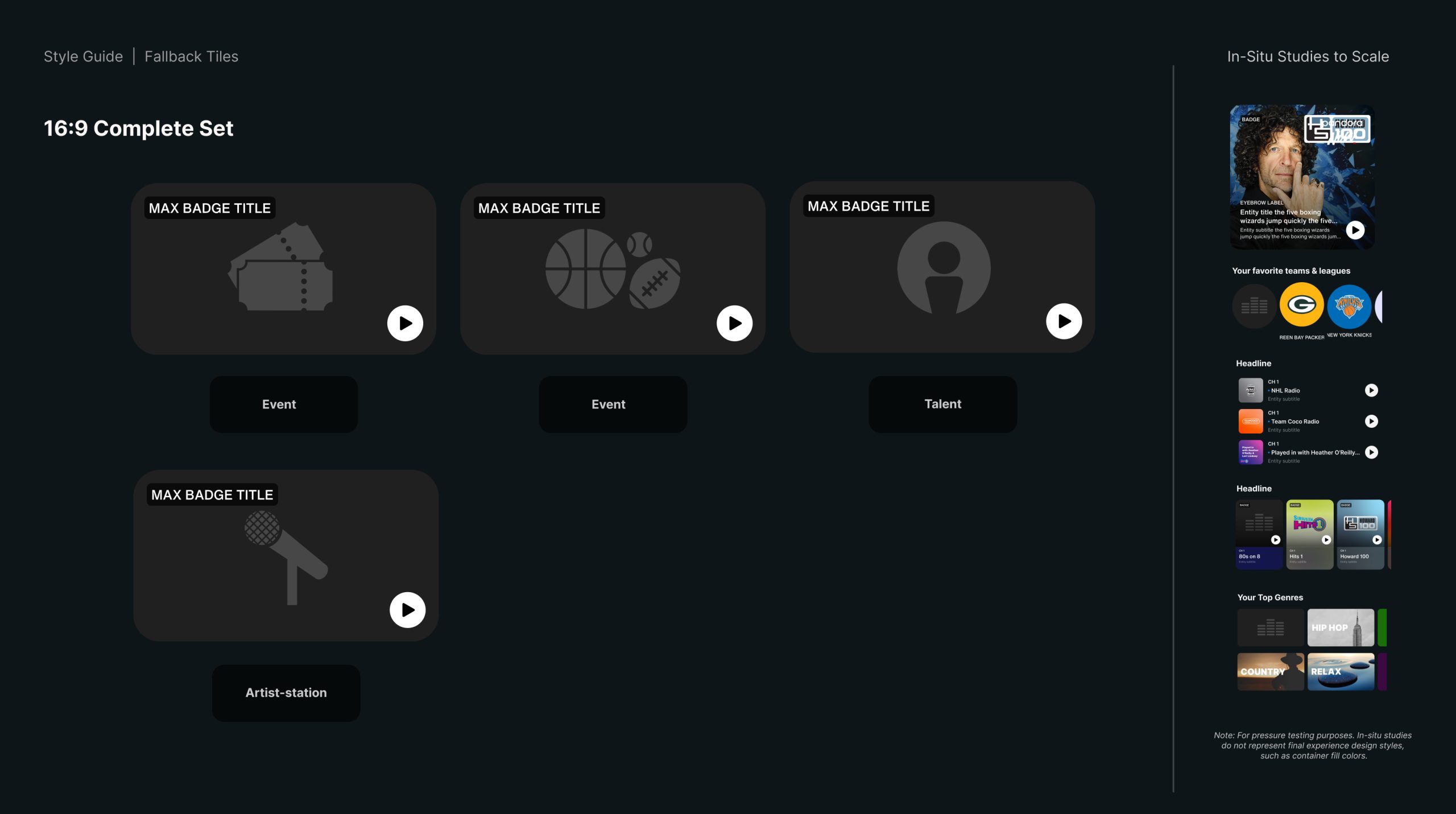
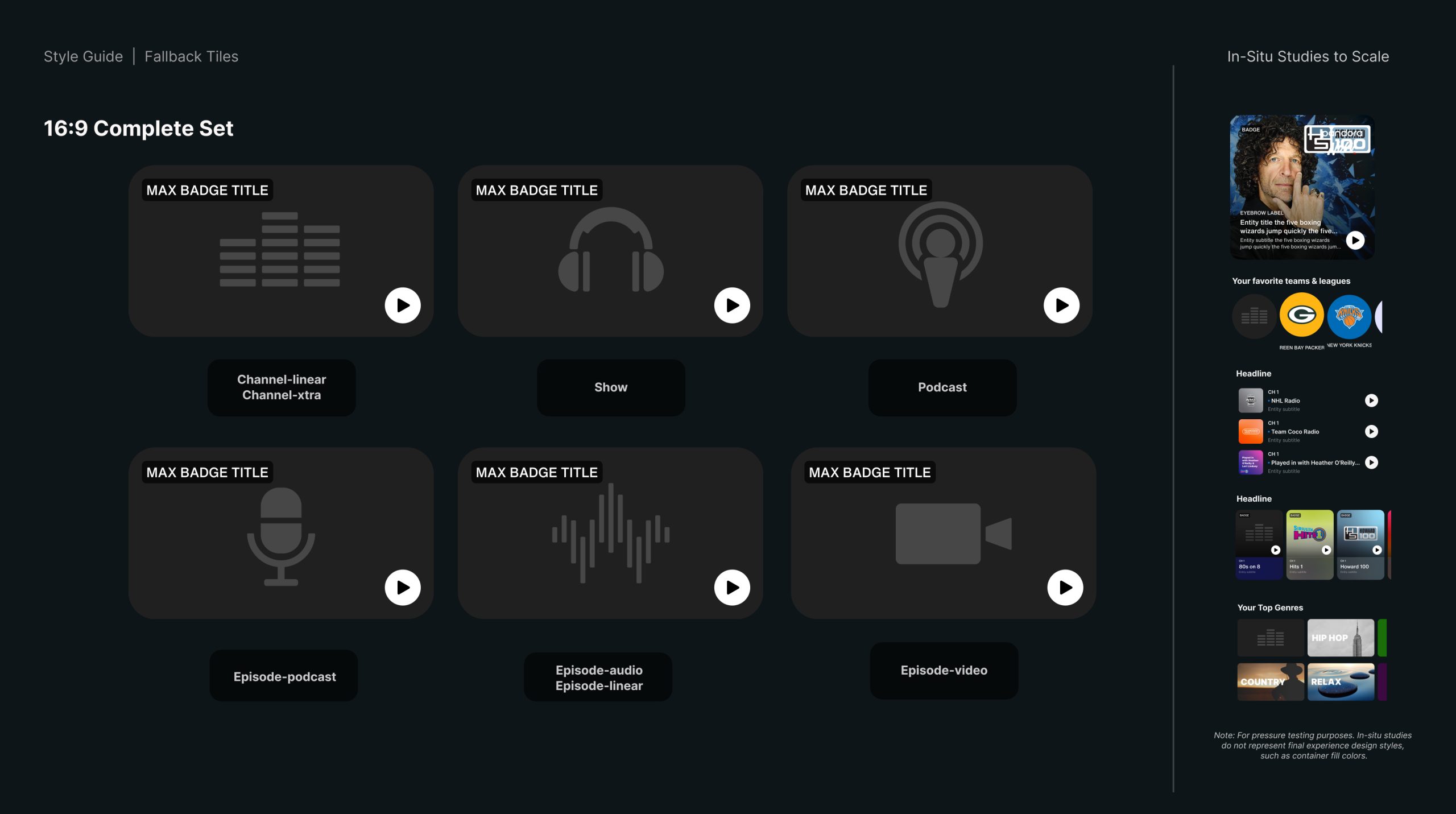
We defined six to seven core content categories that governed how tiles functioned across the platform, spanning audio, video, editorial, talent, live programming, and fallback states. Within those categories, we established a set of visual styles applied primarily to image based tiles, including vignette, graphic, spatial, and mixed media treatments. This approach allowed flexibility in art direction while remaining grounded in shared system rules.
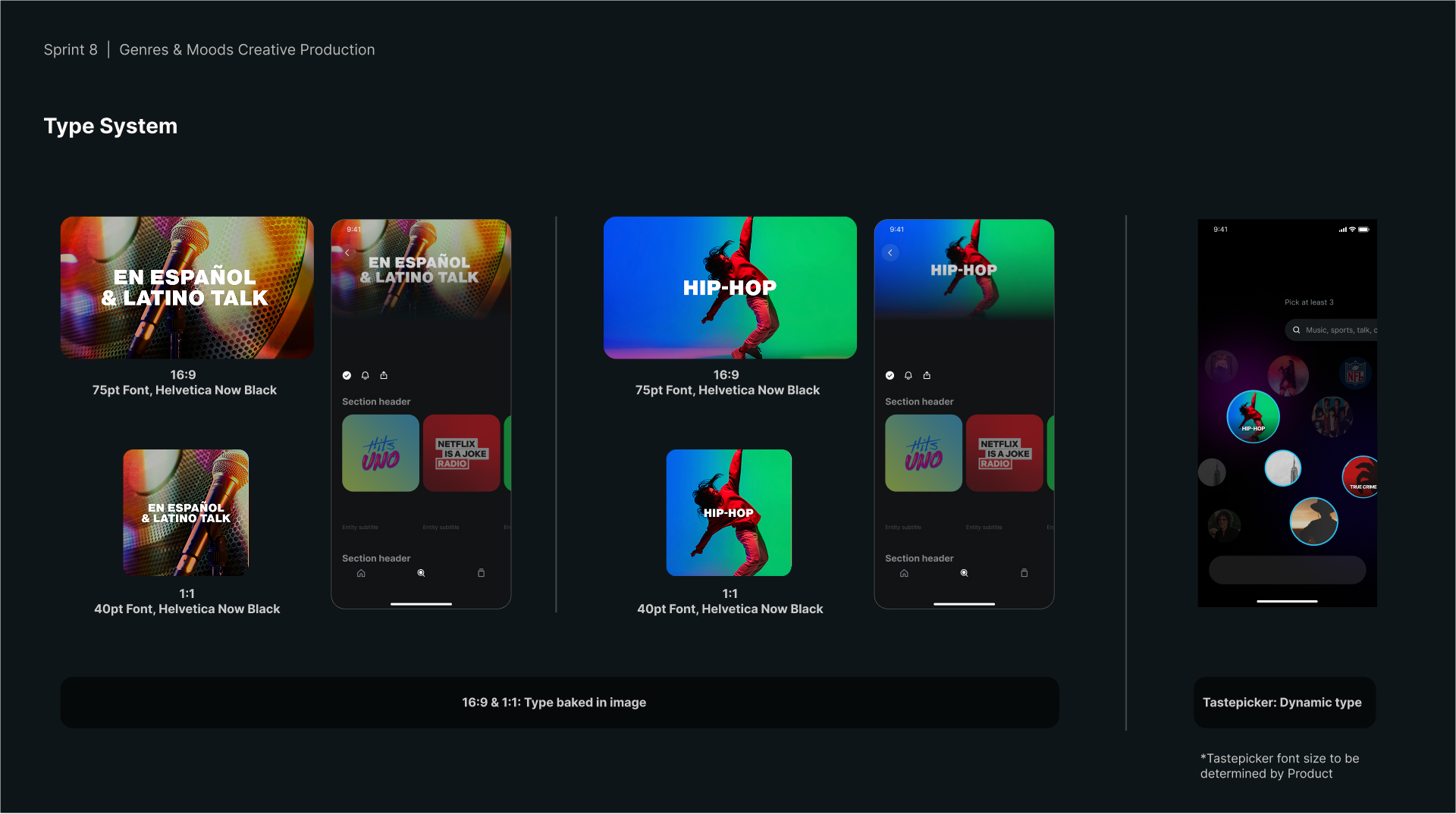
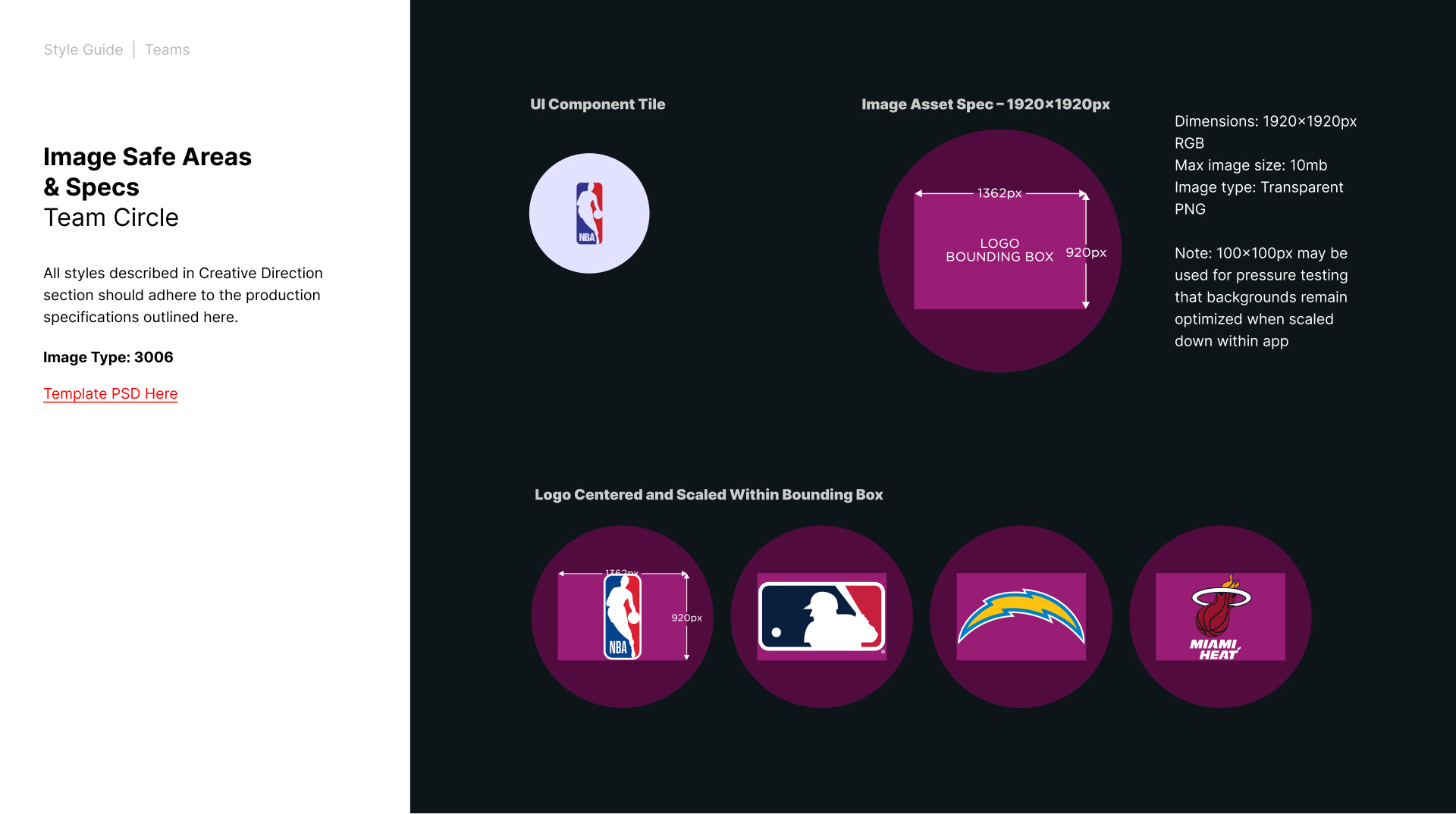
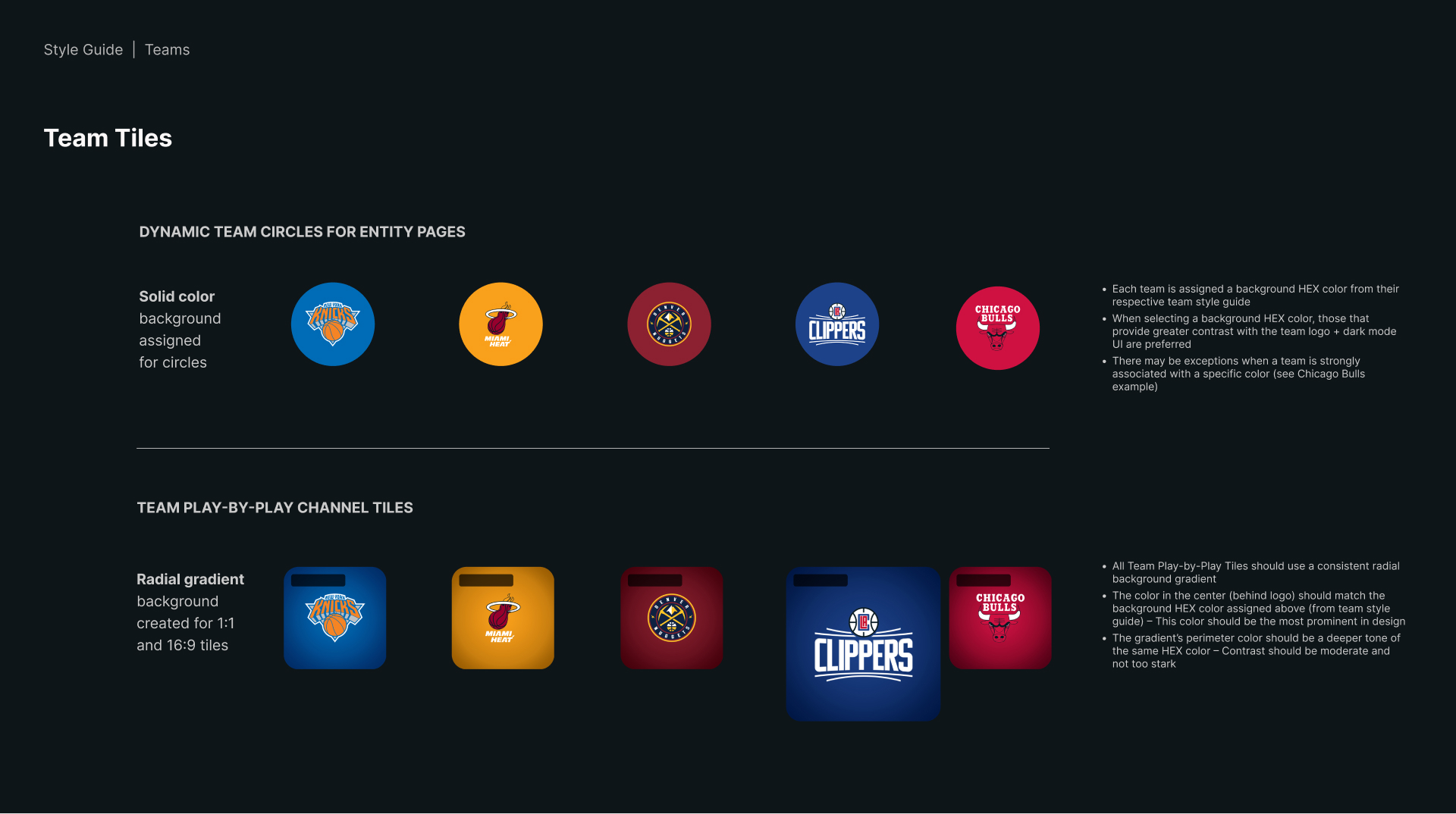
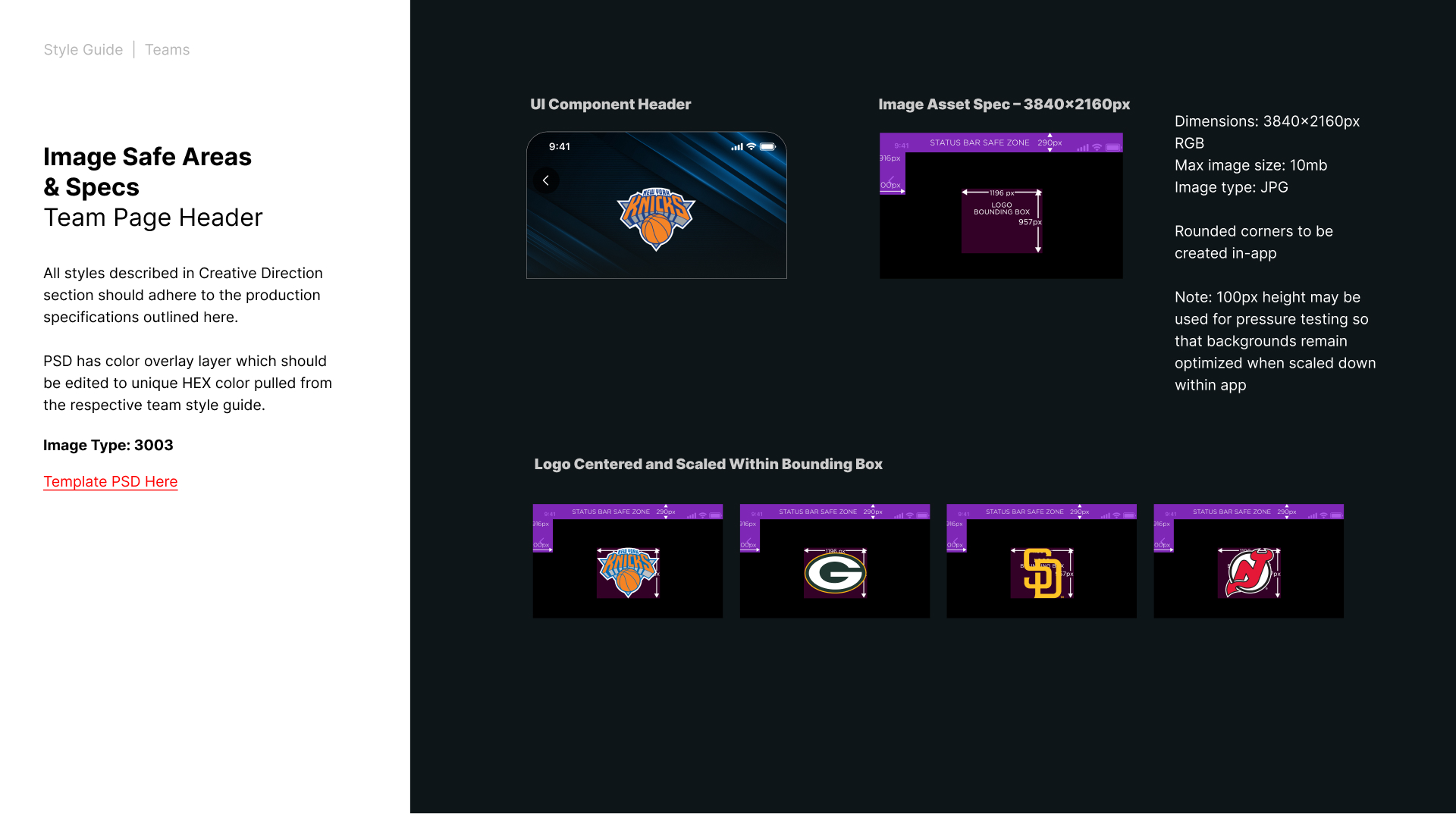
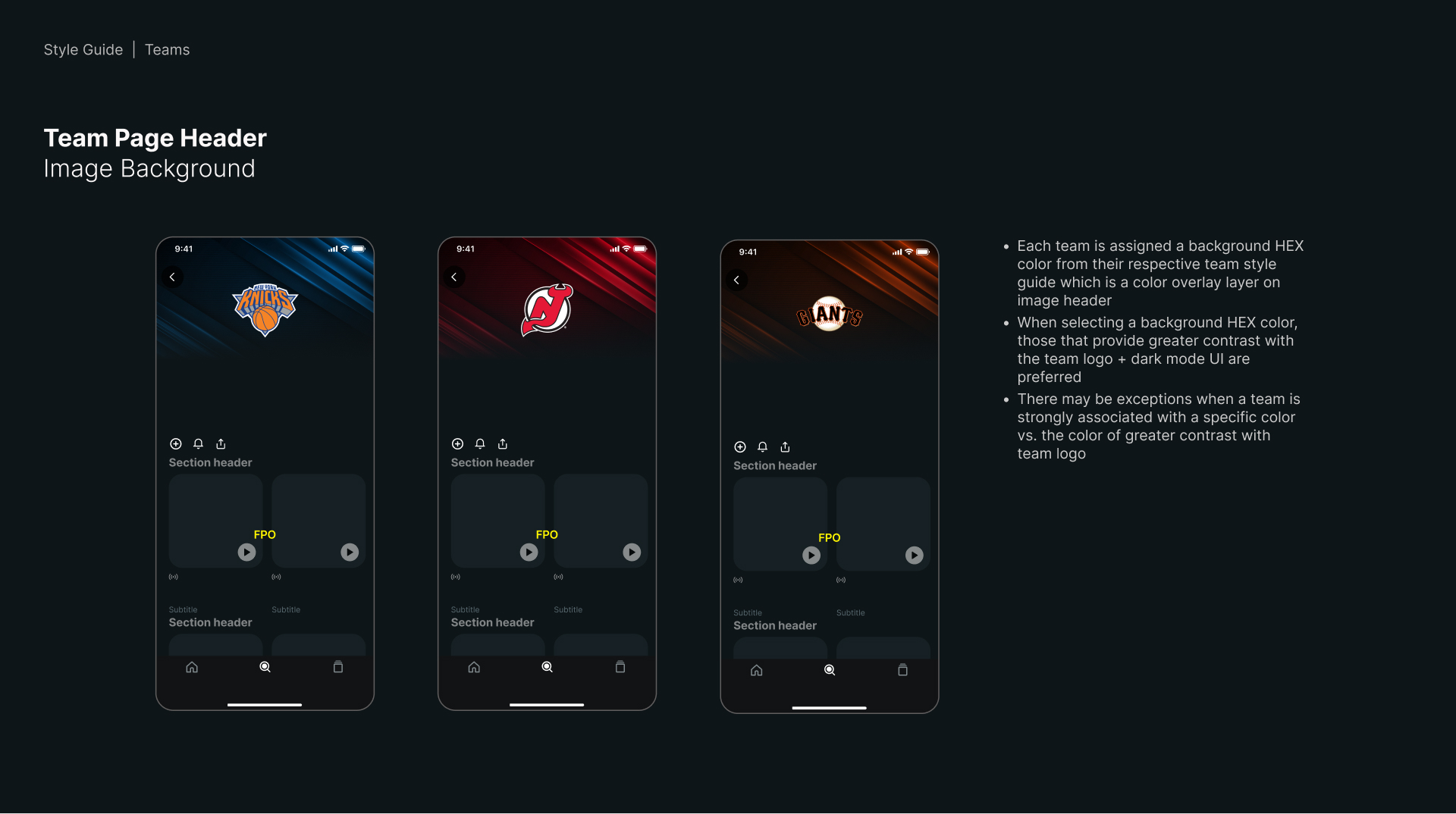
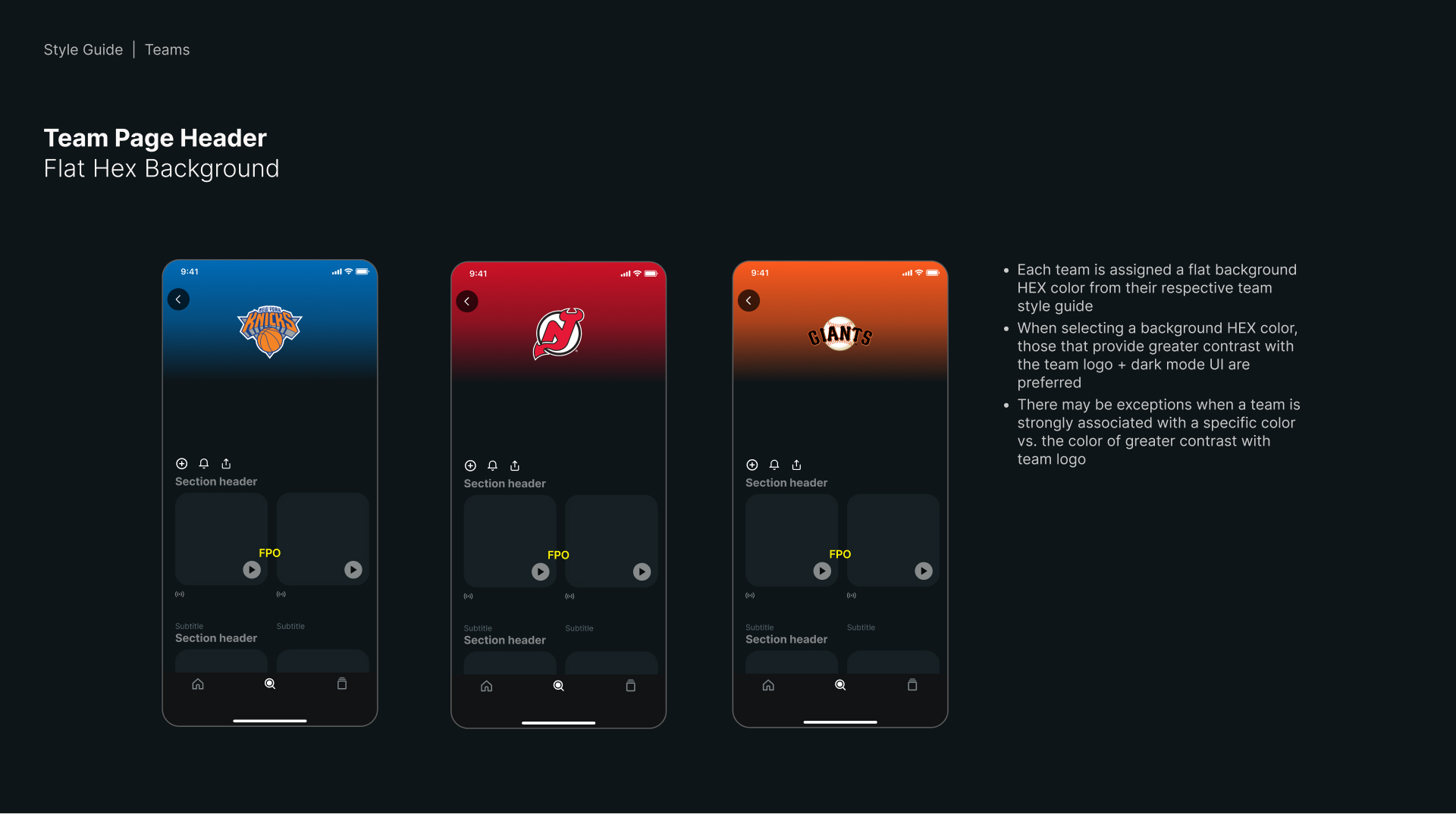
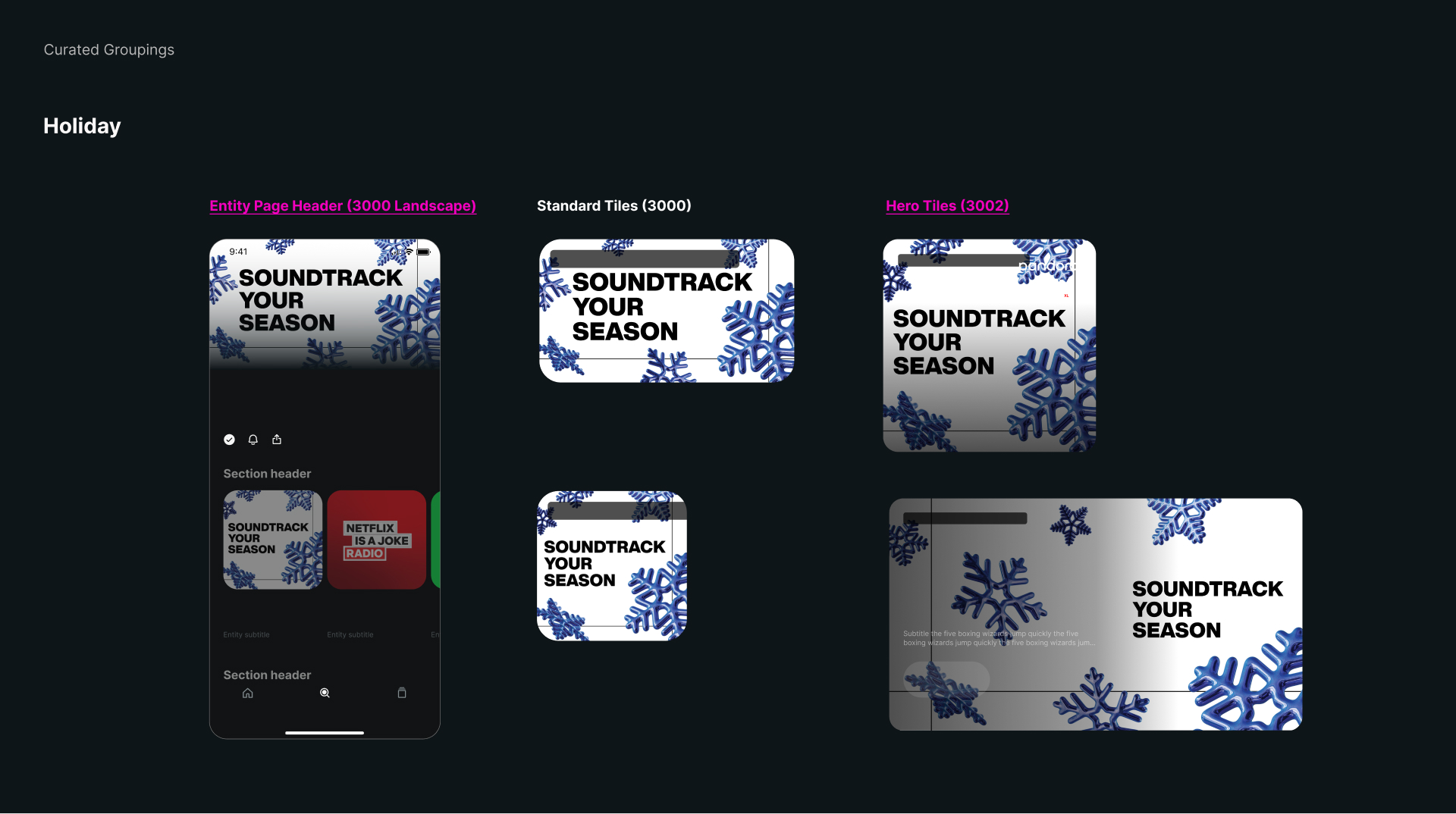
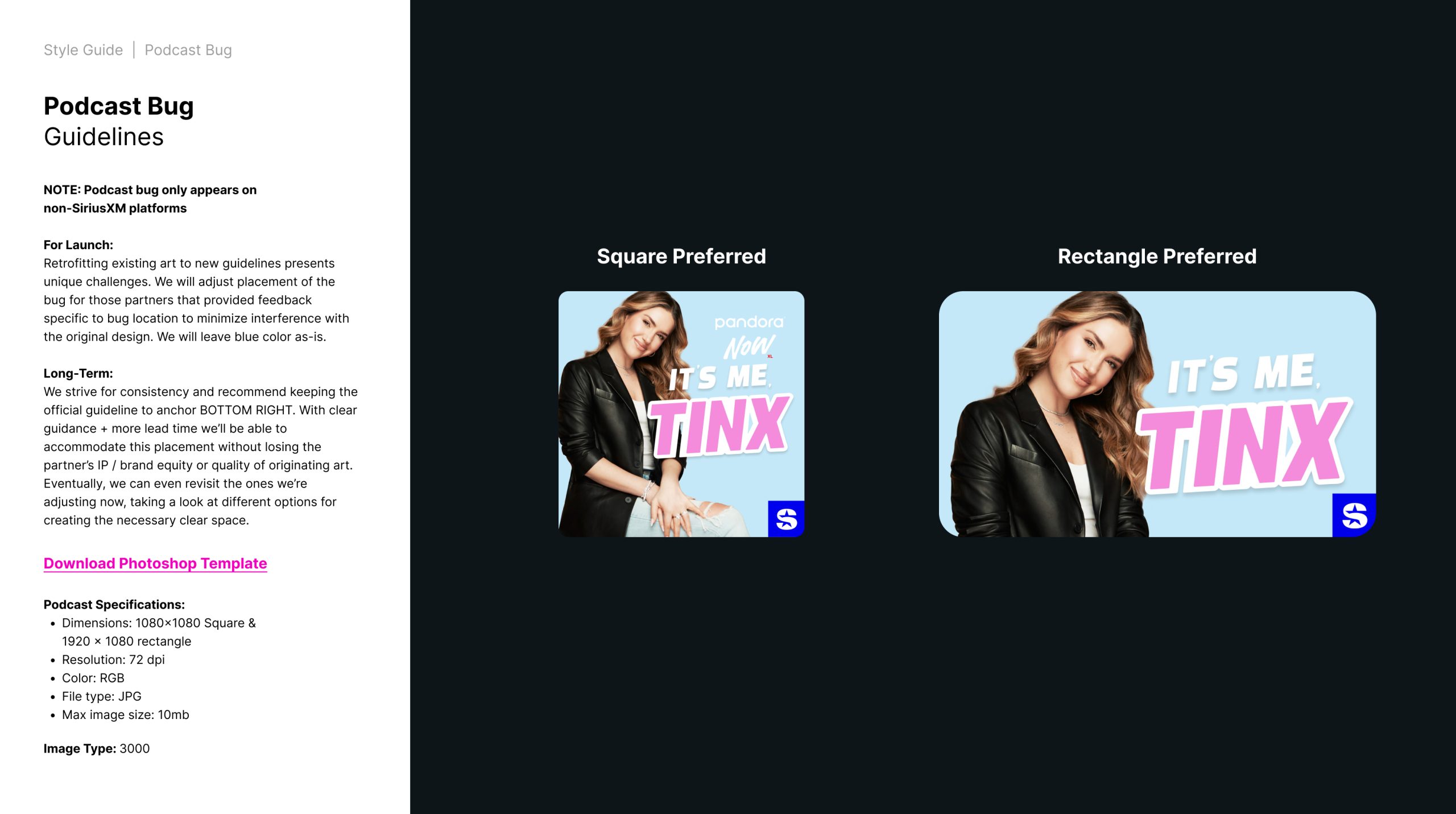
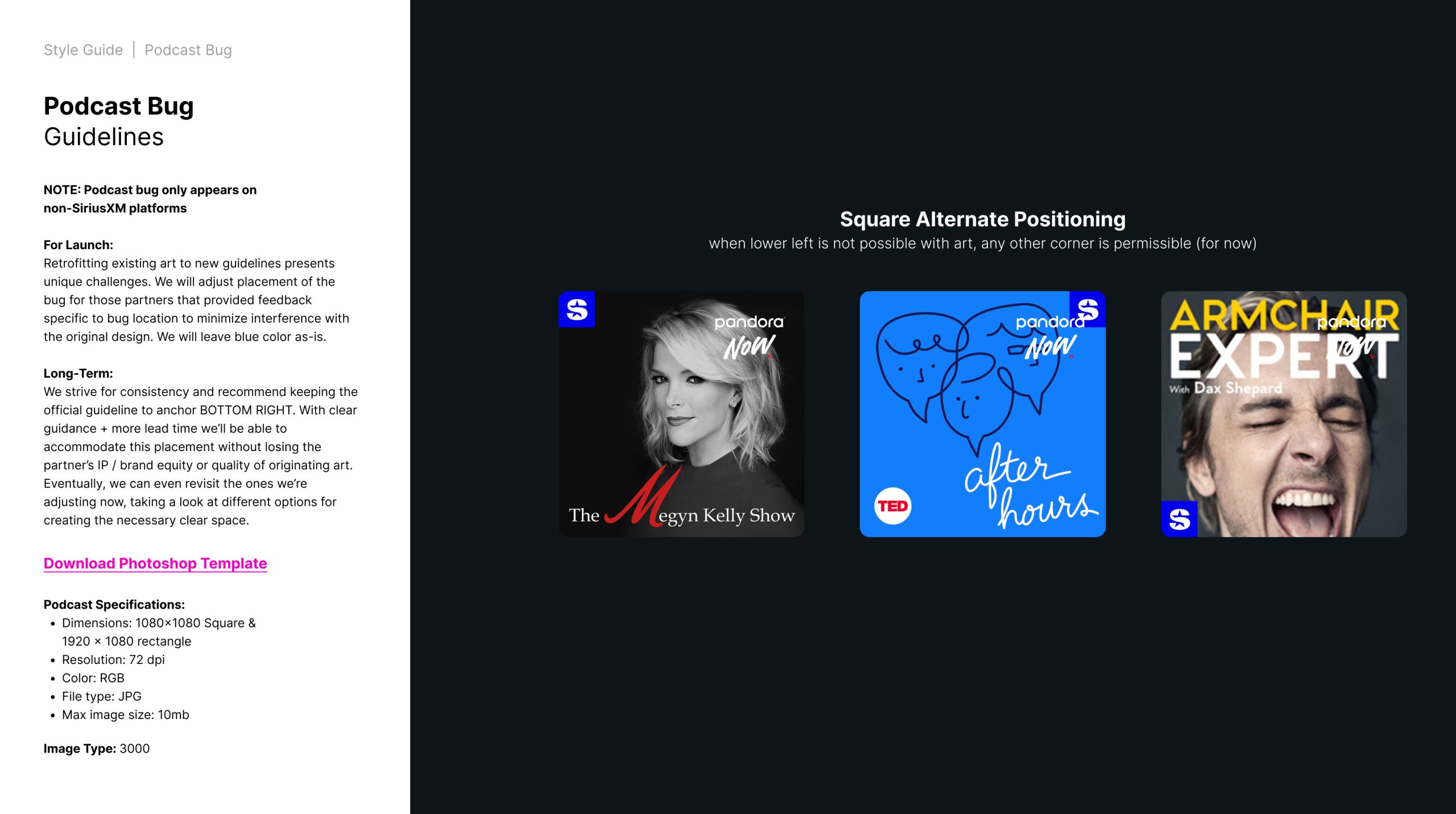
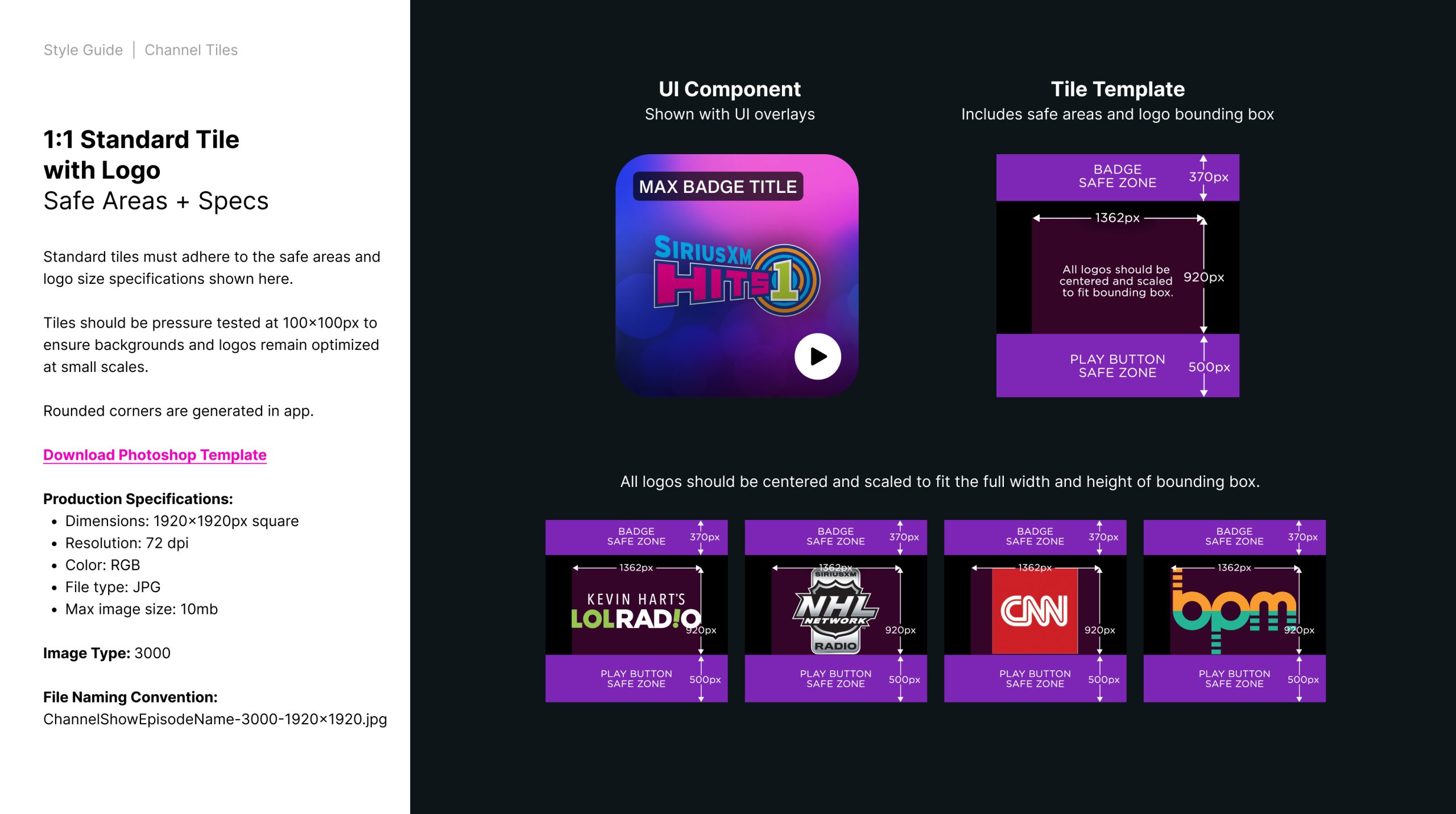
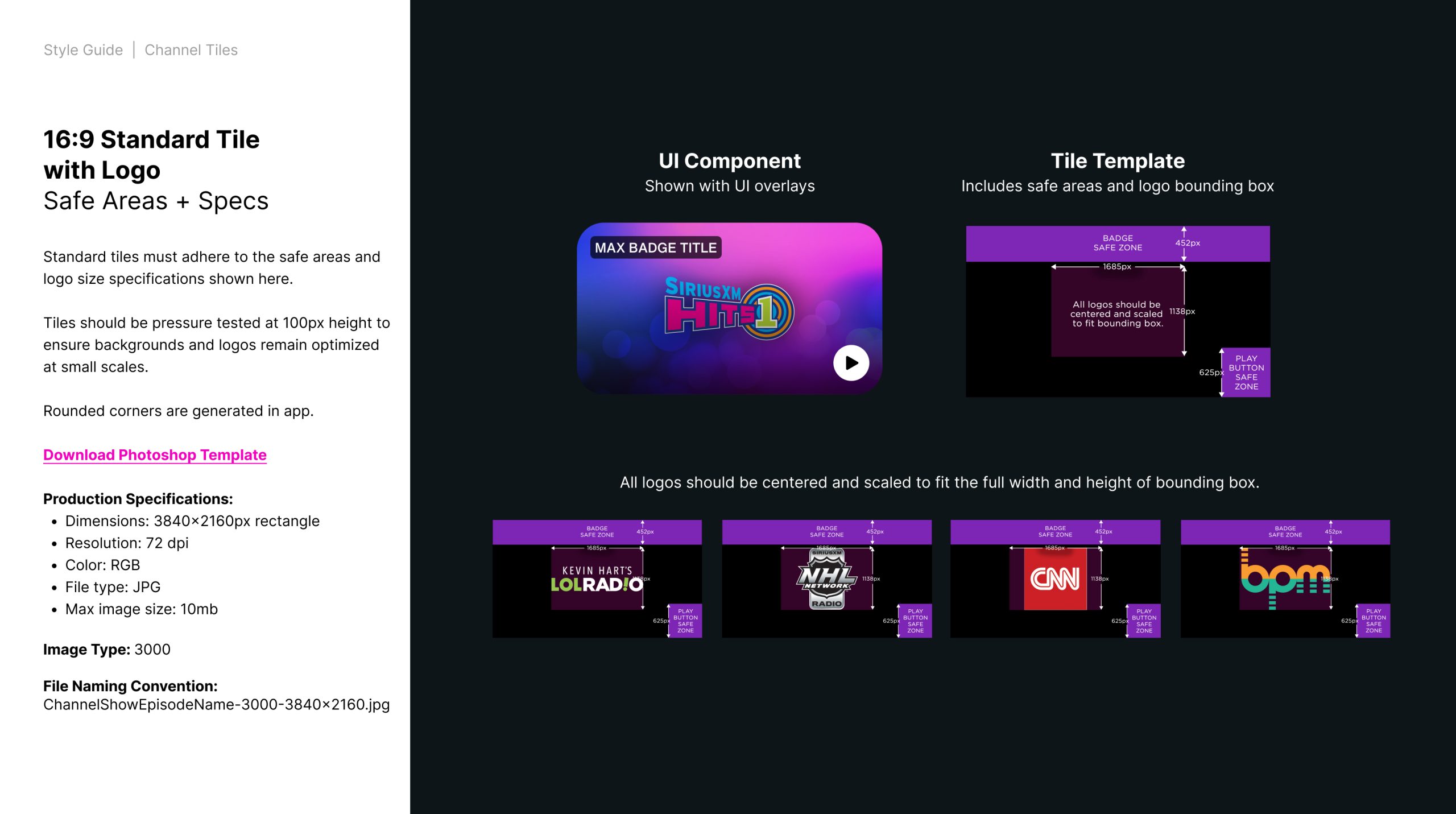
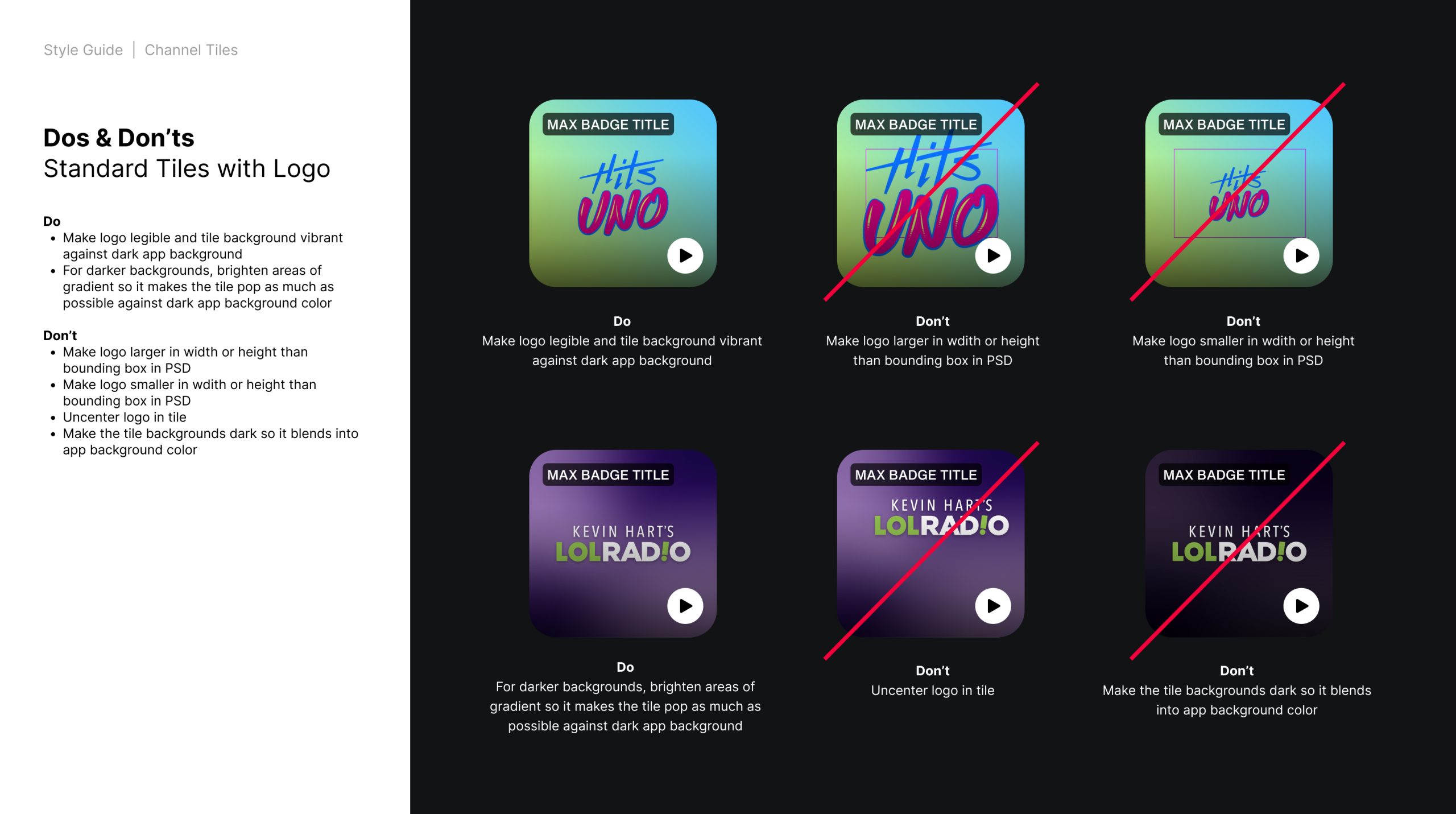
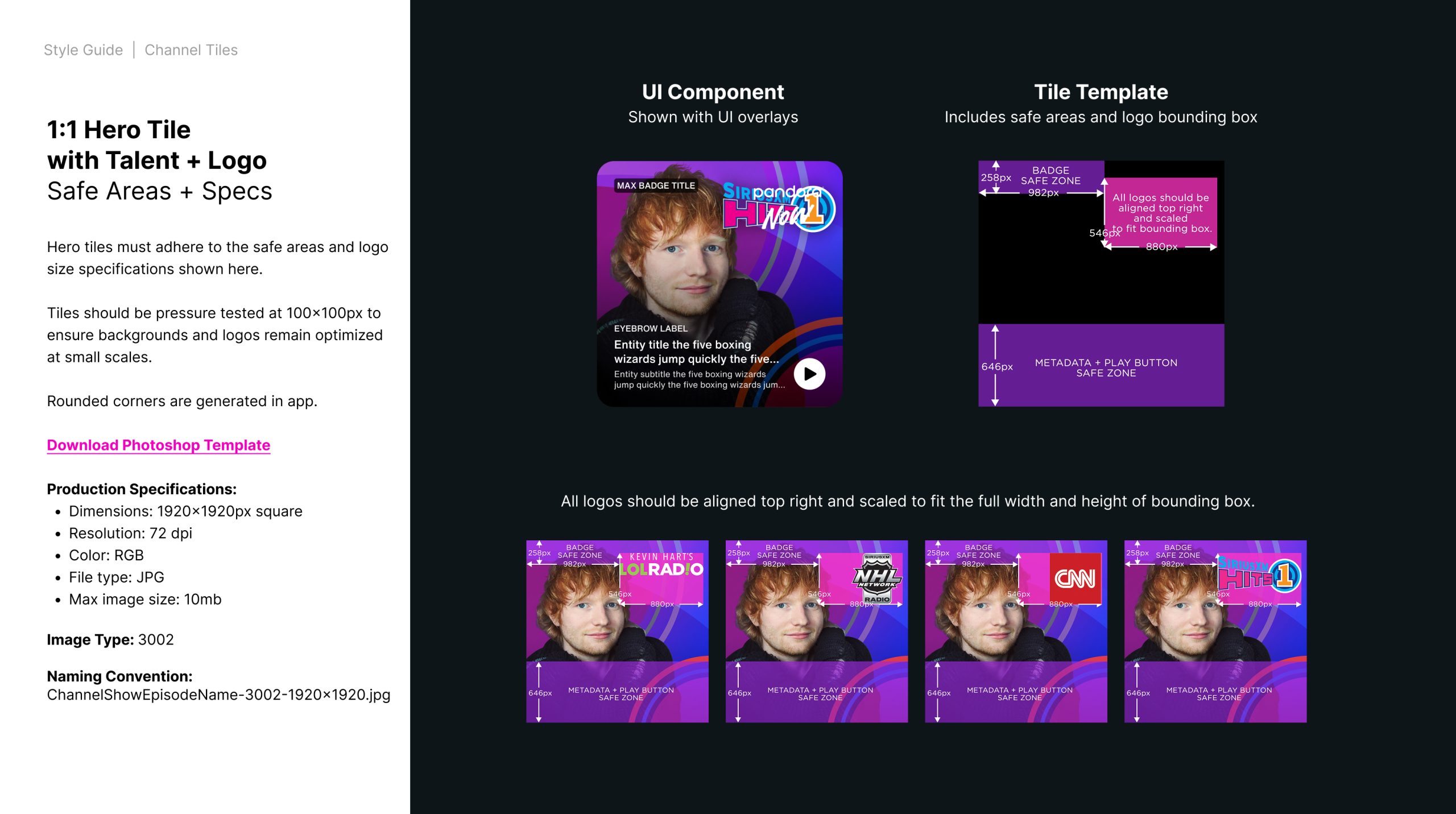
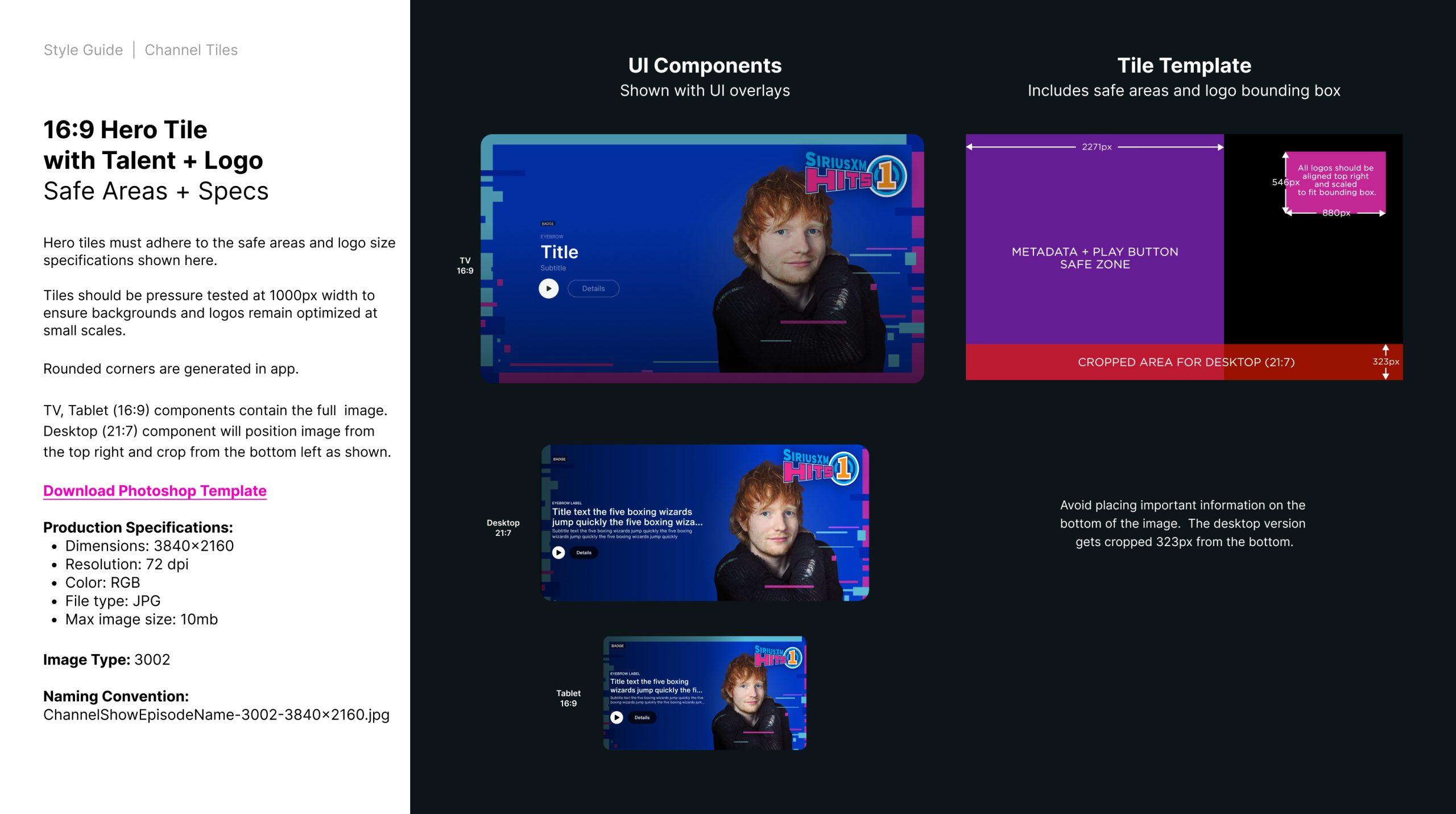
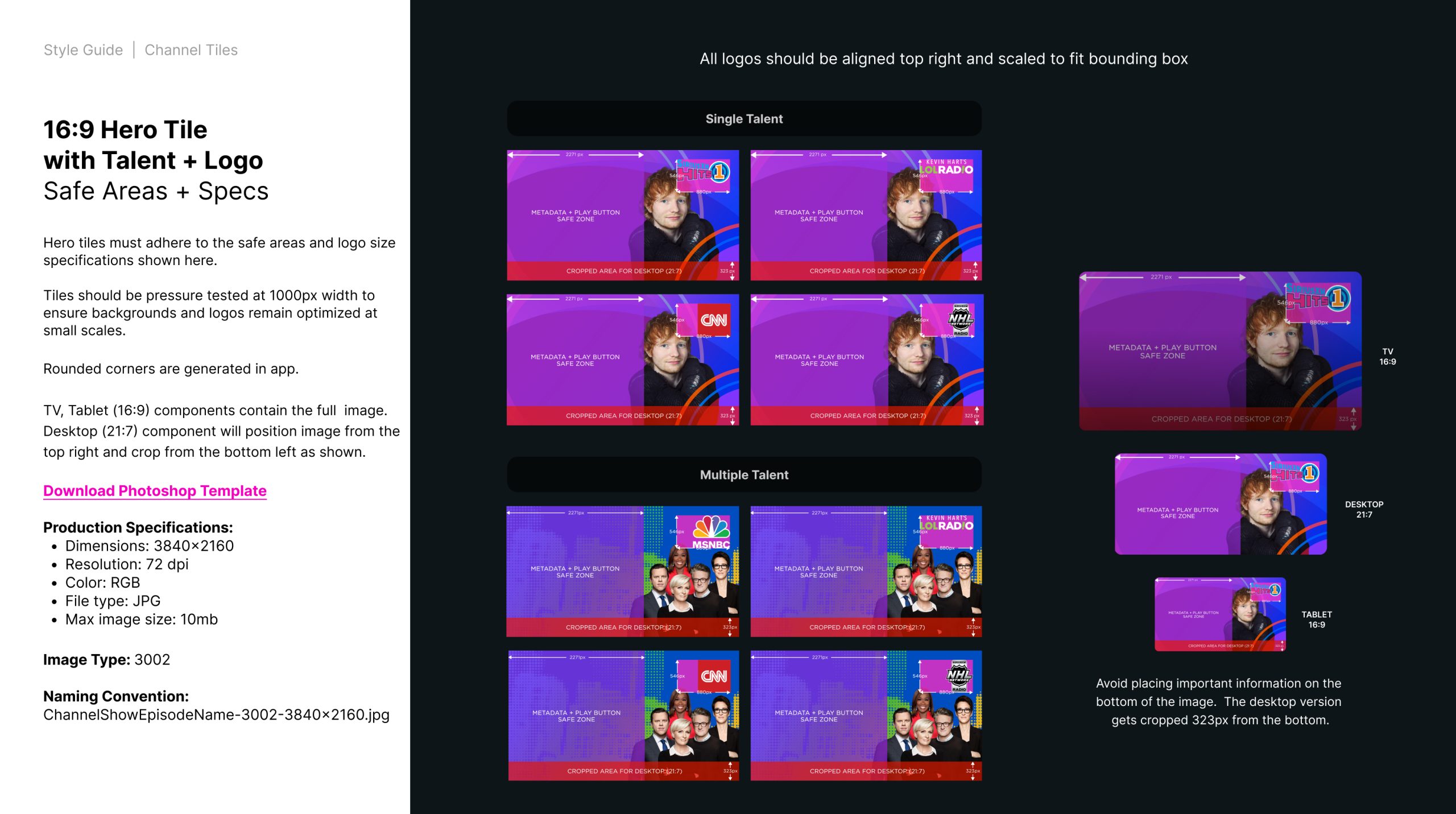
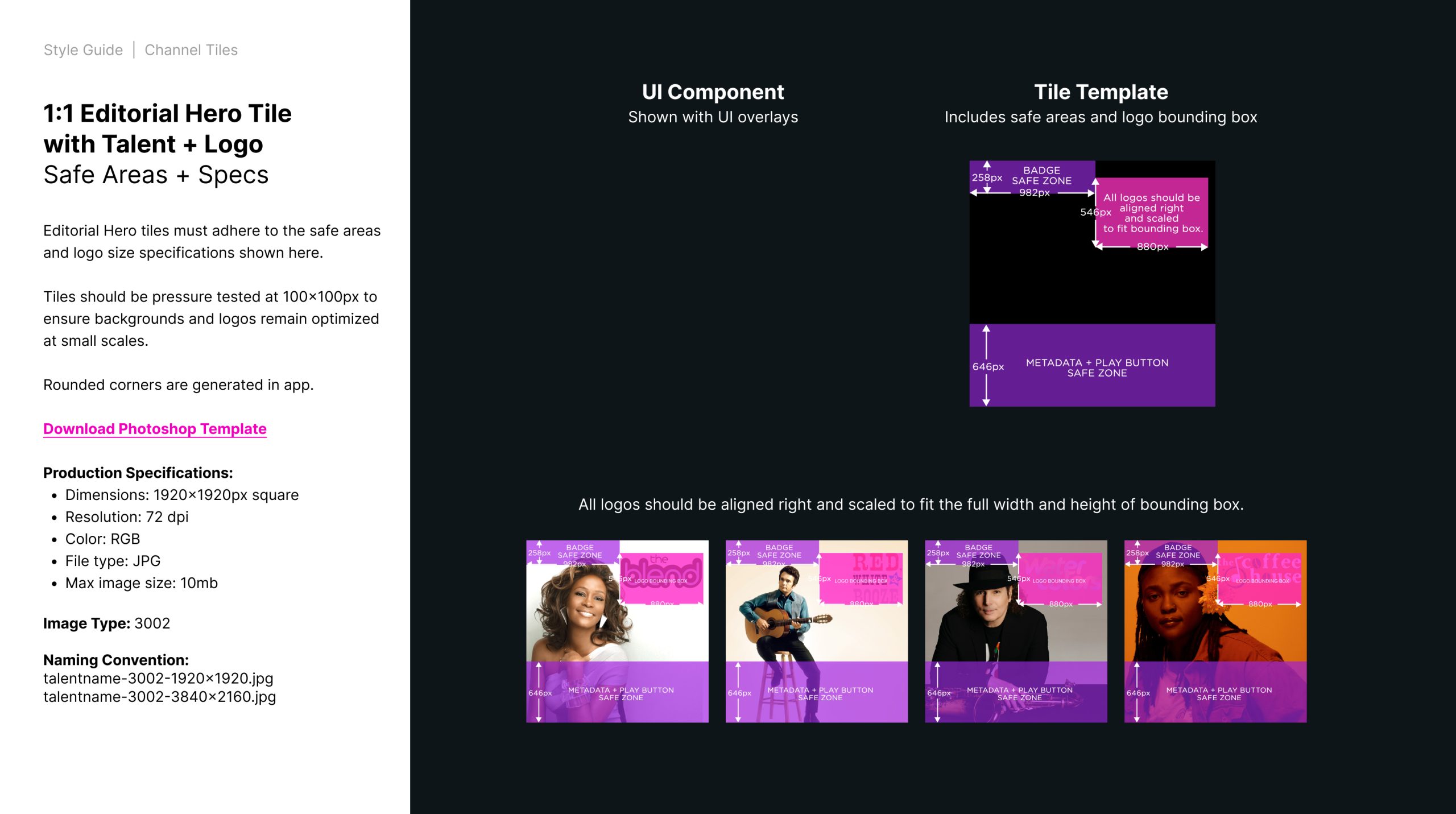
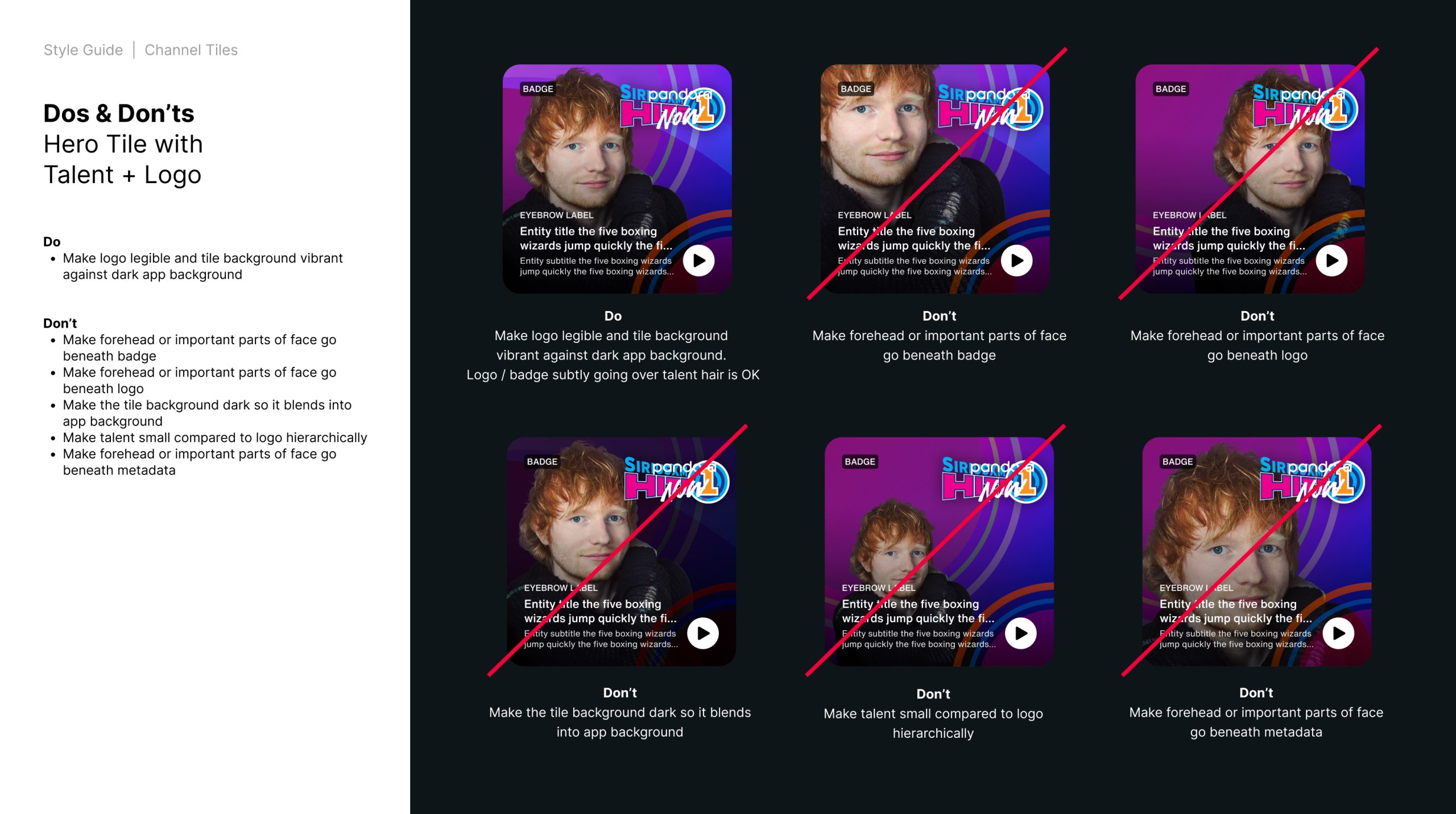
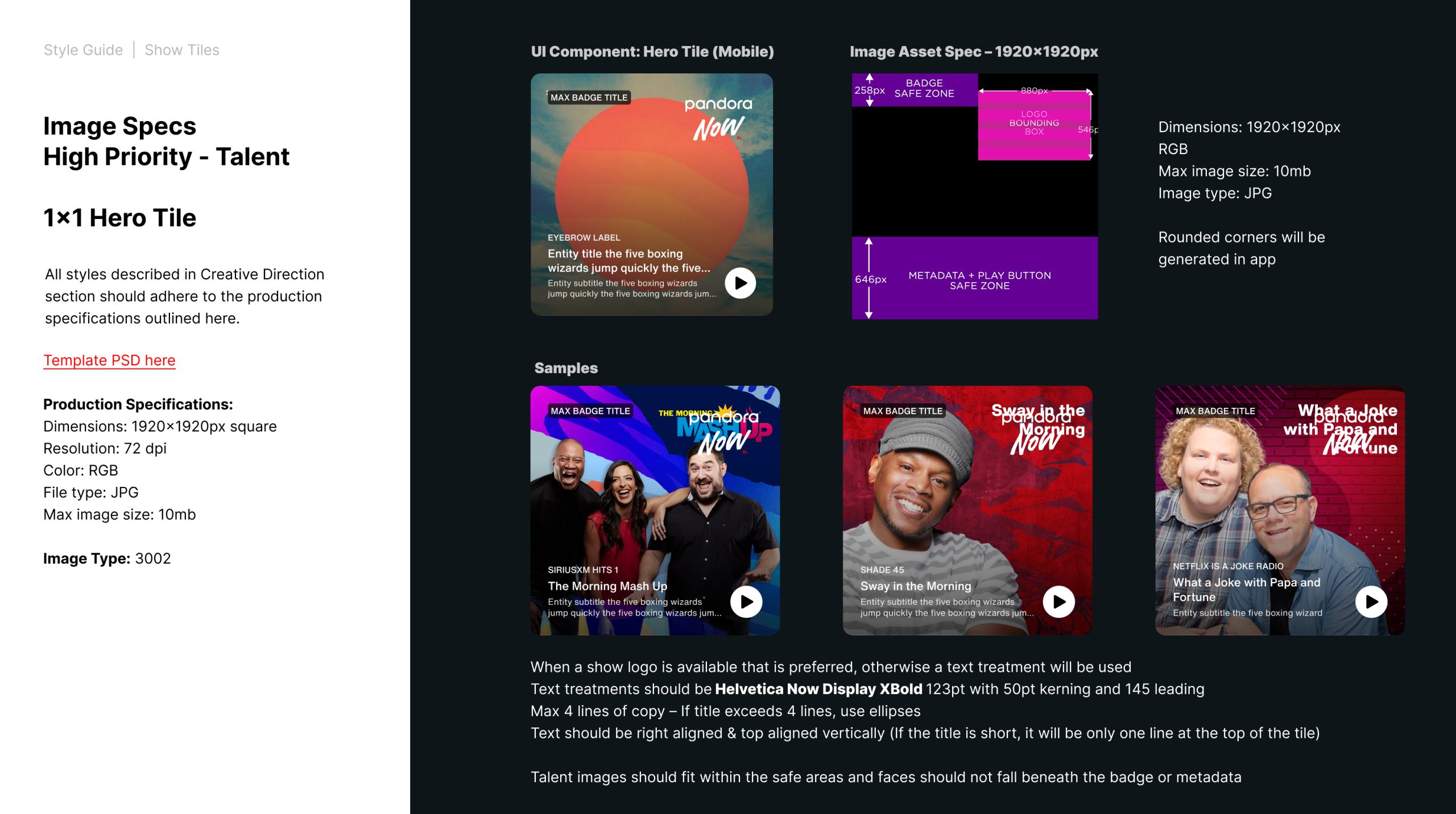
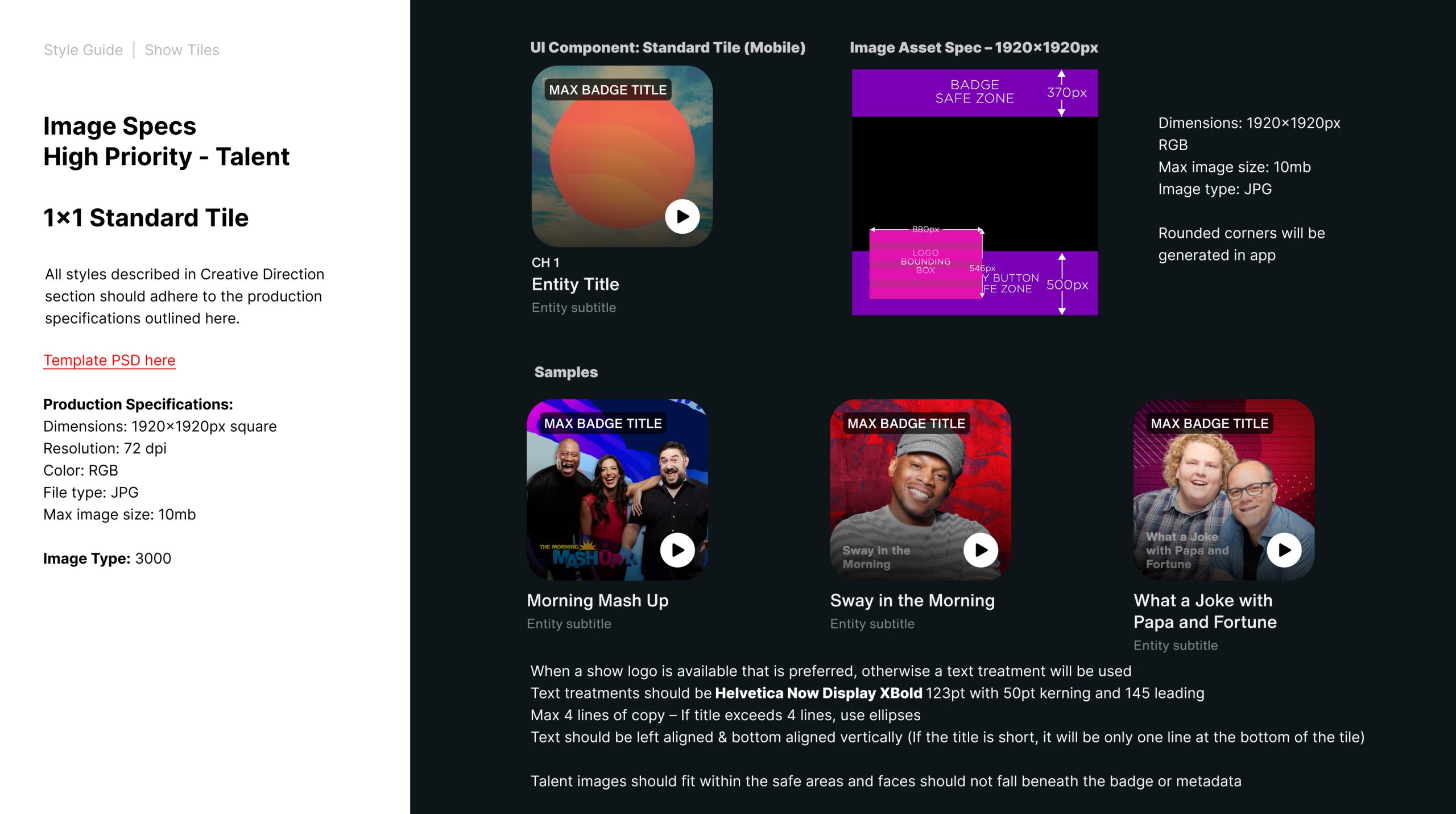
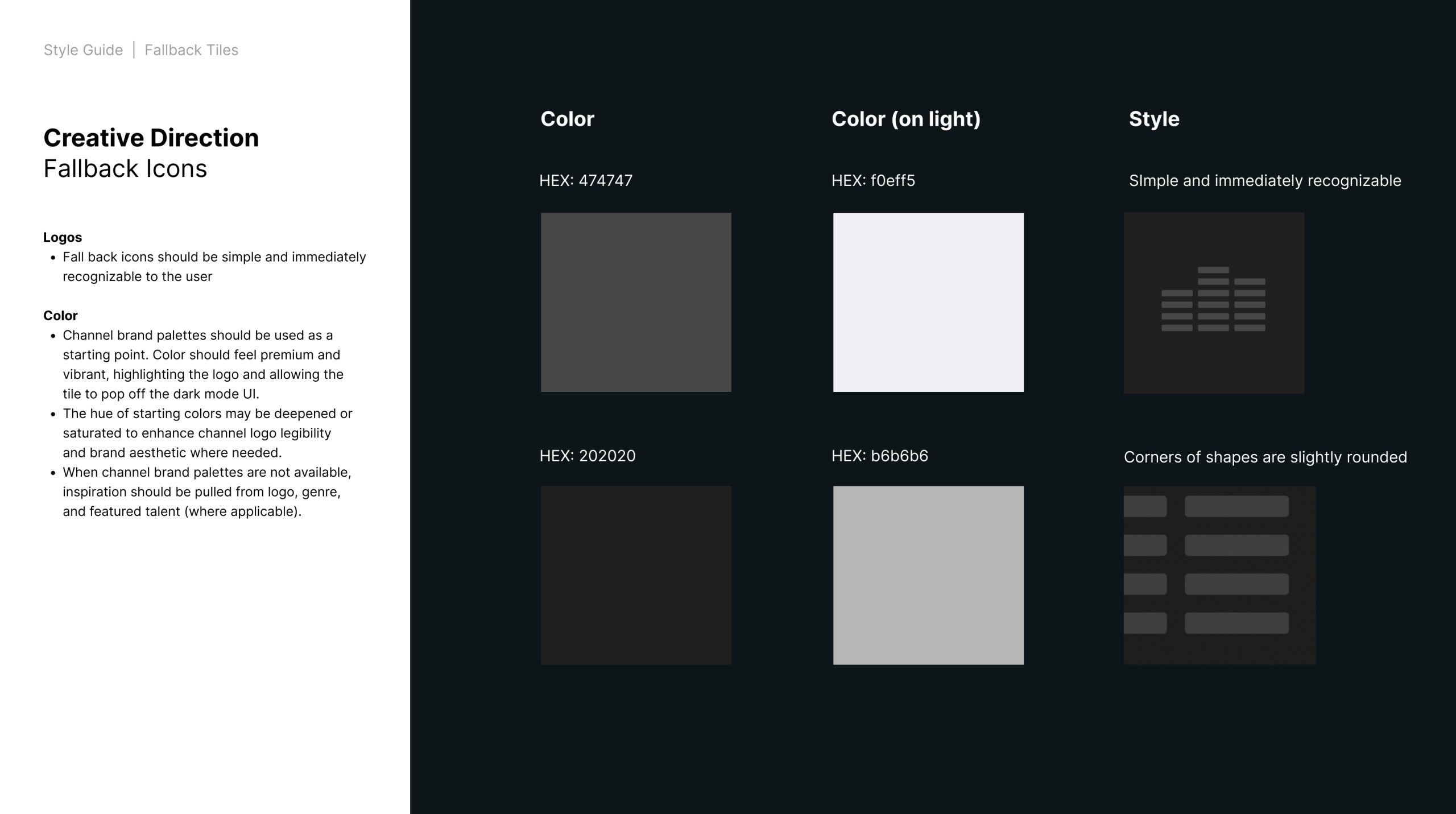
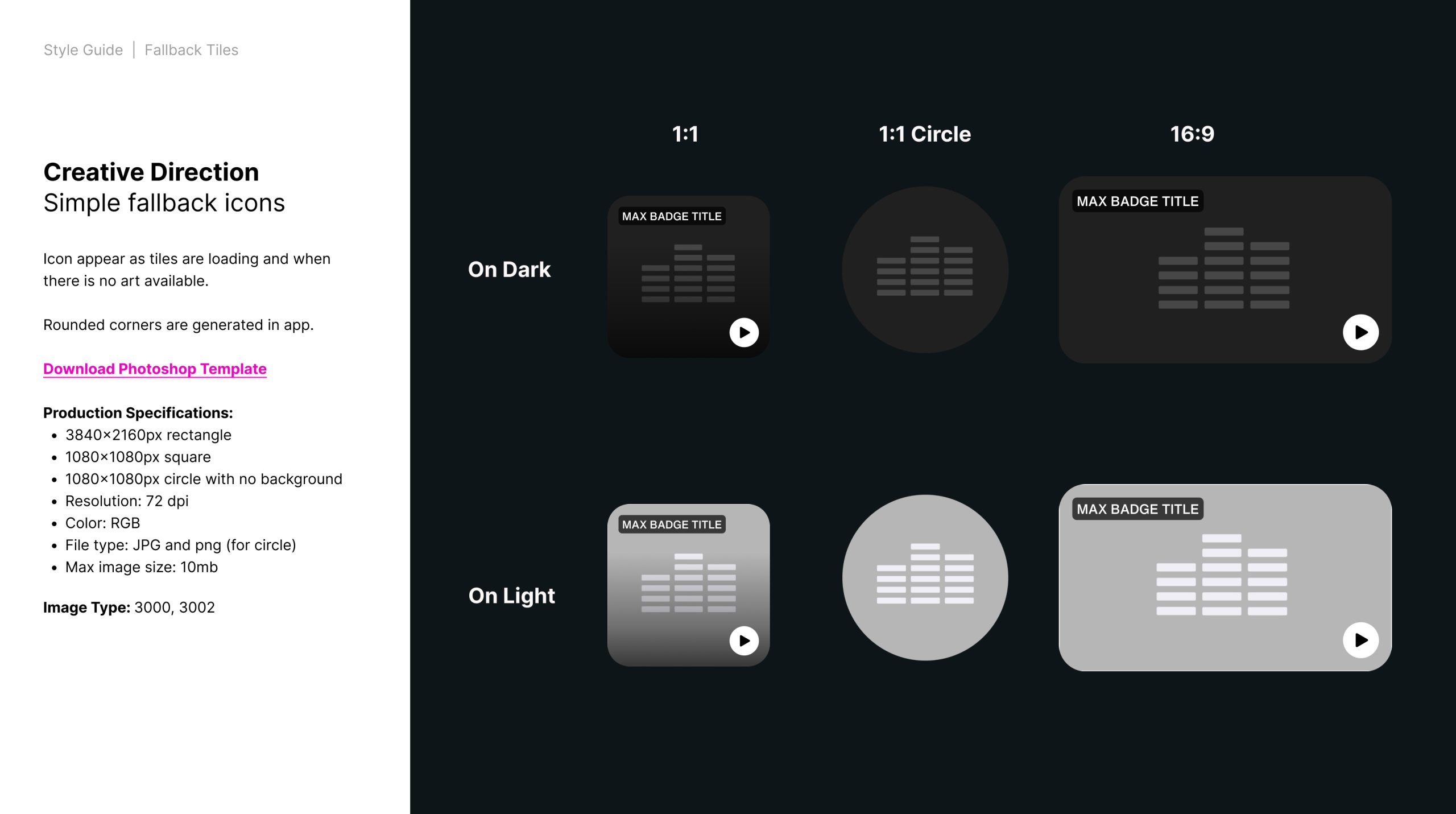
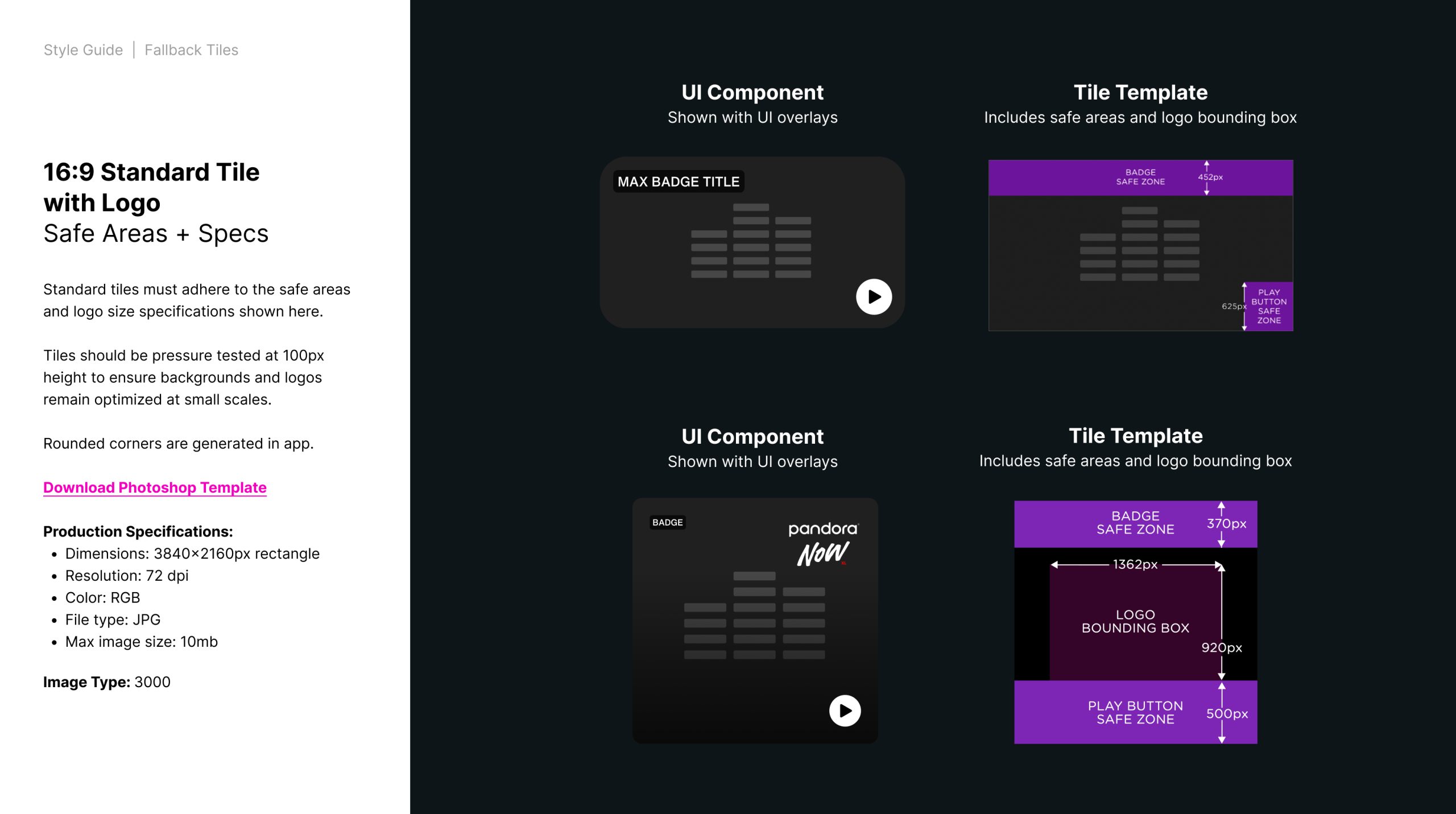
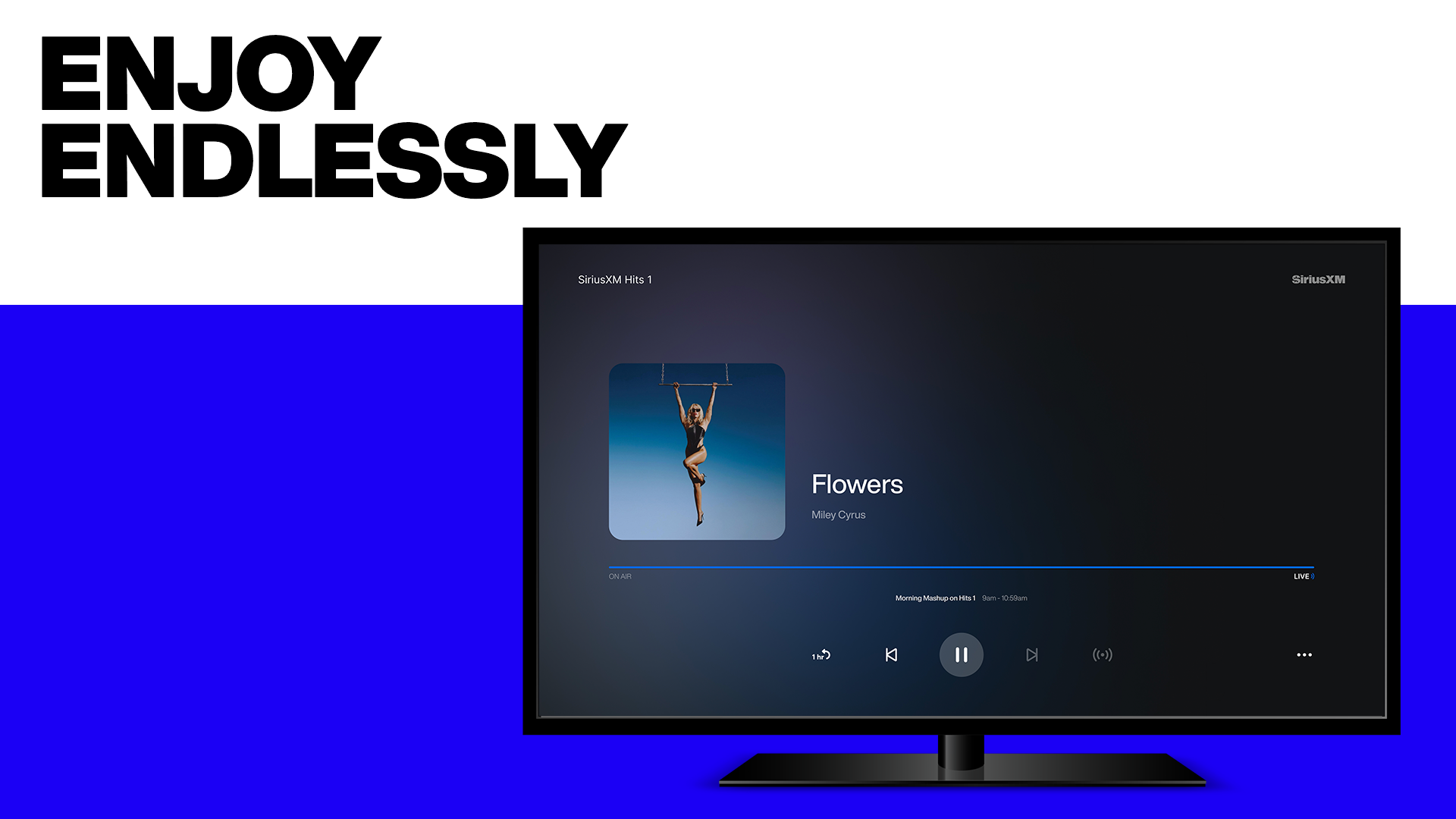
Each tile type was supported by clear guidelines for typography, hierarchy, color usage, motion, safe areas, and logo placement. The system was designed to scale across standard, hero, and promotional placements, enabling fast production while maintaining a cohesive and premium experience across mobile and digital surfaces.
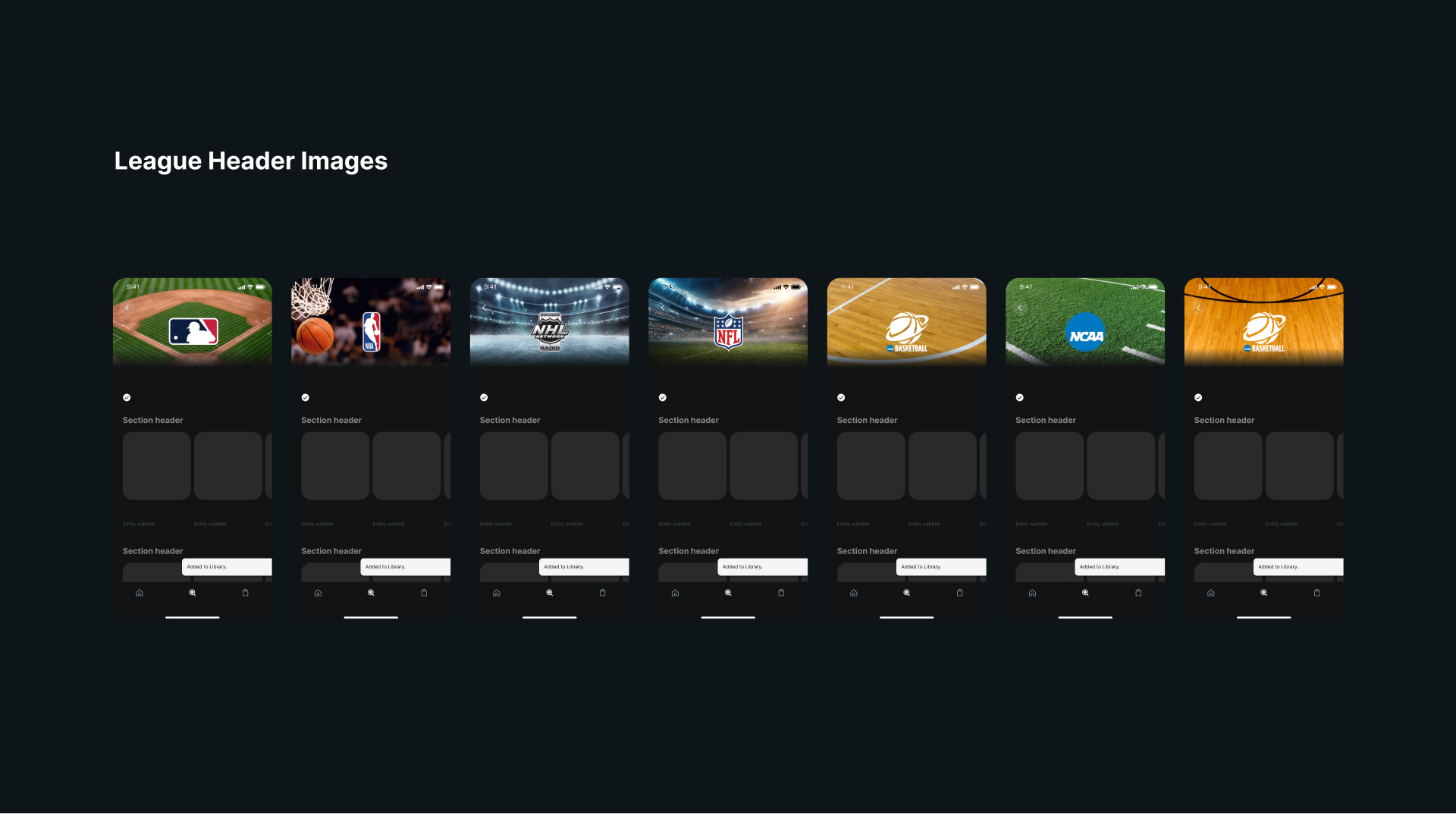
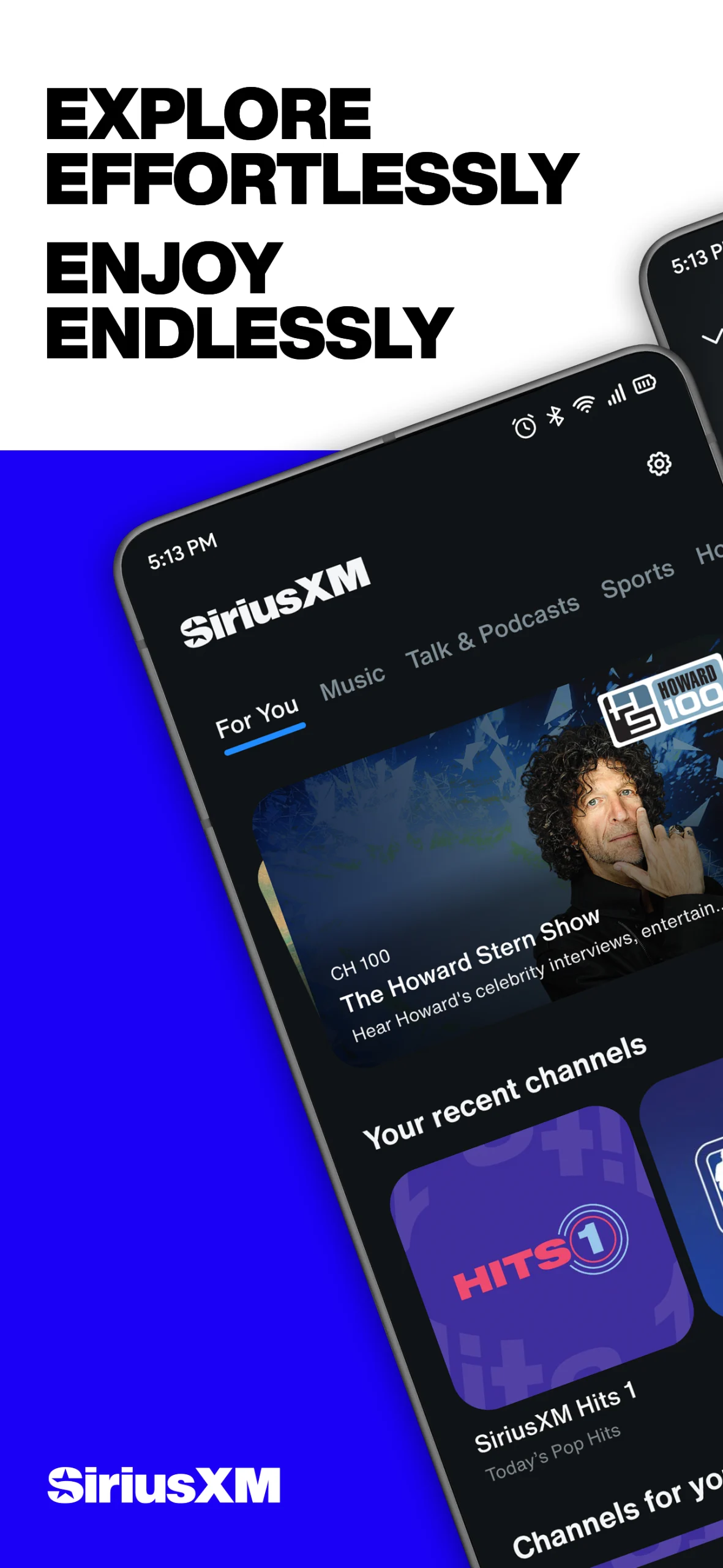
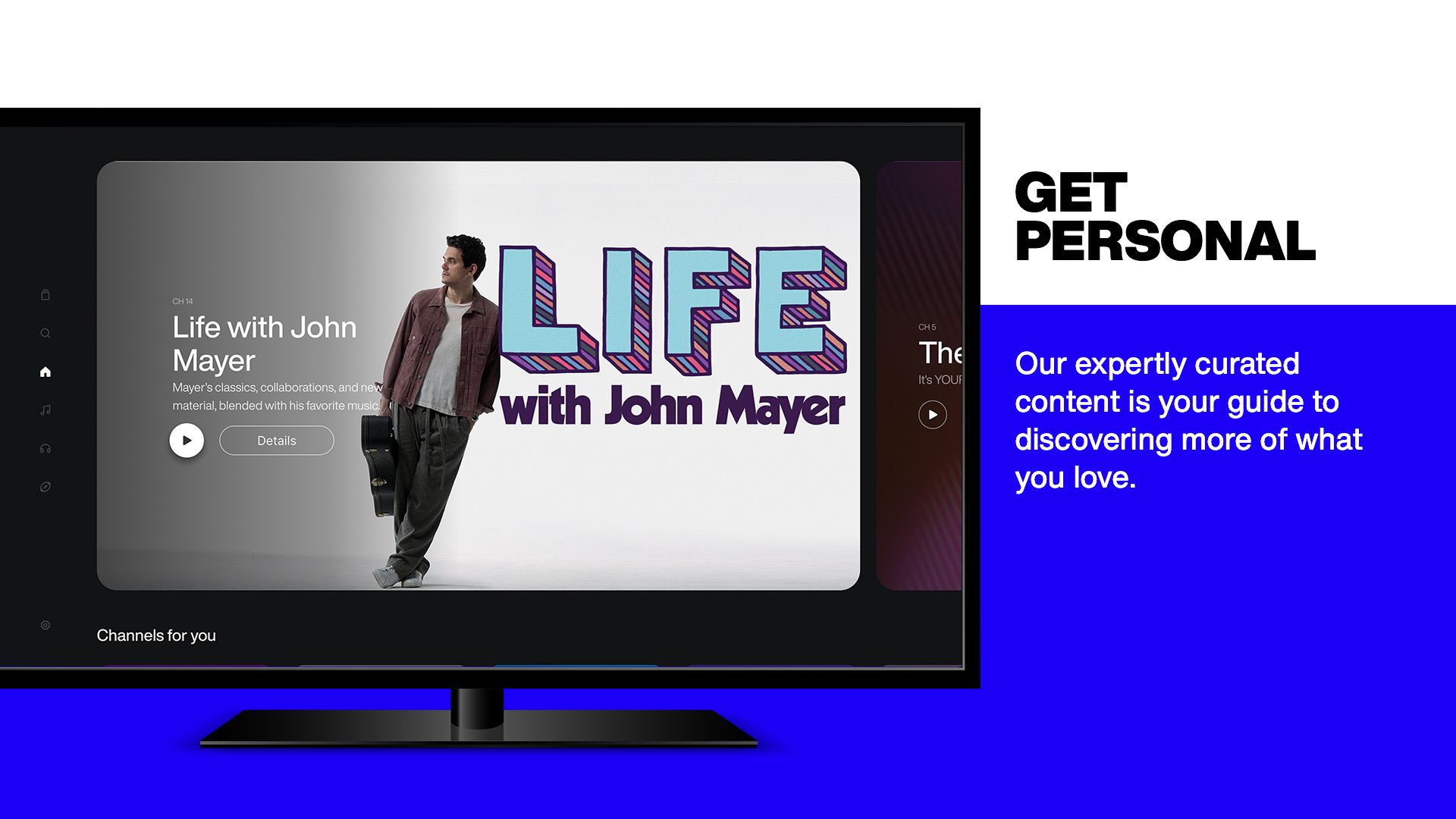
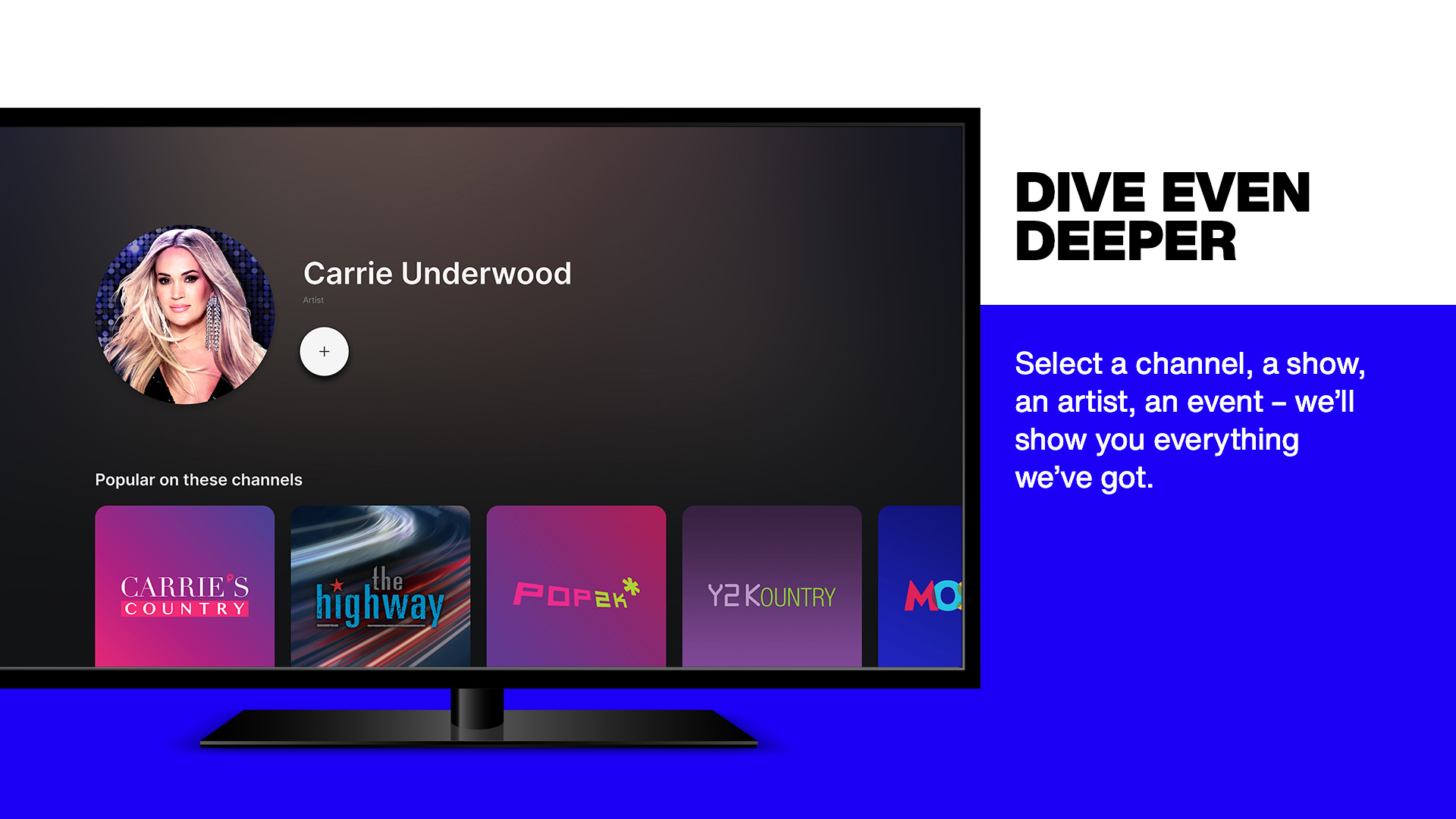
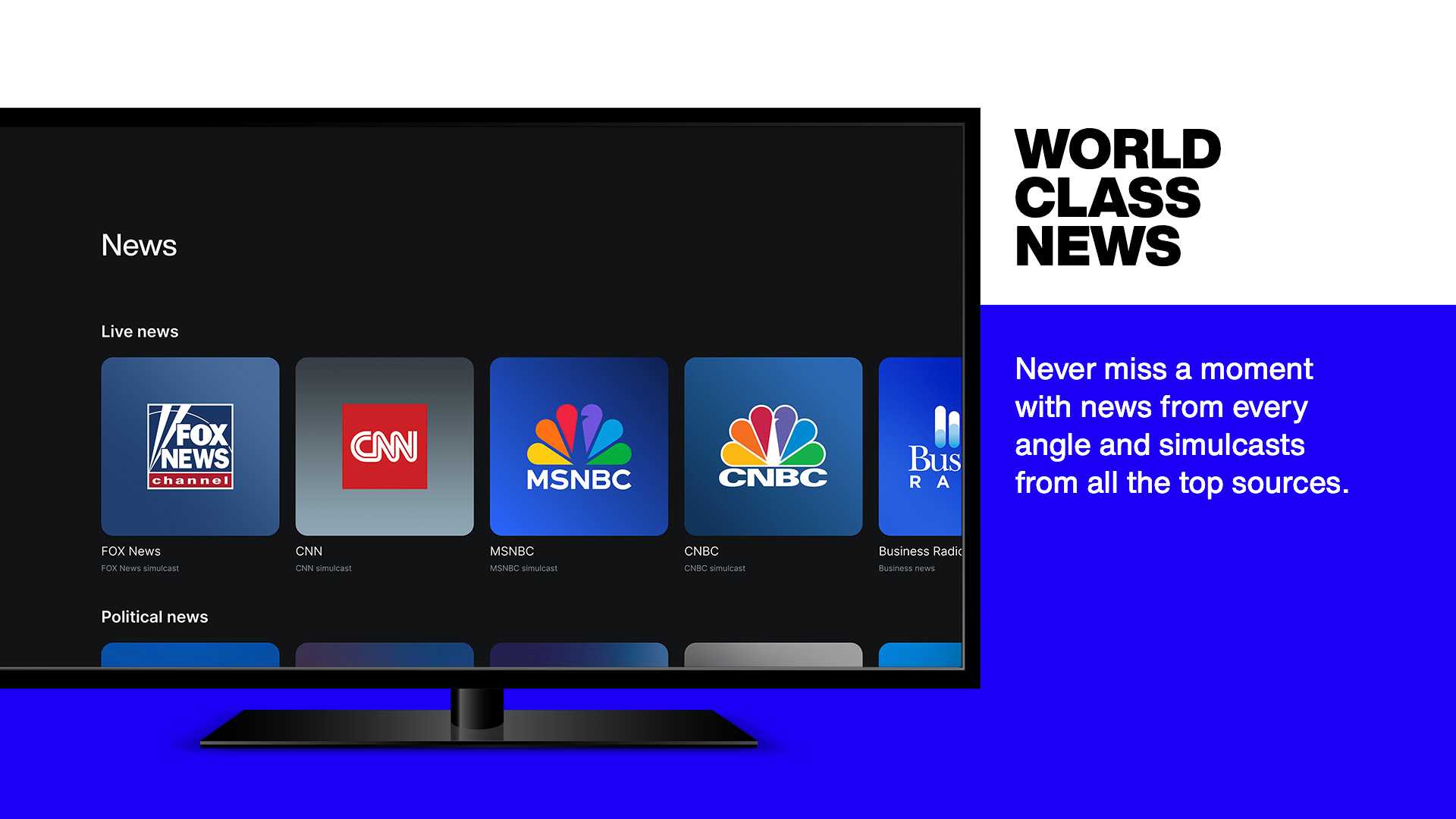
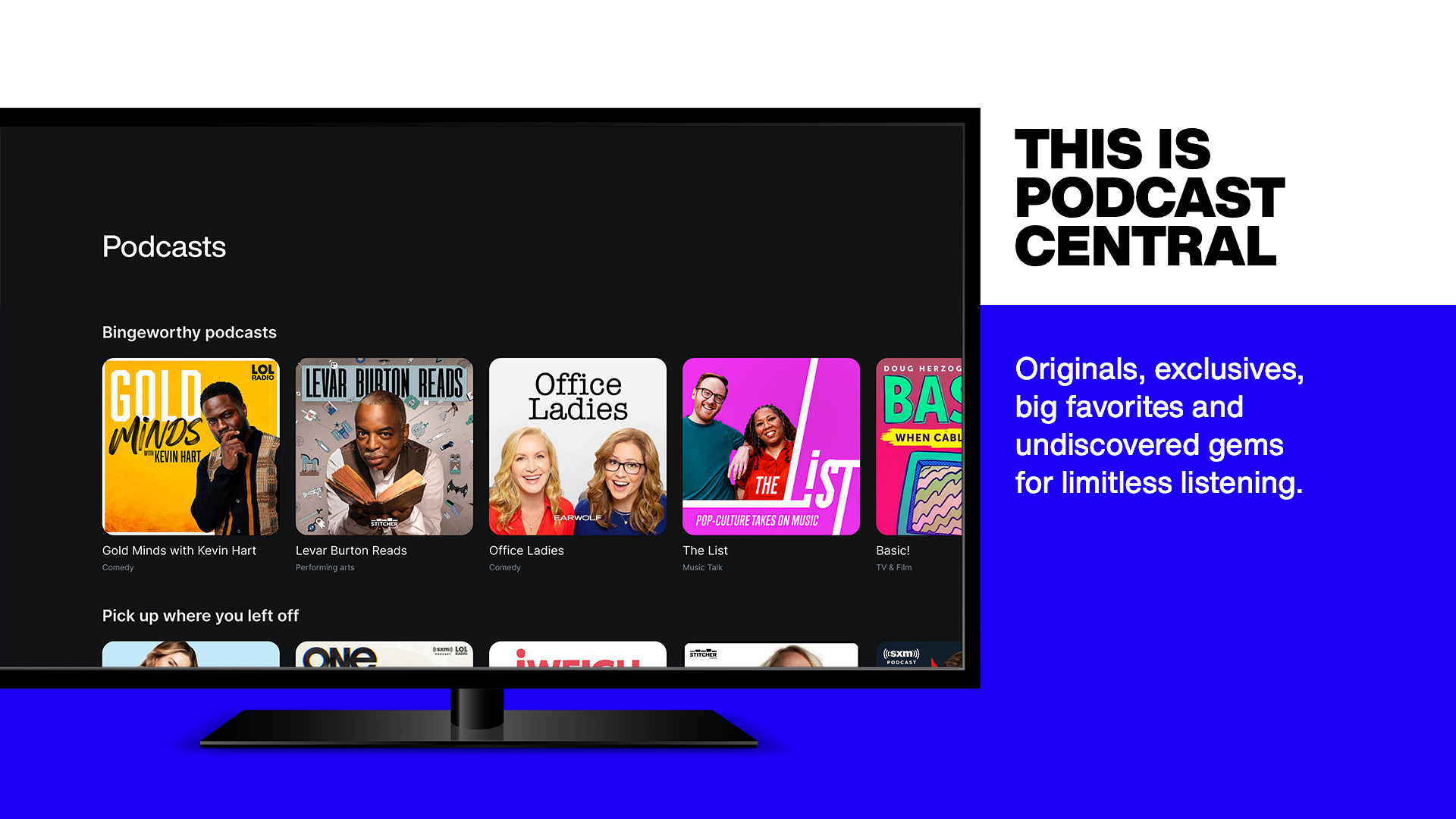
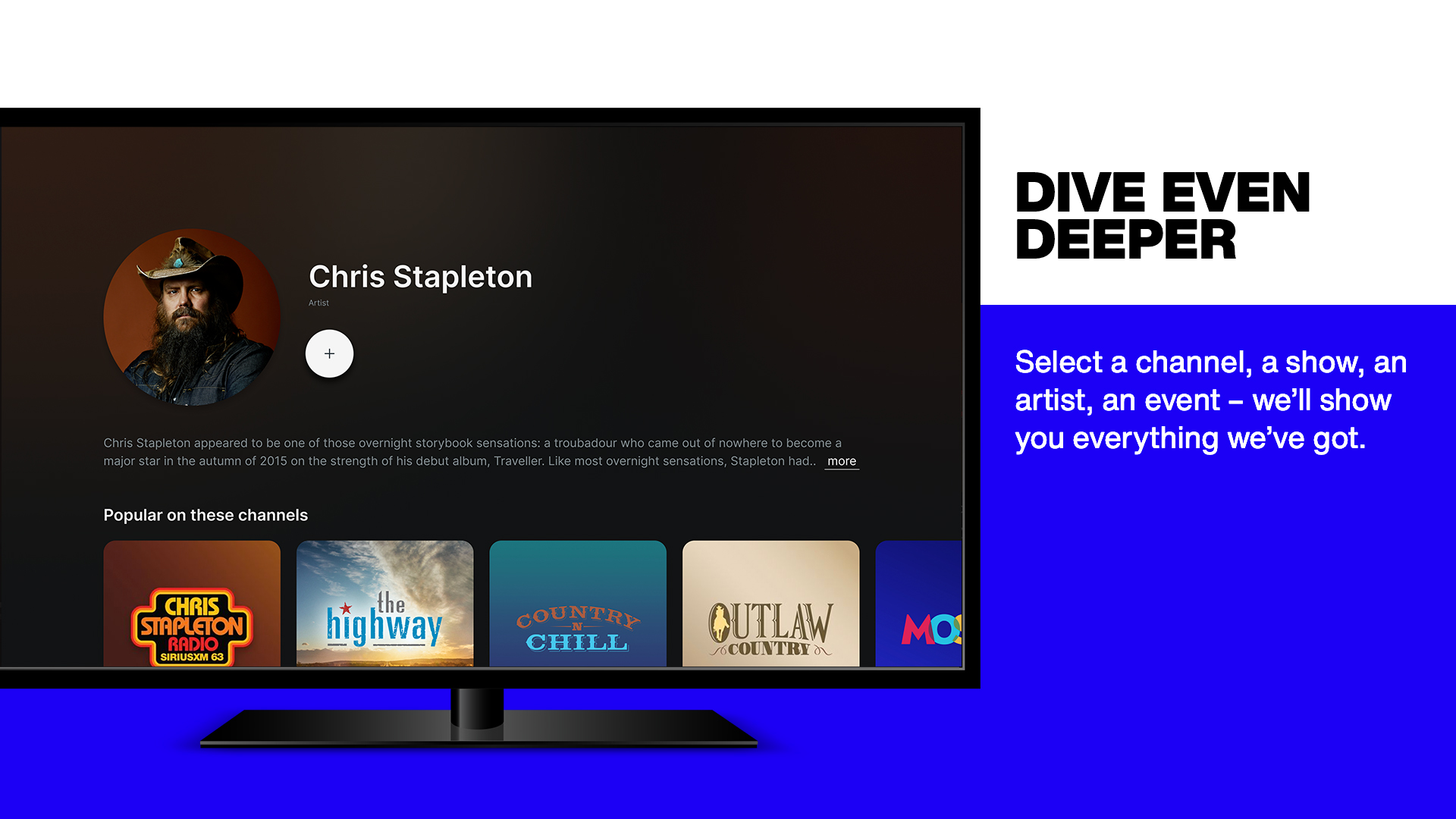
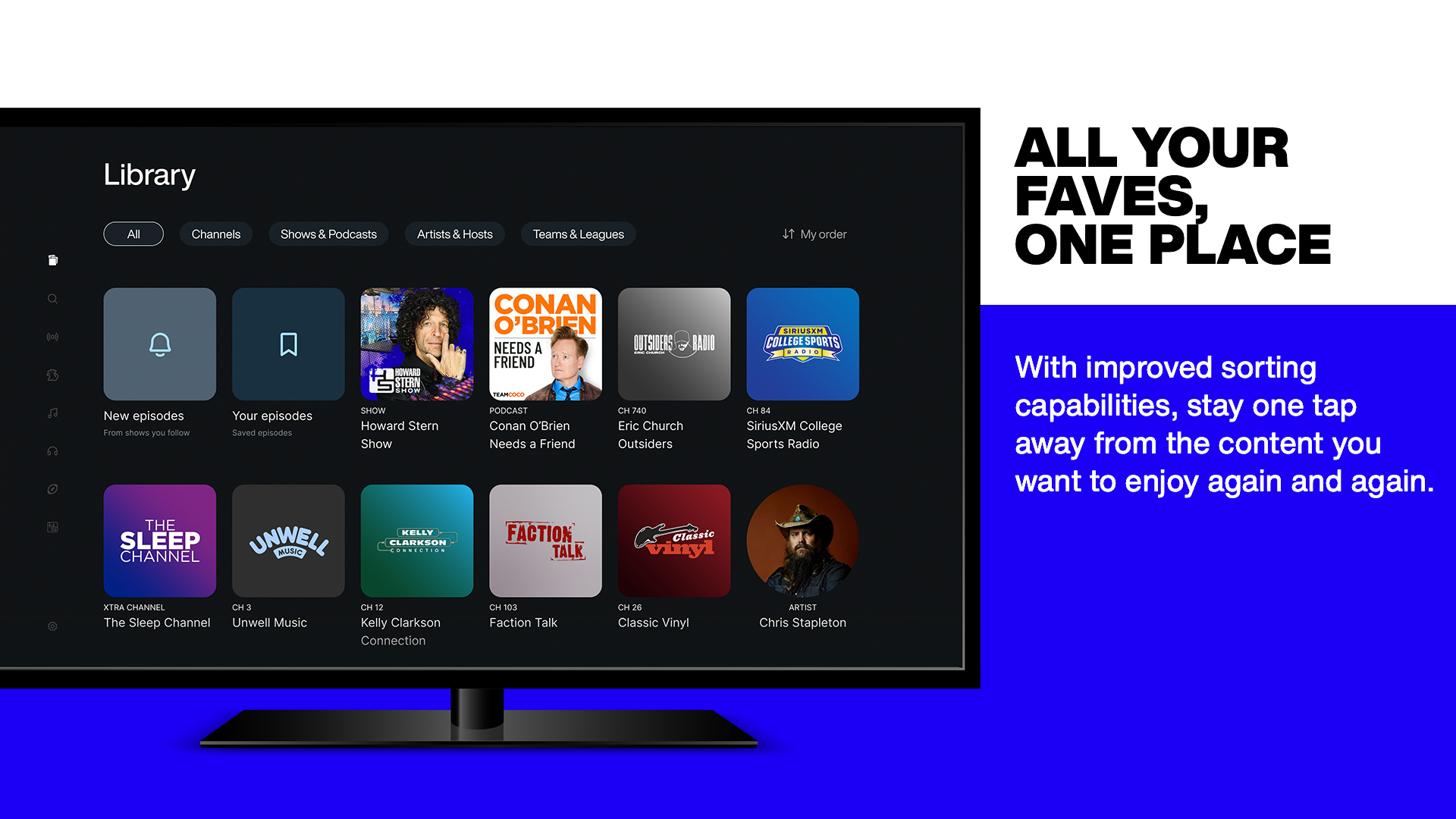
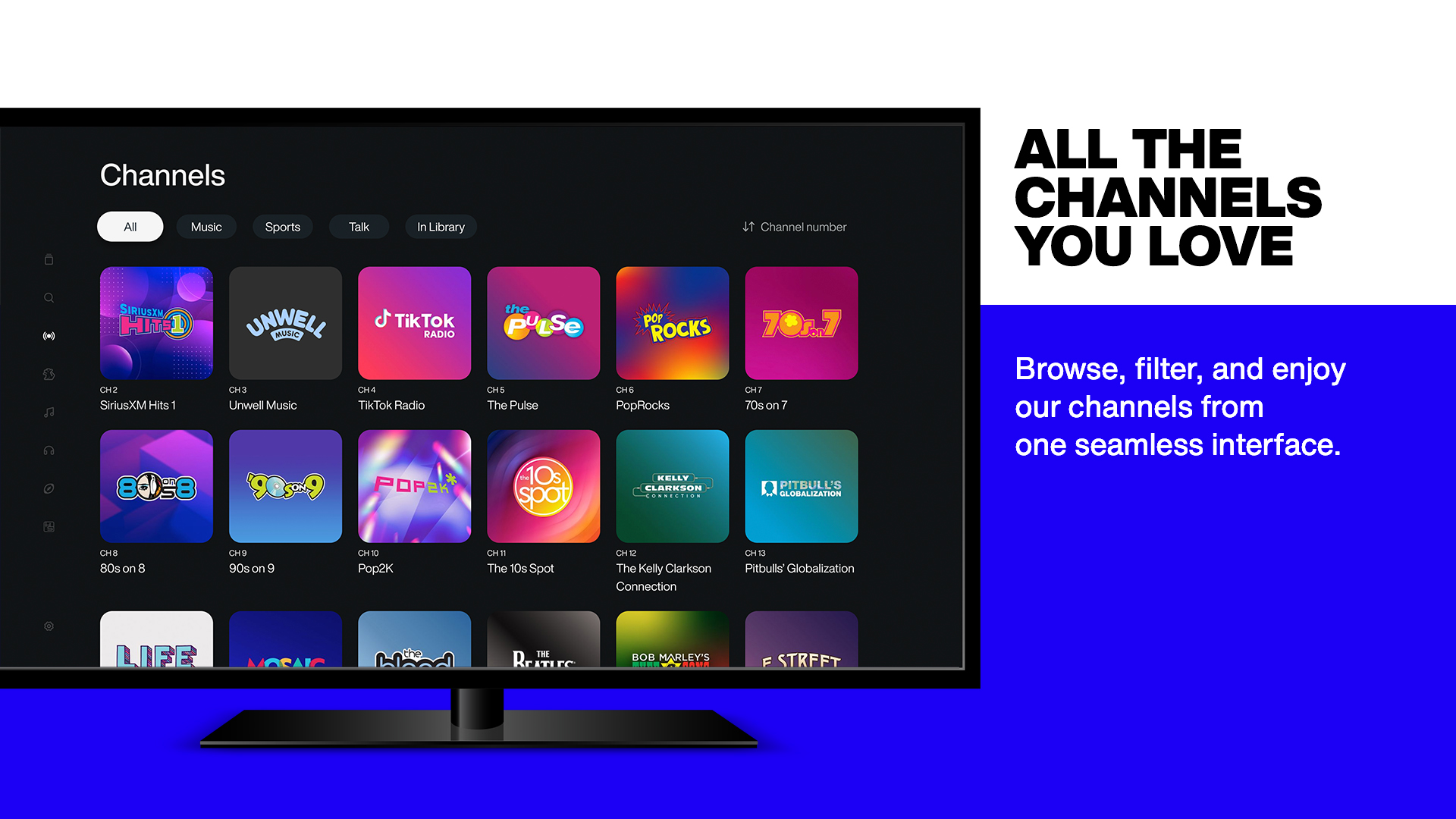
The sections below show how the system operates in practice. What follows highlights how research translates into structure and structure into execution, including placement logic, measurements, brand alignment, and interface behavior. You will see both in market applications and exploratory UI studies, all clearly labeled to demonstrate how the framework flexes, scales, and holds together across SiriusXM’s platform.